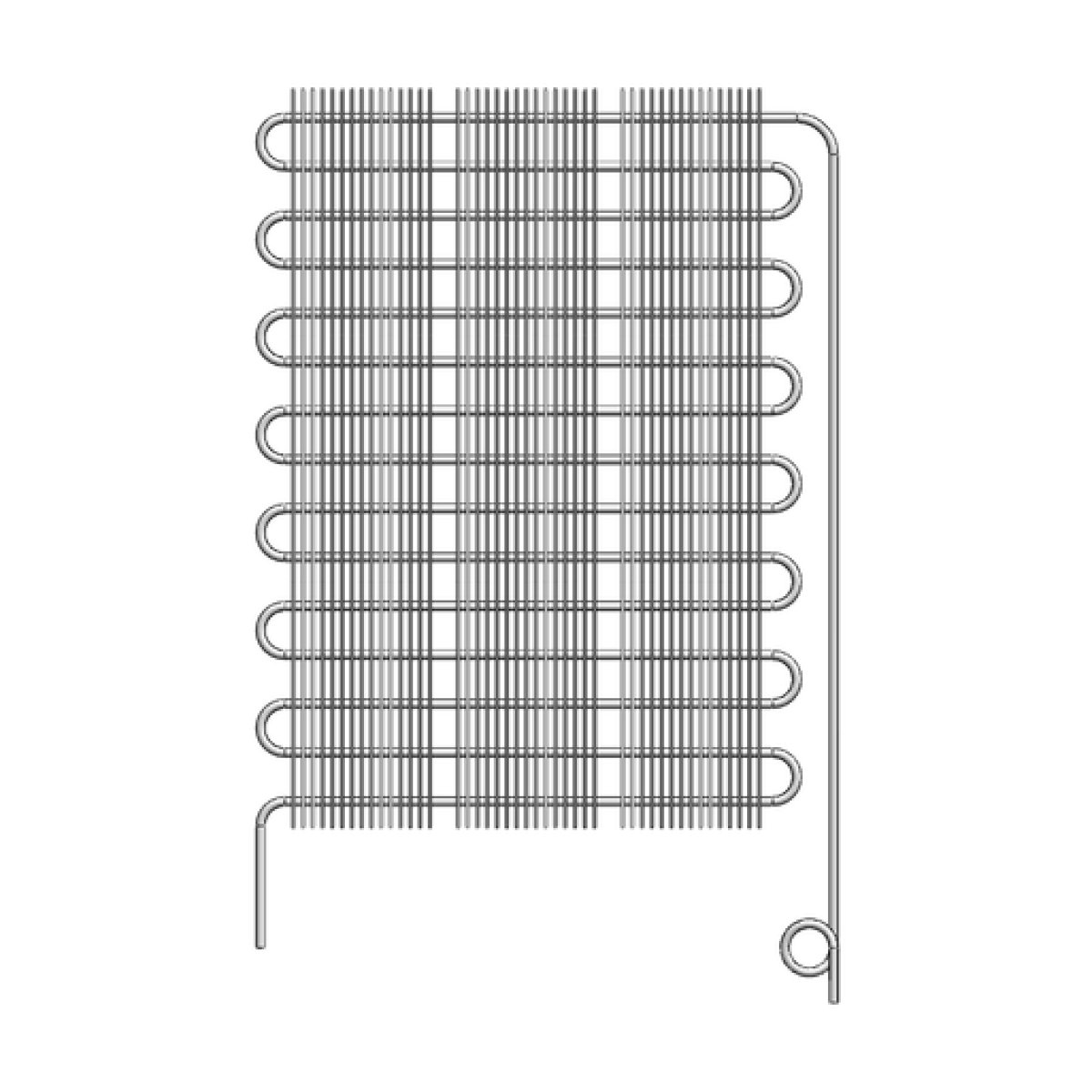
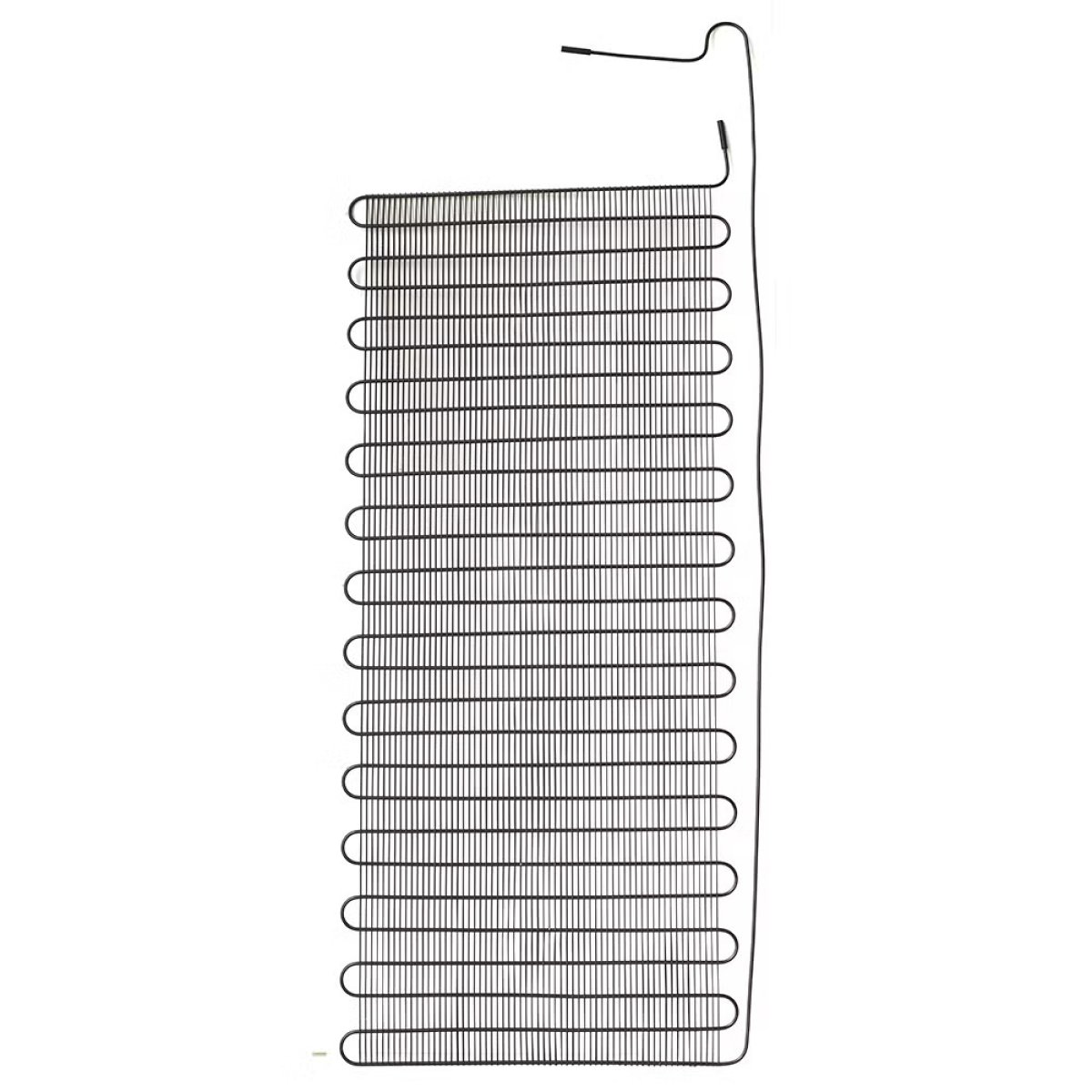
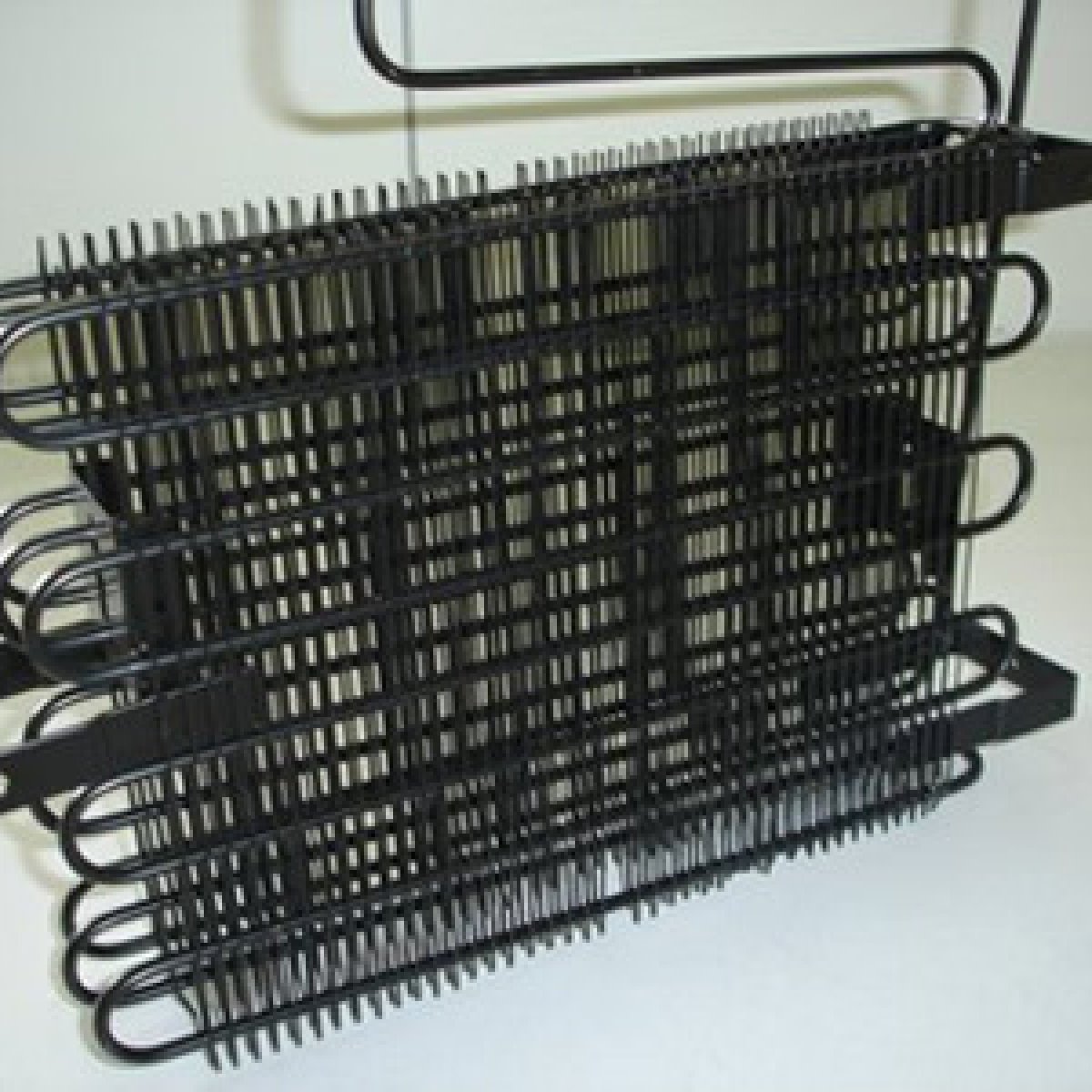
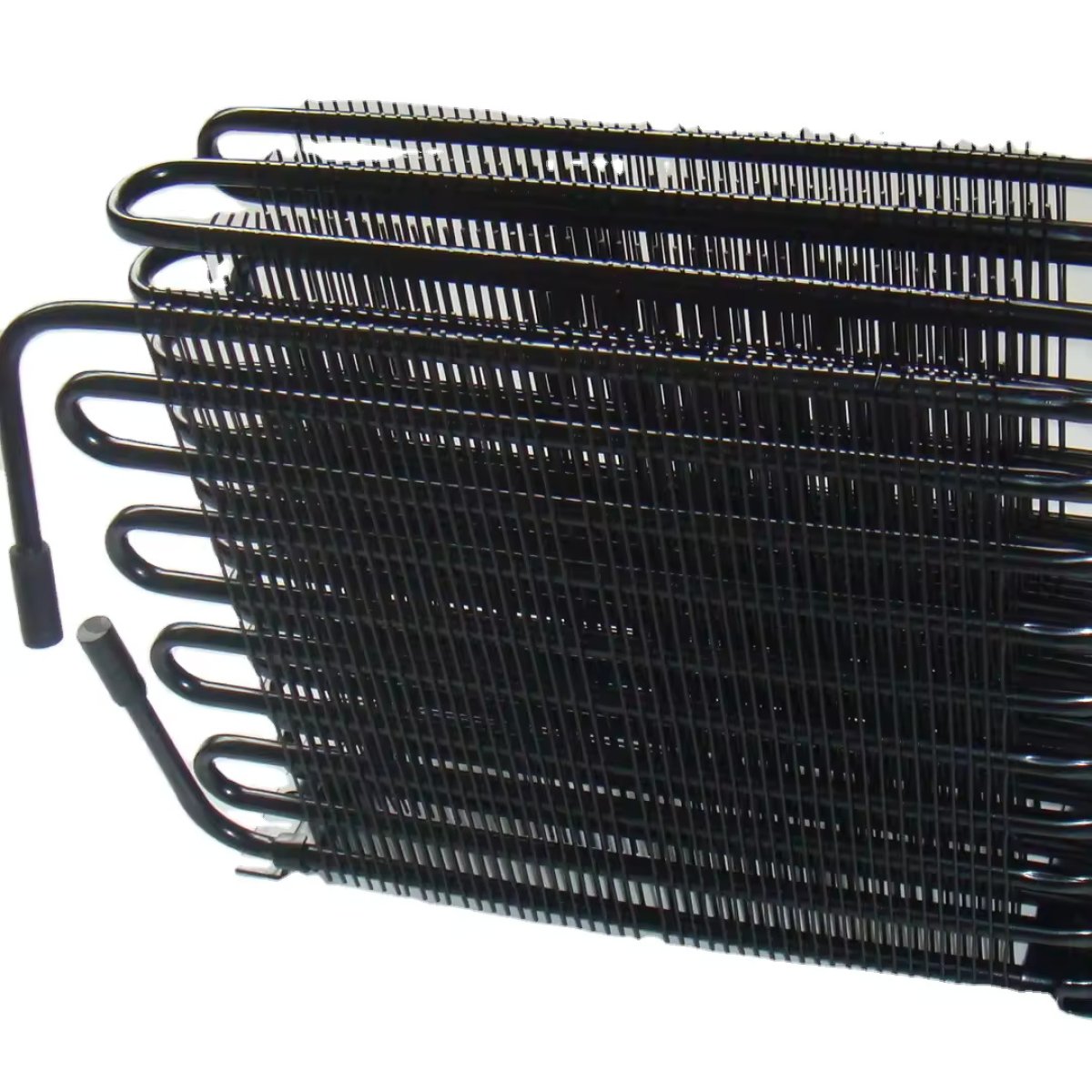
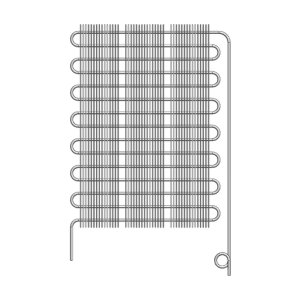
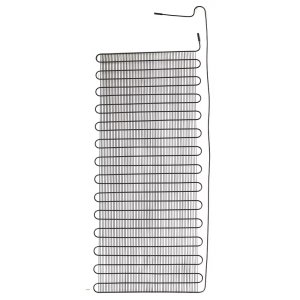
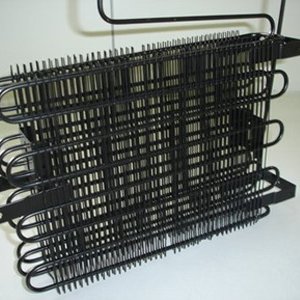
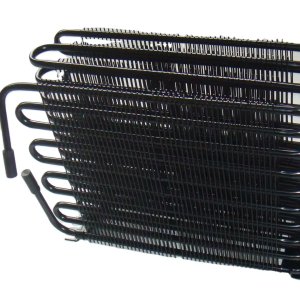
A static, air-cooled wire-on-tube condenser designed for residential refrigerators and freezers. It consists of a serpentine steel Bundy tube with low-carbon steel wires welded perpendicularly to its surface to maximize heat transfer area.
This type of heat exchanger is essential for the refrigeration cycle, facilitating the phase change of refrigerant from a high-pressure gas into a liquid state by releasing heat to the ambient air. [1, 2]
Materials & Construction: The primary body is made from Bundy steel tubing (typically 4.76mm to 9.52mm in diameter). Perpendicular to the tube are rows of thin low-carbon steel wires (1.0mm to 1.6mm diameter), which act as passive cooling fins.
Static Design: These are often referred to as "static" condensers because they rely on natural convection (natural draft) rather than forced air from a fan. They are commonly mounted on the exterior back wall of single-door refrigerators or chest freezers.
Coating & Performance: The entire assembly is typically finished with a black electrophoretic coating (e-coat) to provide superior corrosion resistance and improve thermal efficiency.
Efficiency: The wire-on-tube structure is favored in modern manufacturing because it is lightweight, cost-effective, and easy to clean, ensuring the system maintains optimal cooling performance over time.