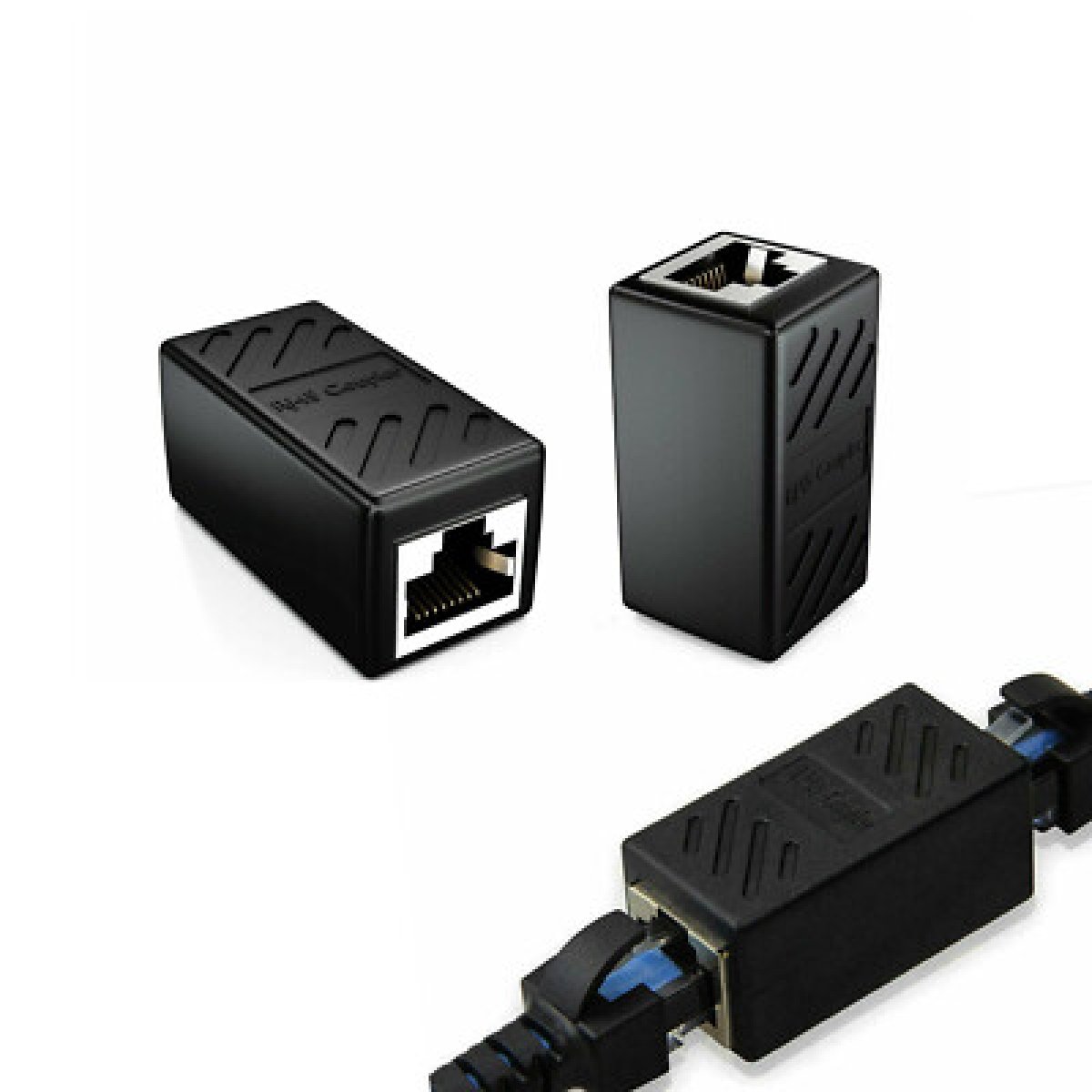
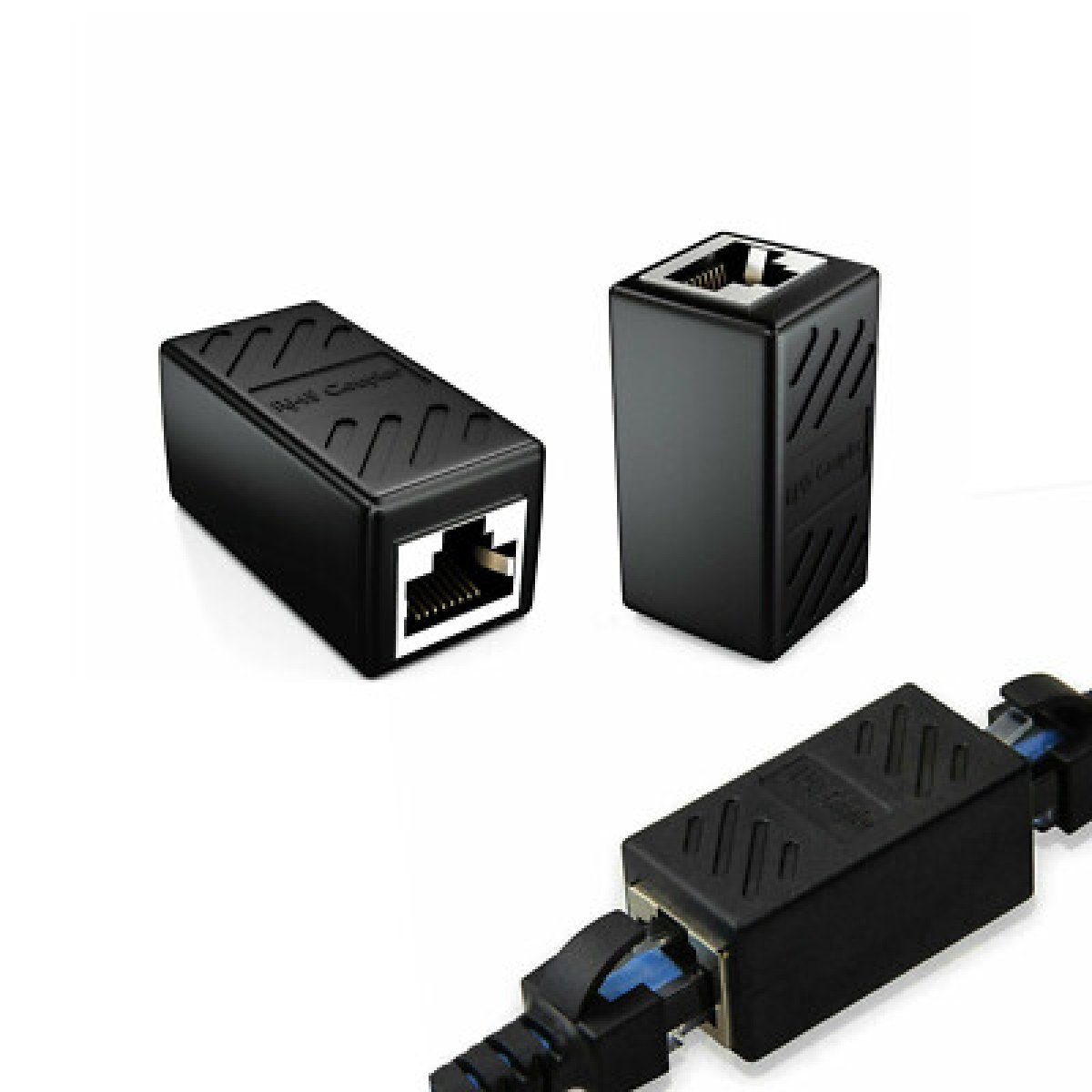
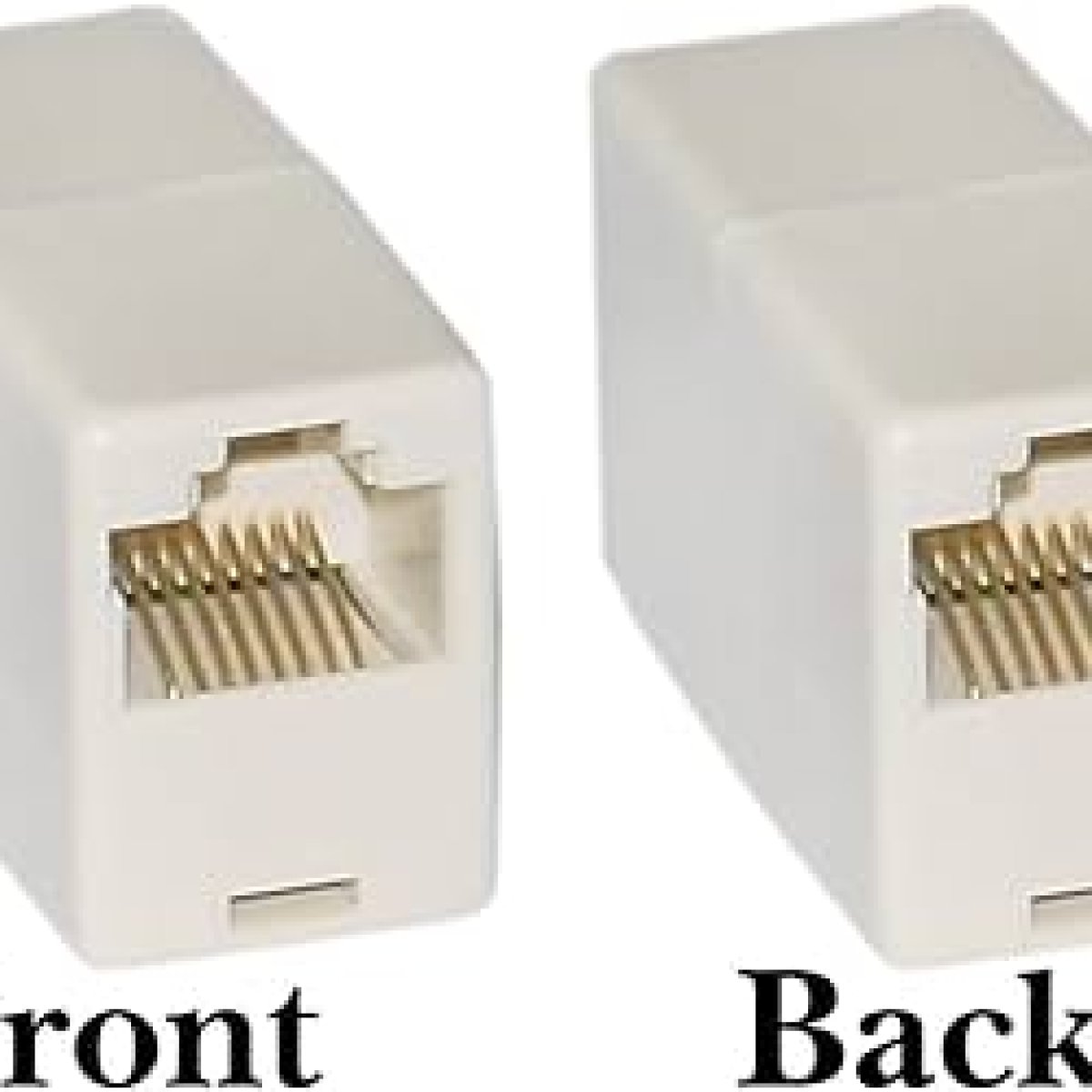
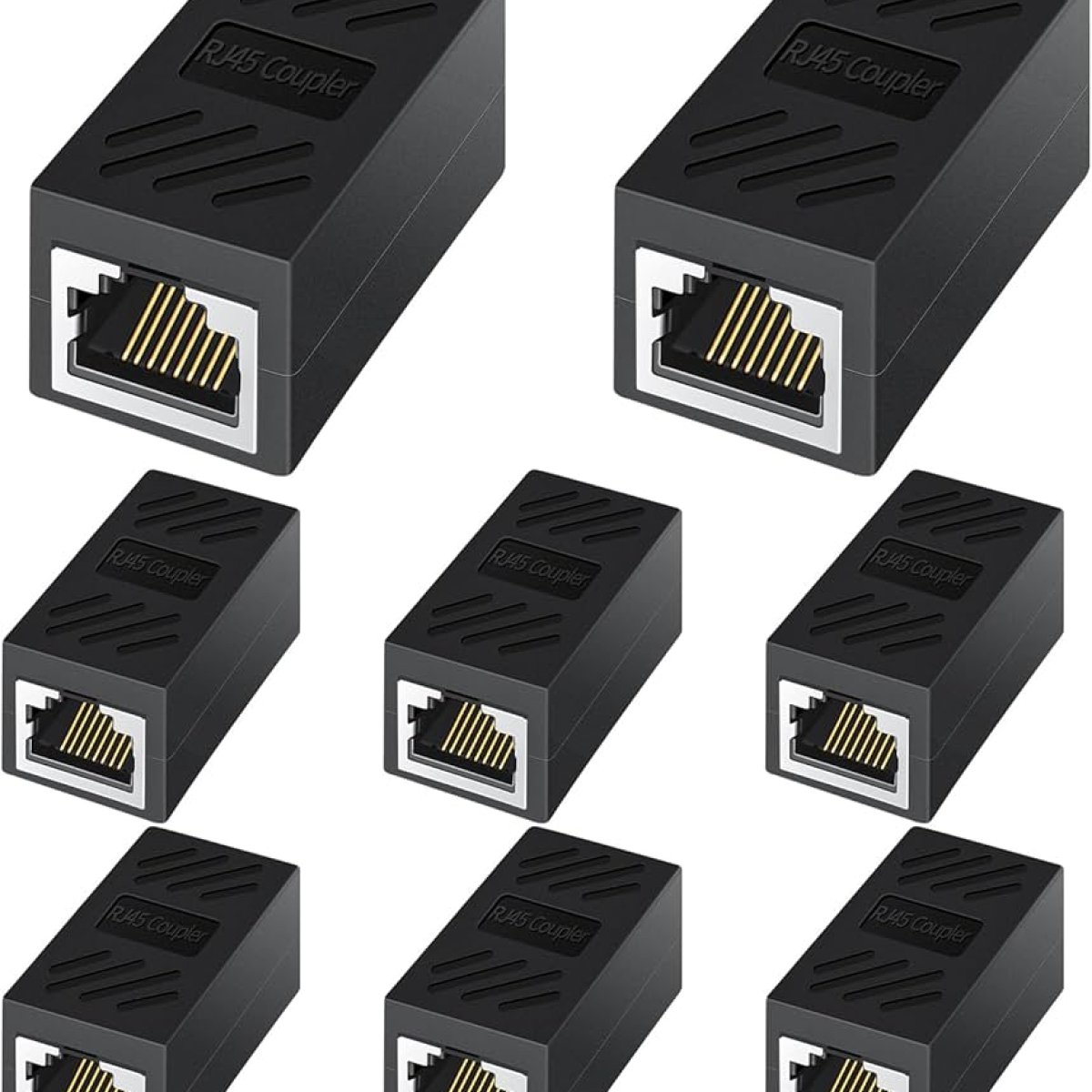
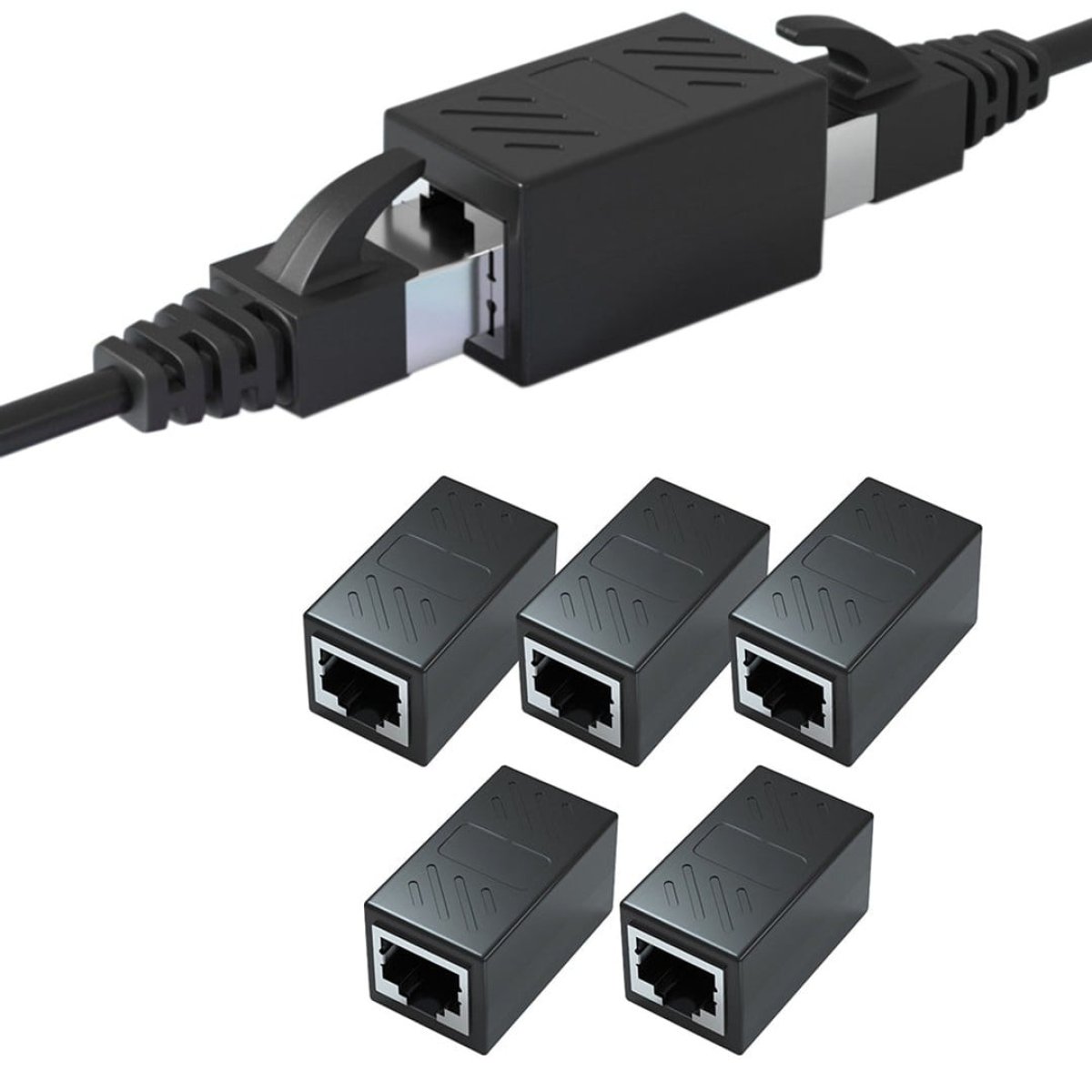
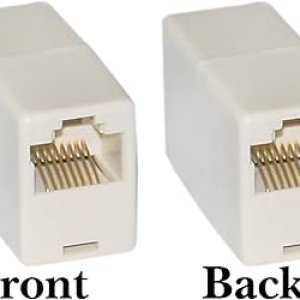
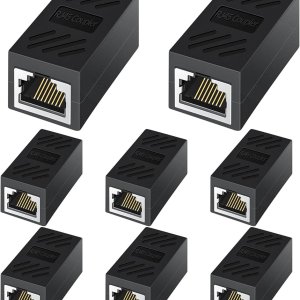
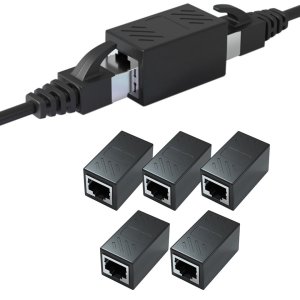
An Ethernet Coupler is a simple "bridge" device with an RJ45 port on both sides. It allows you to click two patch cables together to create one longer cable, maintaining a continuous data connection across Cat6, Cat6a, or other network standards.
Couplers are the quickest solution for extending a network run that falls just short of its destination. While convenient, they are generally considered a temporary or "fix-it" solution rather than a permanent part of structured cabling.
- Types of Couplers:
- Inline Couplers: Small, standalone plastic blocks used to join two loose cables on a desk or floor.
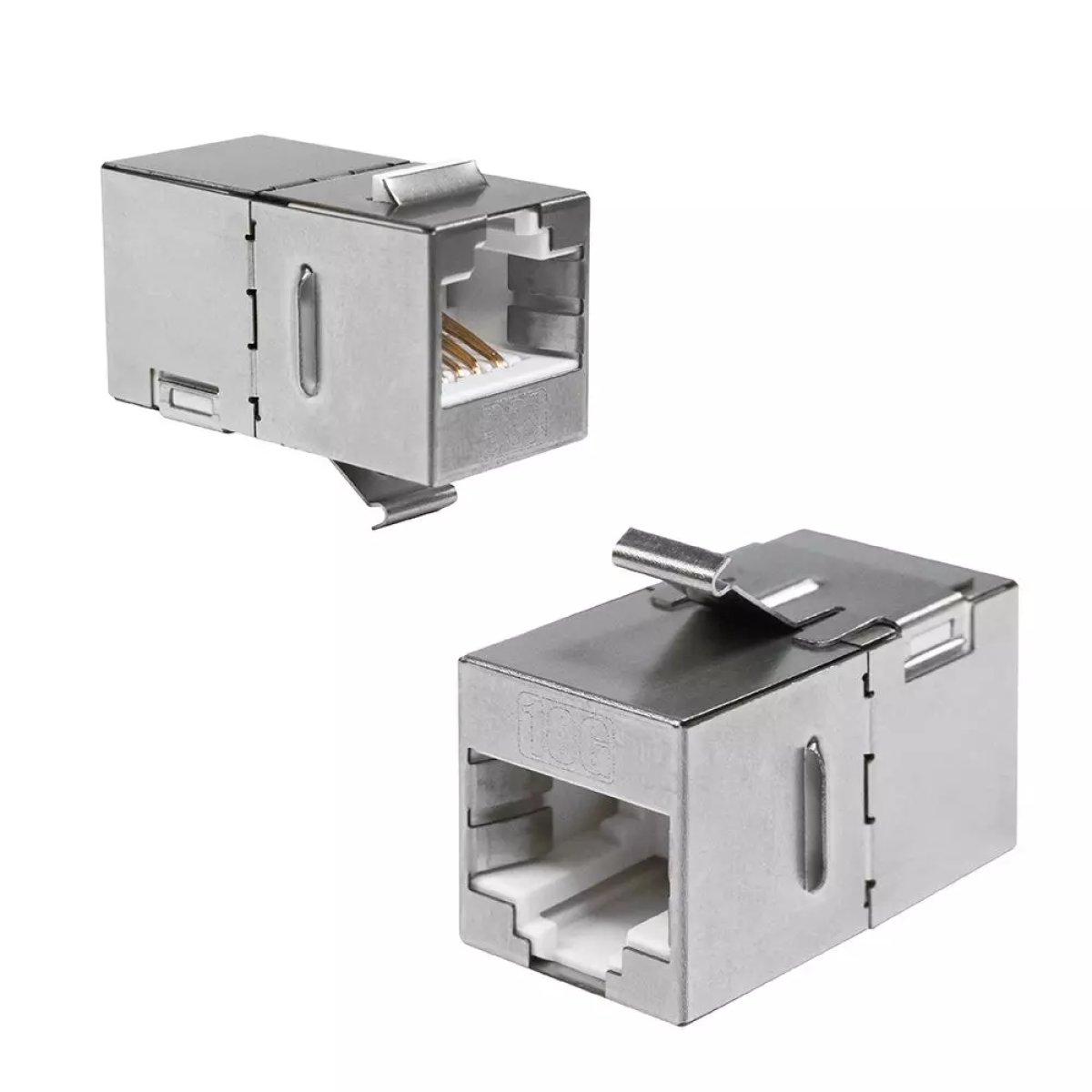
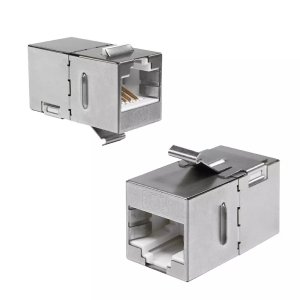
- Keystone Couplers: Designed with the same "snap-in" footprint as a standard jack, allowing them to be mounted into wall plates or patch panels.
- Shielded (STP) vs. Unshielded (UTP): High-performance couplers (Cat6a/Cat7) feature a metal casing to maintain the grounding and shielding of the cables being joined.
- Performance Impact: Every coupler introduces a small amount of insertion loss and signal reflection. While one coupler usually doesn't affect speed, "daisy-chaining" several of them can lead to dropped packets or reduced speeds, especially at 10Gbps frequencies.
- Weatherproofing: Specialized Waterproof Couplers are available with screw-on gaskets to protect connections in outdoor or industrial environments from moisture and dust.
- Ideal Use Cases:
- Extending a cable that was cut too short behind a desk.
- Connecting a long outdoor cable to an indoor patch lead.
- Testing network lines quickly without installing permanent jacks.