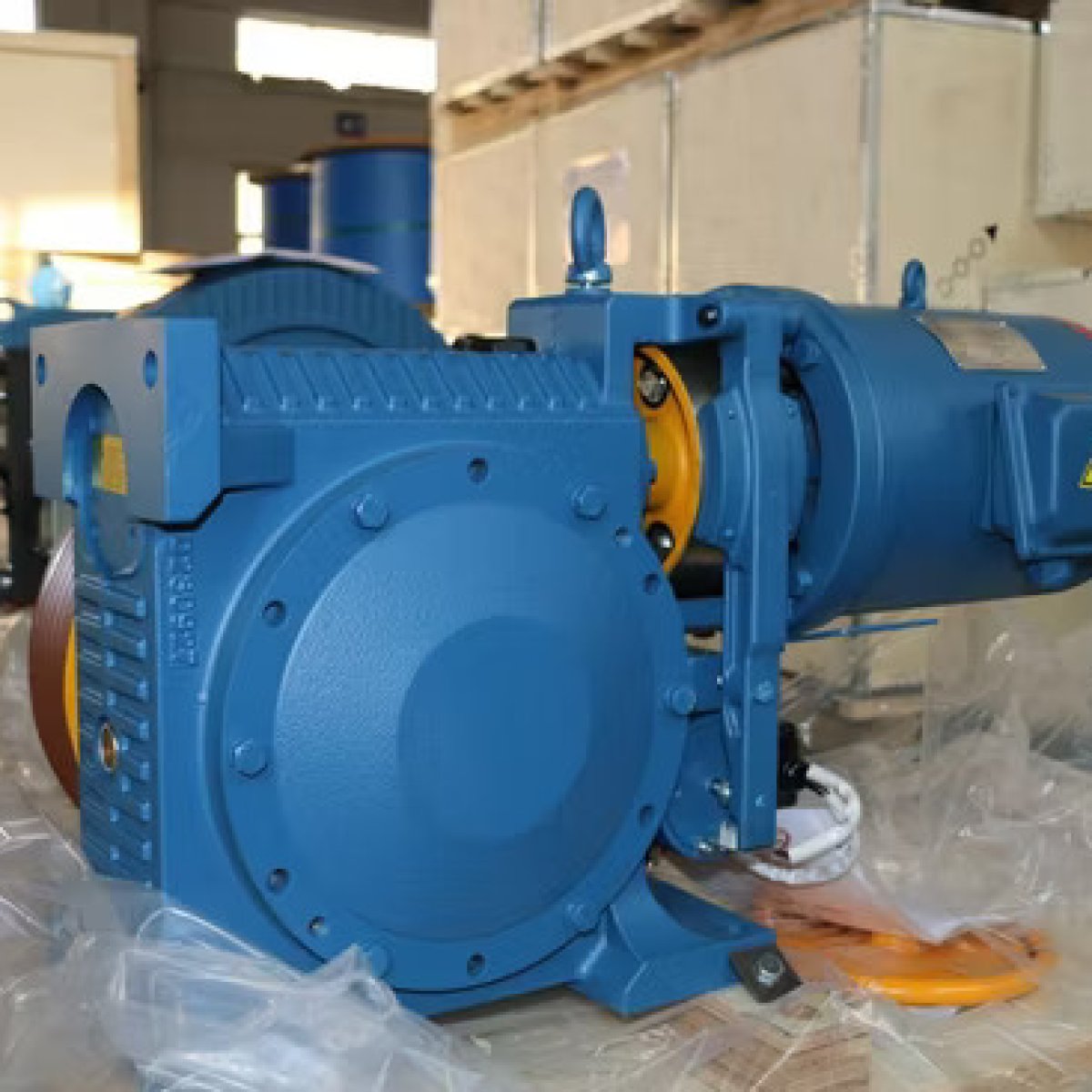
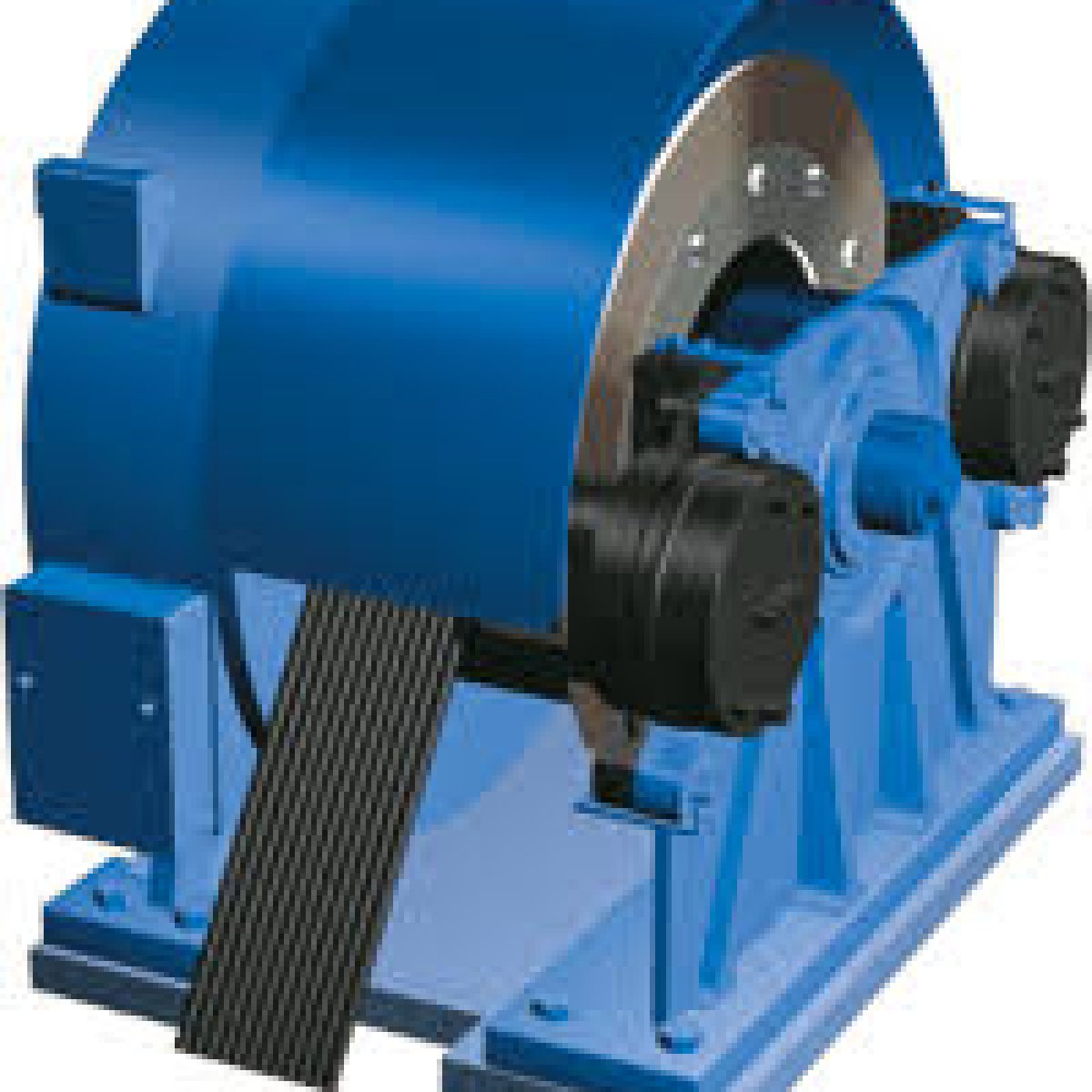
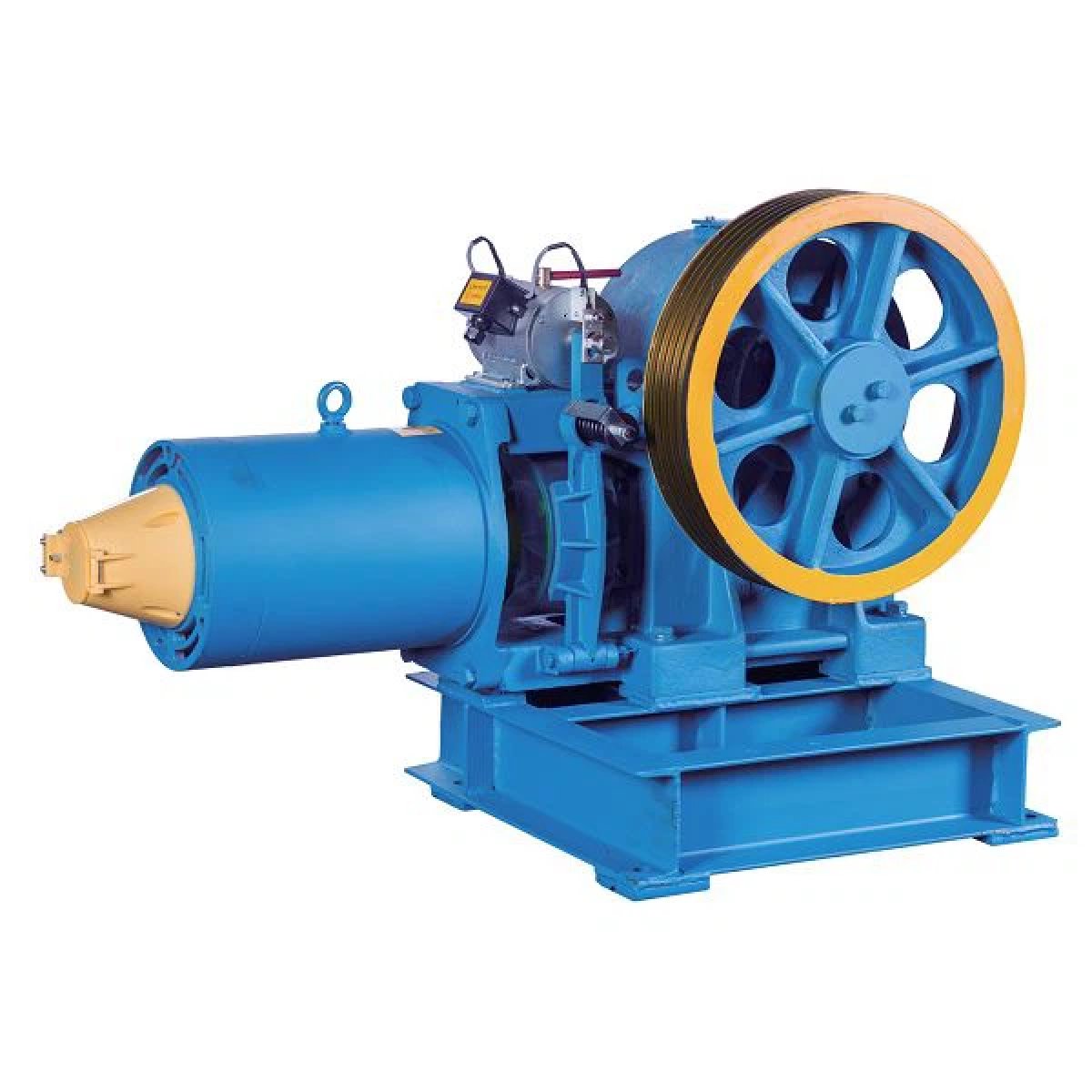
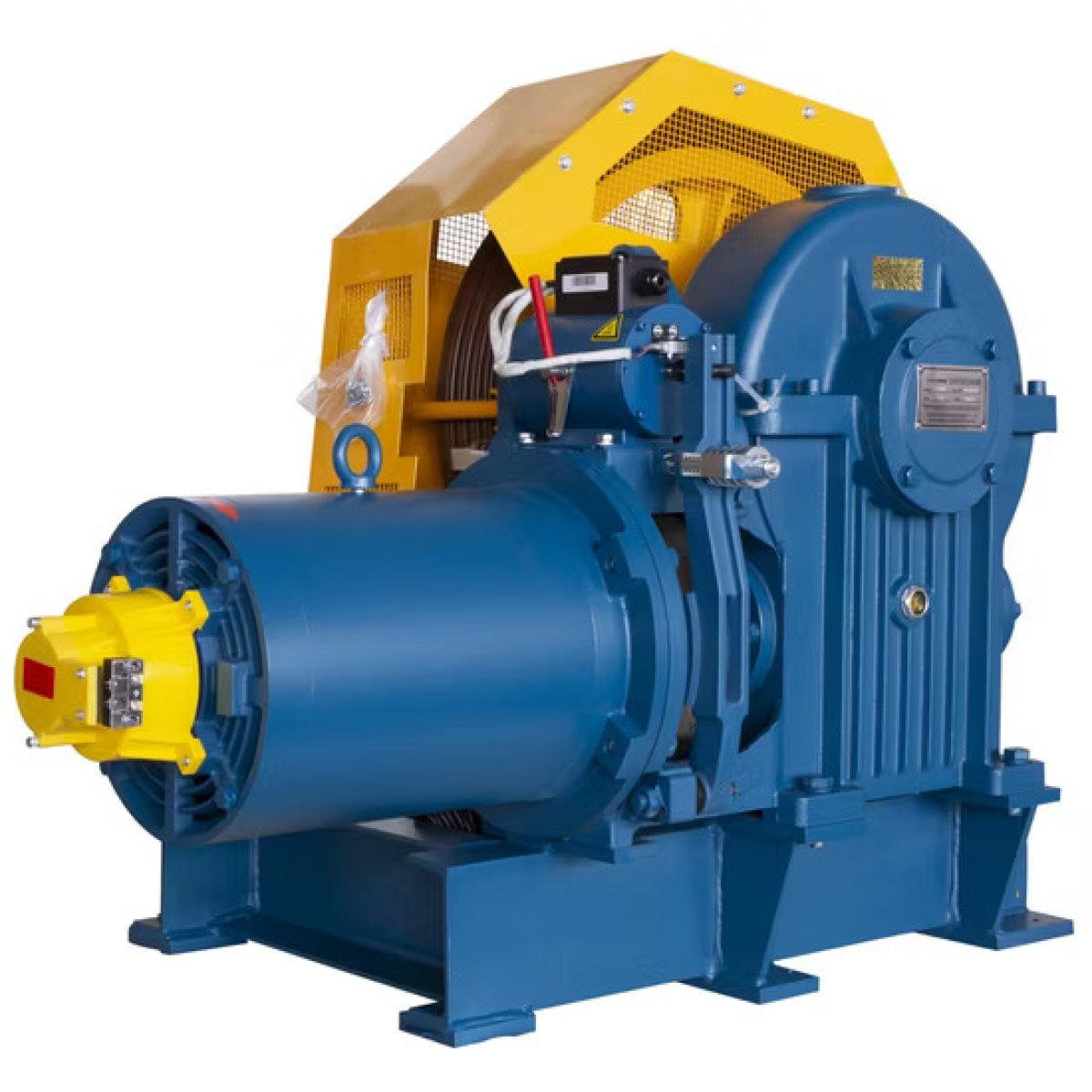
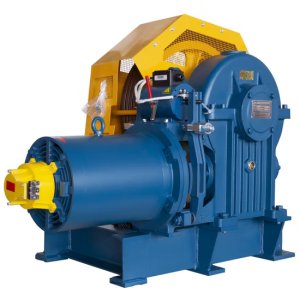
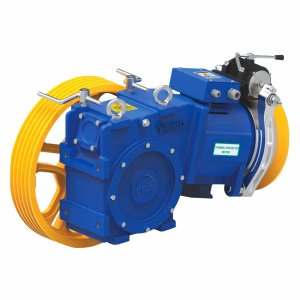
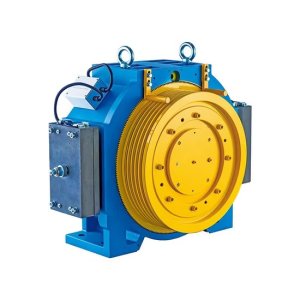
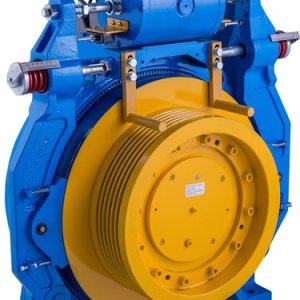
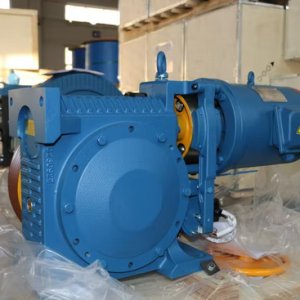
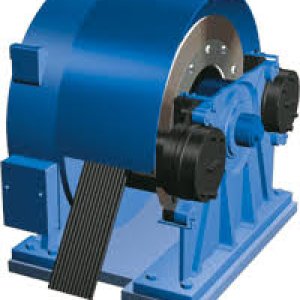
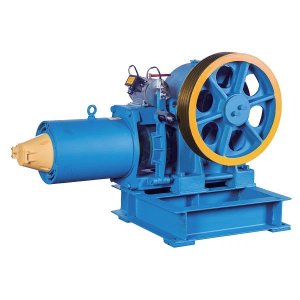
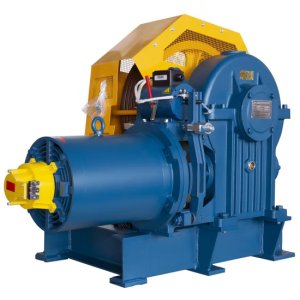
Highlights the core mechanical and electrical components of a modern traction elevator system. These parts are typically housed in the building's machine room or integrated within the Hostway for space-saving designs
Core System Components
Traction Machines (Elevator Motors):
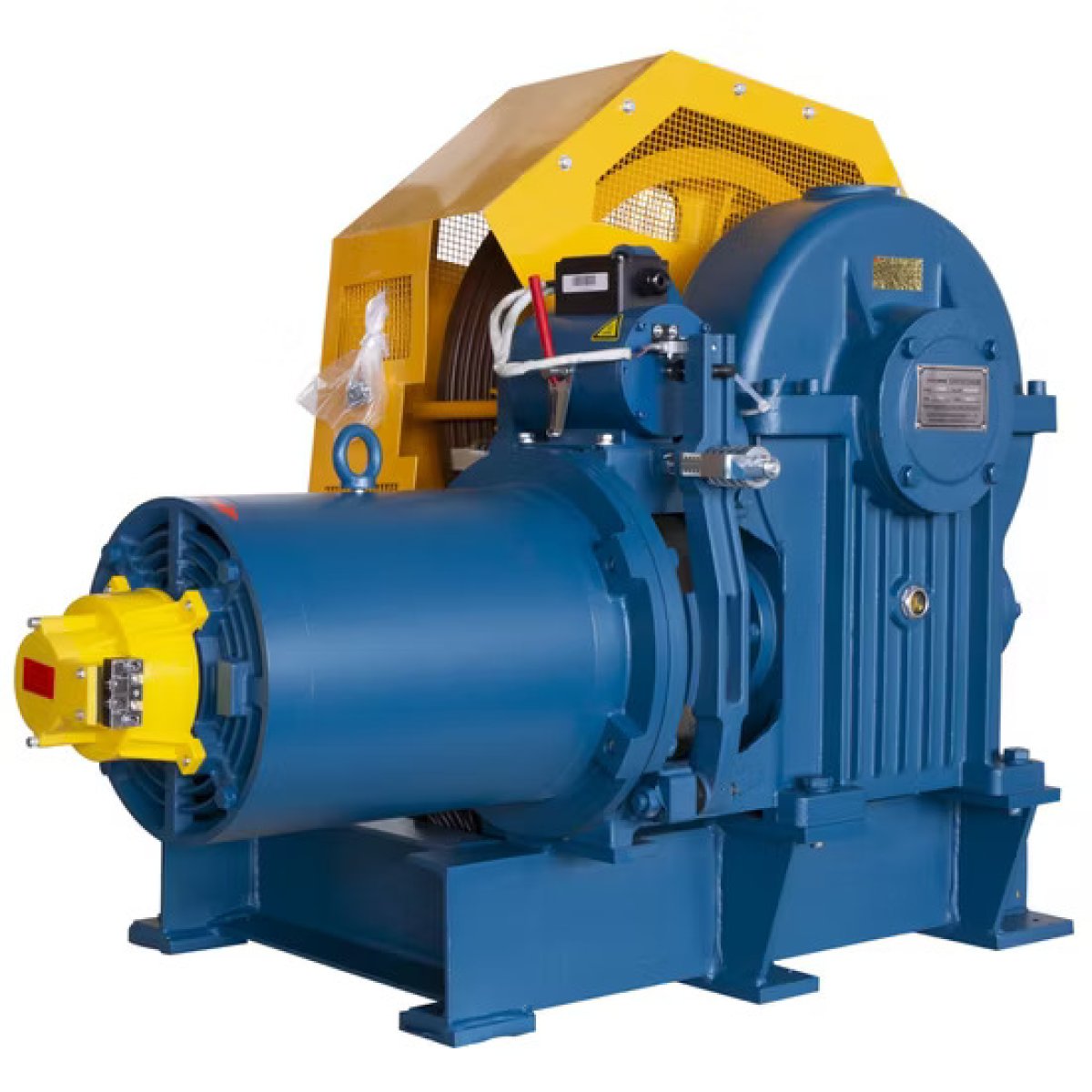
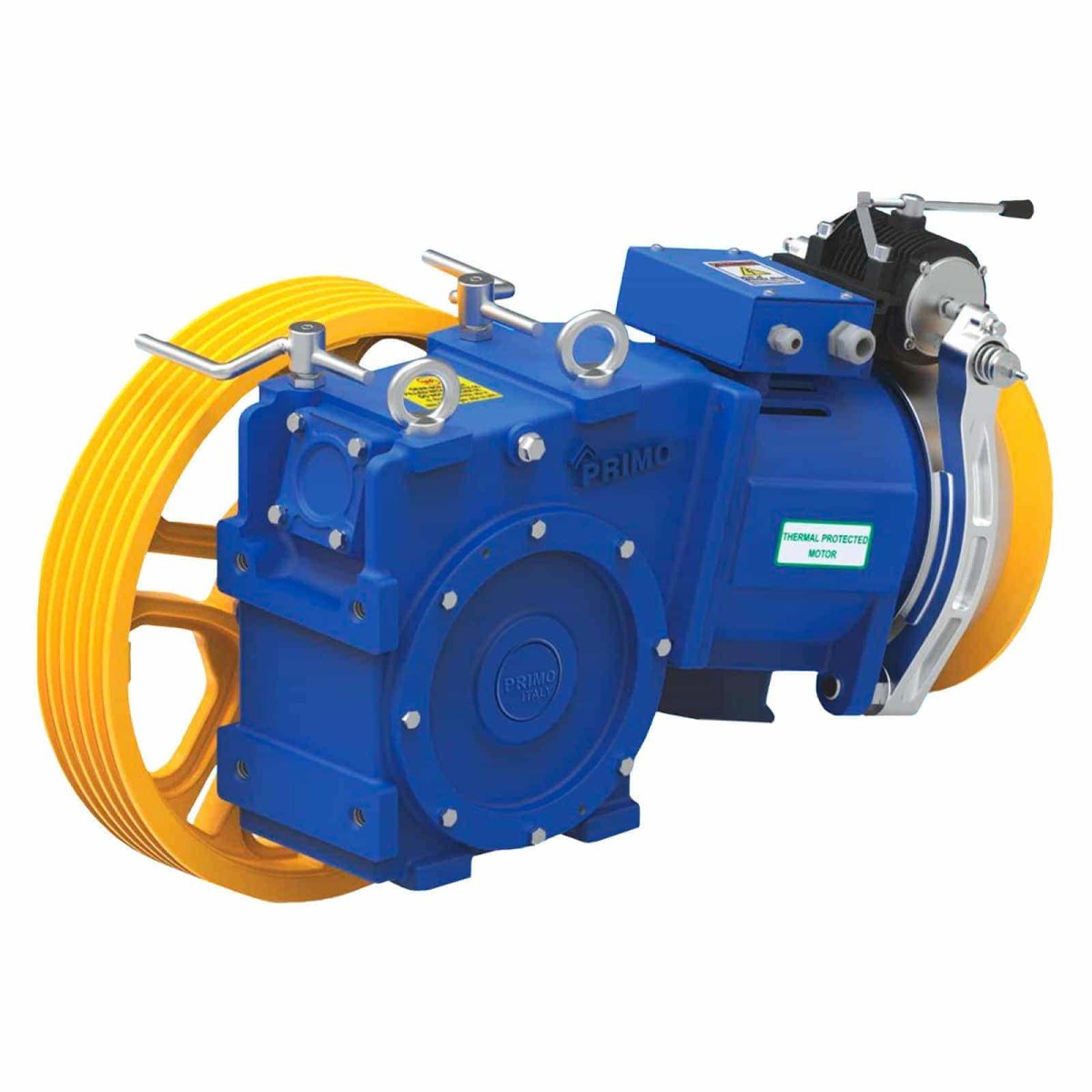
Geared Traction Machine (Blue Unit, top left): Uses a gearbox to reduce high-speed motor rotation into high torque for moderate speeds. It is often used in mid-rise buildings.
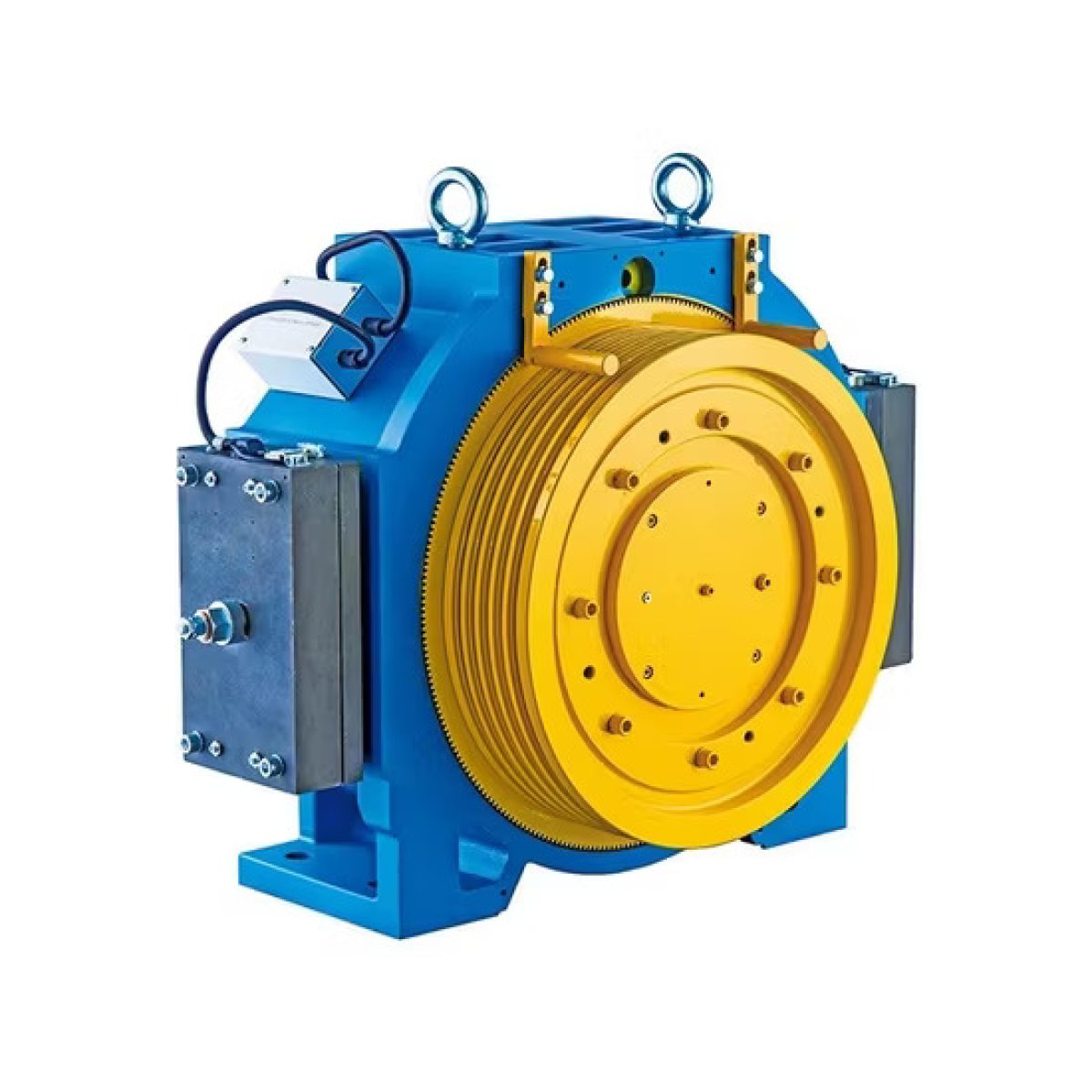
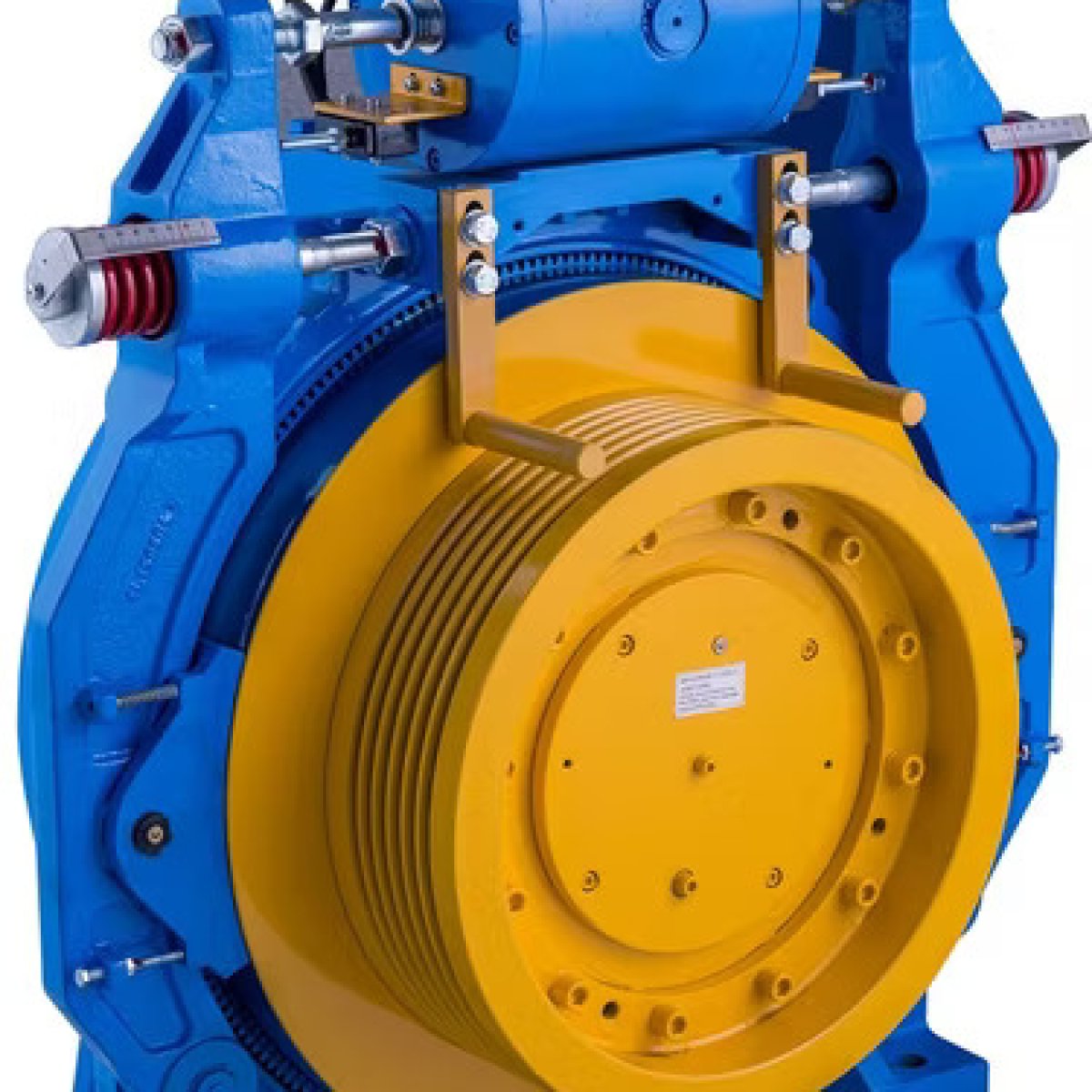
Gearless Traction Machine (Circular Units): Features a large, low-RPM motor directly connected to the drive sheave. These are more energy-efficient, quieter, and common in high-rise or high-speed applications.
Elevator Control Panel (Center): Often called the "brain" of the system, this cabinet contains the main control board, power supplies, and a Variable Frequency Drive (VFD) that regulates motor speed and torque for smooth starts and stops.
Braking System (Close-ups, bottom right): An electromagnetic safety mechanism, such as a Block-Type Brake, that automatically engages when power is cut. It uses heavy-duty springs to press pads against the sheave, holding the elevator stationary.
Traction Sheave (Yellow Wheel): The grooved pulley around which steel cables (hoist ropes) are looped. Friction between the ropes and these grooves provides the lifting force for the elevator car and its counterweight.