Cat-7 Ethernet is a high-speed network cable capable of supporting 10 Gbps data rates over a full distance of 100 meters. It operates at a bandwidth of 600 MHz and is always shielded to virtually eliminate signal interference
Cat-7 (ISO/IEC 11801 Class F) was designed to be the ultimate solution for industrial and performance-critical networks.
dlaycable.com +1
Performance & Bandwidth: It provides a frequency of 600 MHz, which is 20% higher than Cat-6A (500 MHz) and over double that of standard Cat-6 (250 MHz). This extra "headroom" allows for more stable data transmission in high-traffic networks.
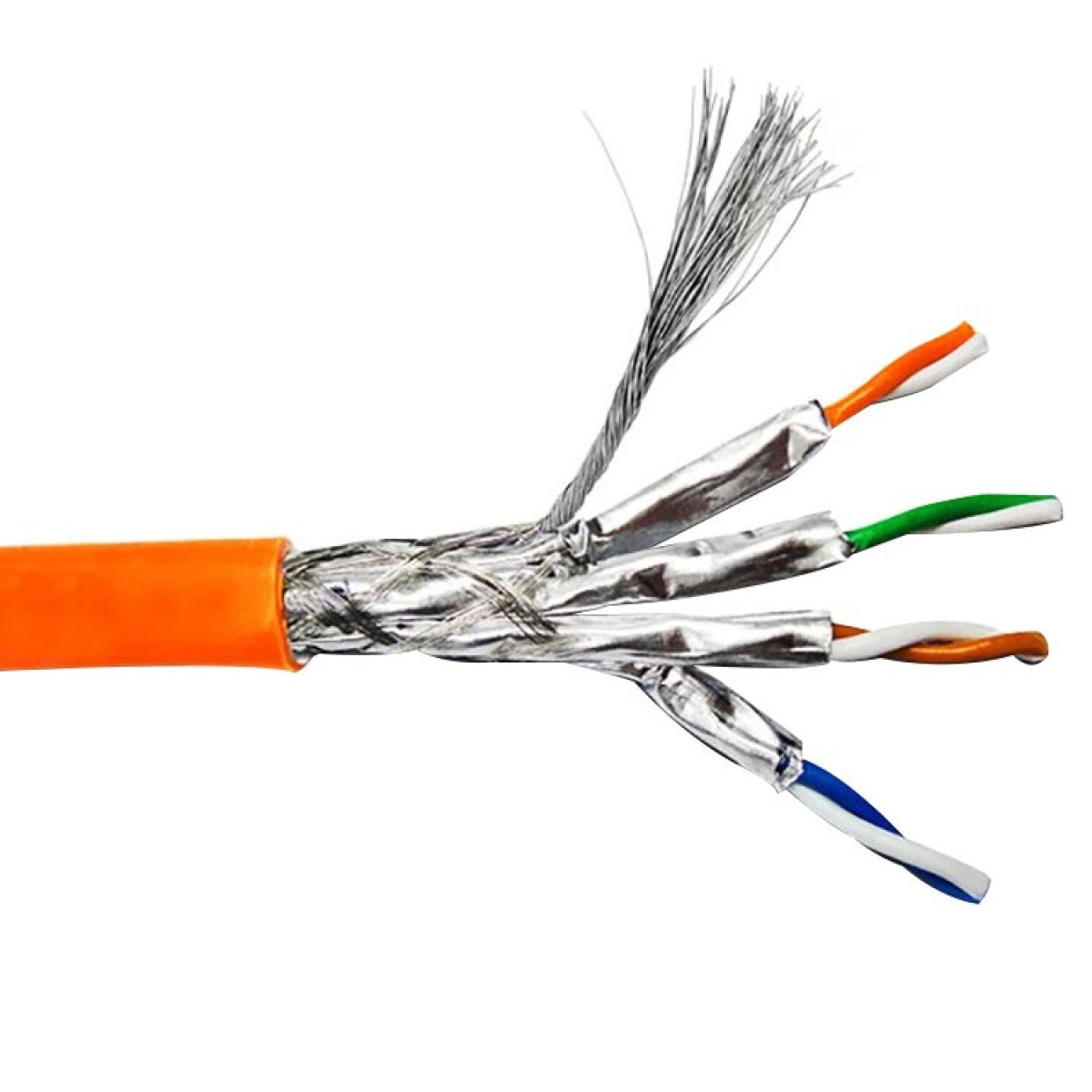
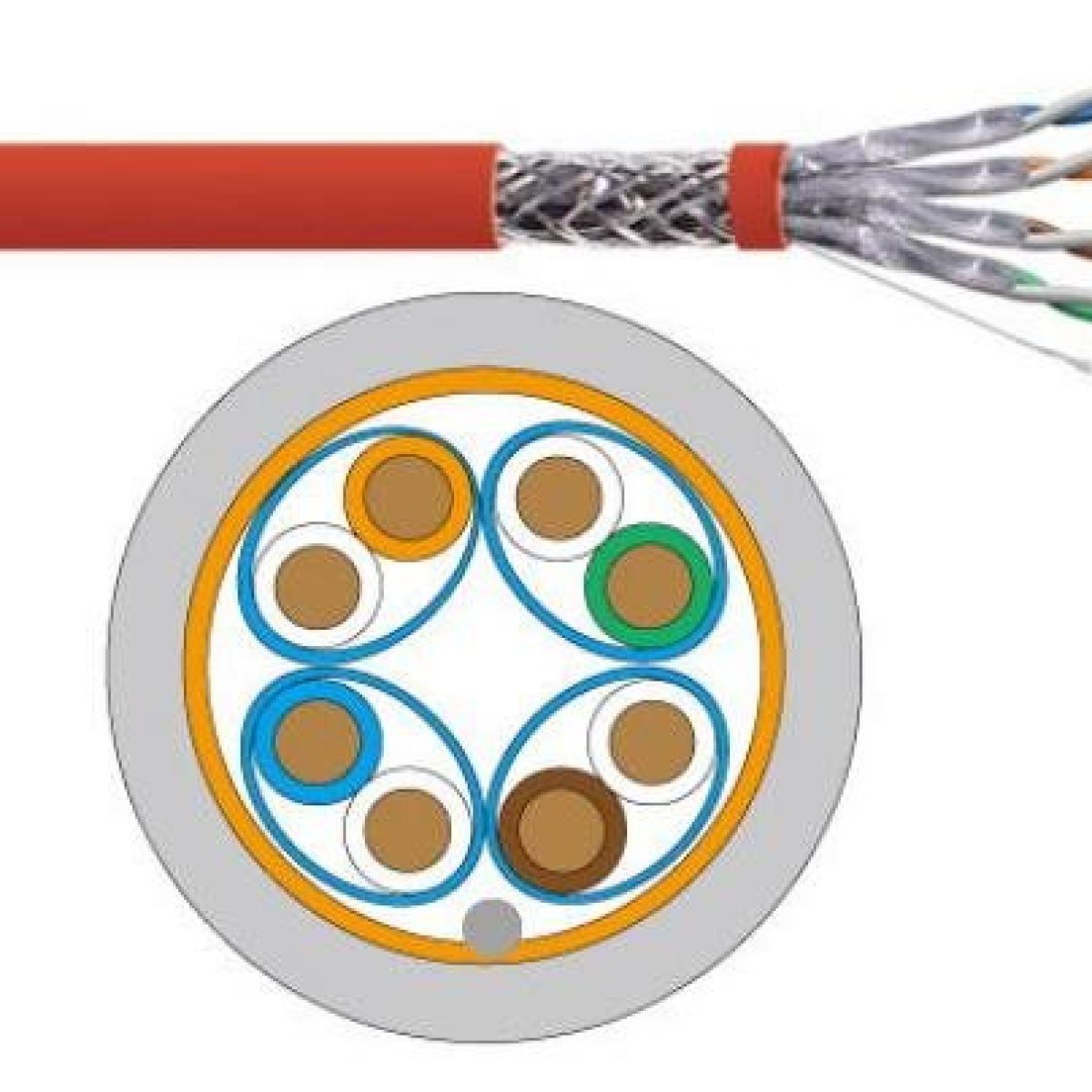
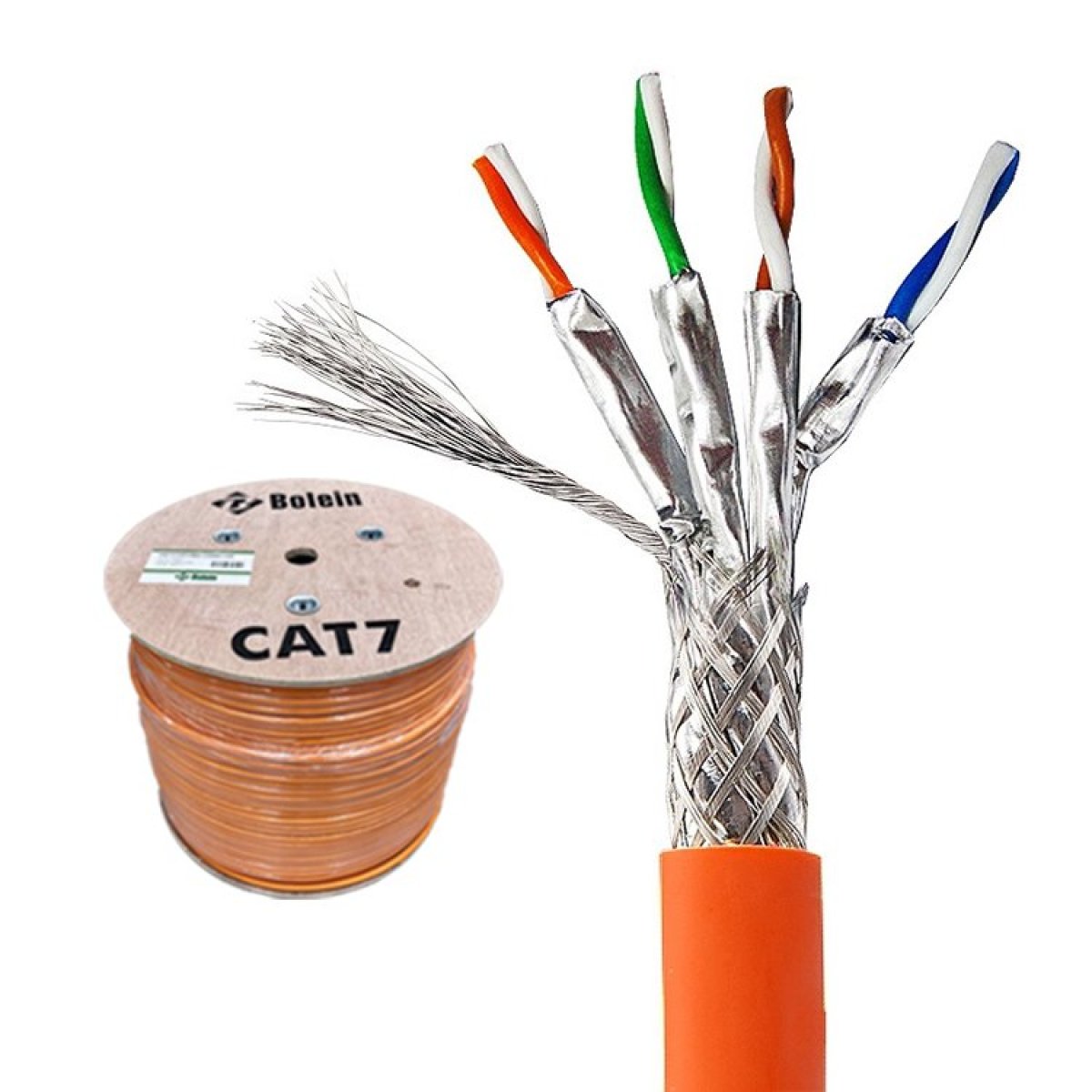
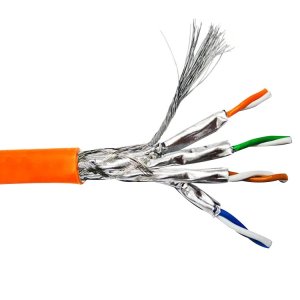
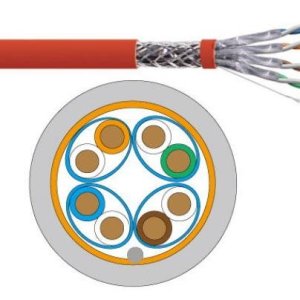
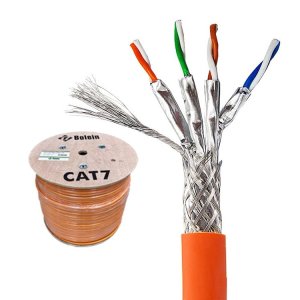
Superior Shielding (S/FTP): By default, Cat-7 features S/FTP (Shielded Foiled Twisted Pair) construction. Each of the four wire pairs is individually wrapped in foil, and the entire bundle is encased in an overall braided shield. This double-layer protection makes it nearly immune to alien crosstalk and electromagnetic interference (EMI) from heavy machinery or power lines.
Connectors: While often sold with standard RJ45 connectors for consumer use, Cat-7 was technically designed for specialized GG45 or TERA connectors to maintain grounding integrity and reach its full frequency potential.
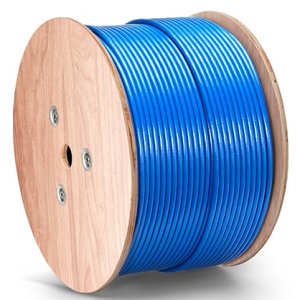
Durability & Build: Because of its extensive shielding, Cat-7 is thicker, heavier, and less flexible than lower categories. It often uses thicker 22 or 23 AWG copper conductors, which are excellent for high-power PoE++ applications.
Ideal Use Cases:
Industrial Environments: Near motors or fluorescent lights that cause heavy interference.
Professional Labs & Data Centers: For high-density switch-to-server connections.
Advanced Gaming/Streaming: To ensure the lowest possible latency and maximum stability.