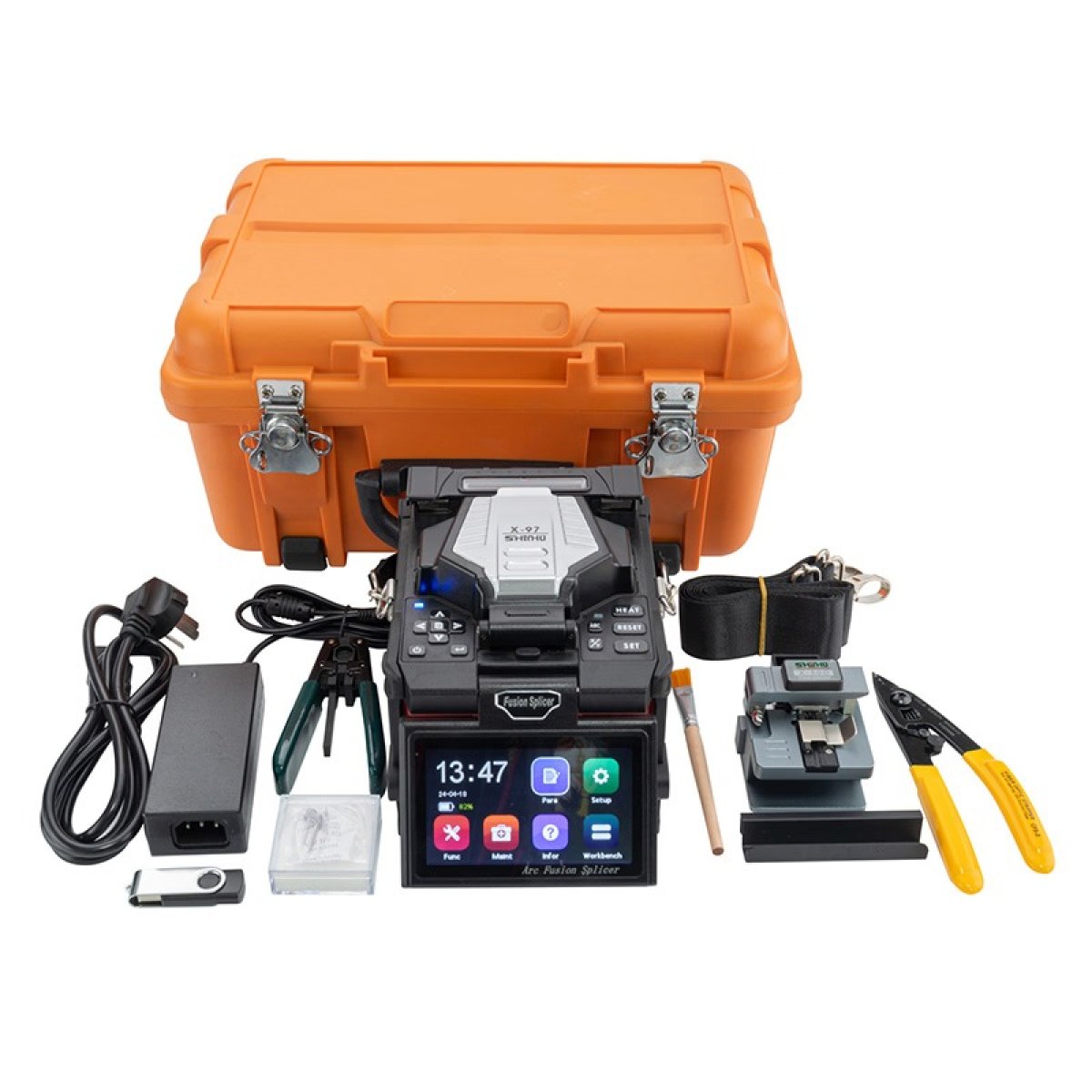
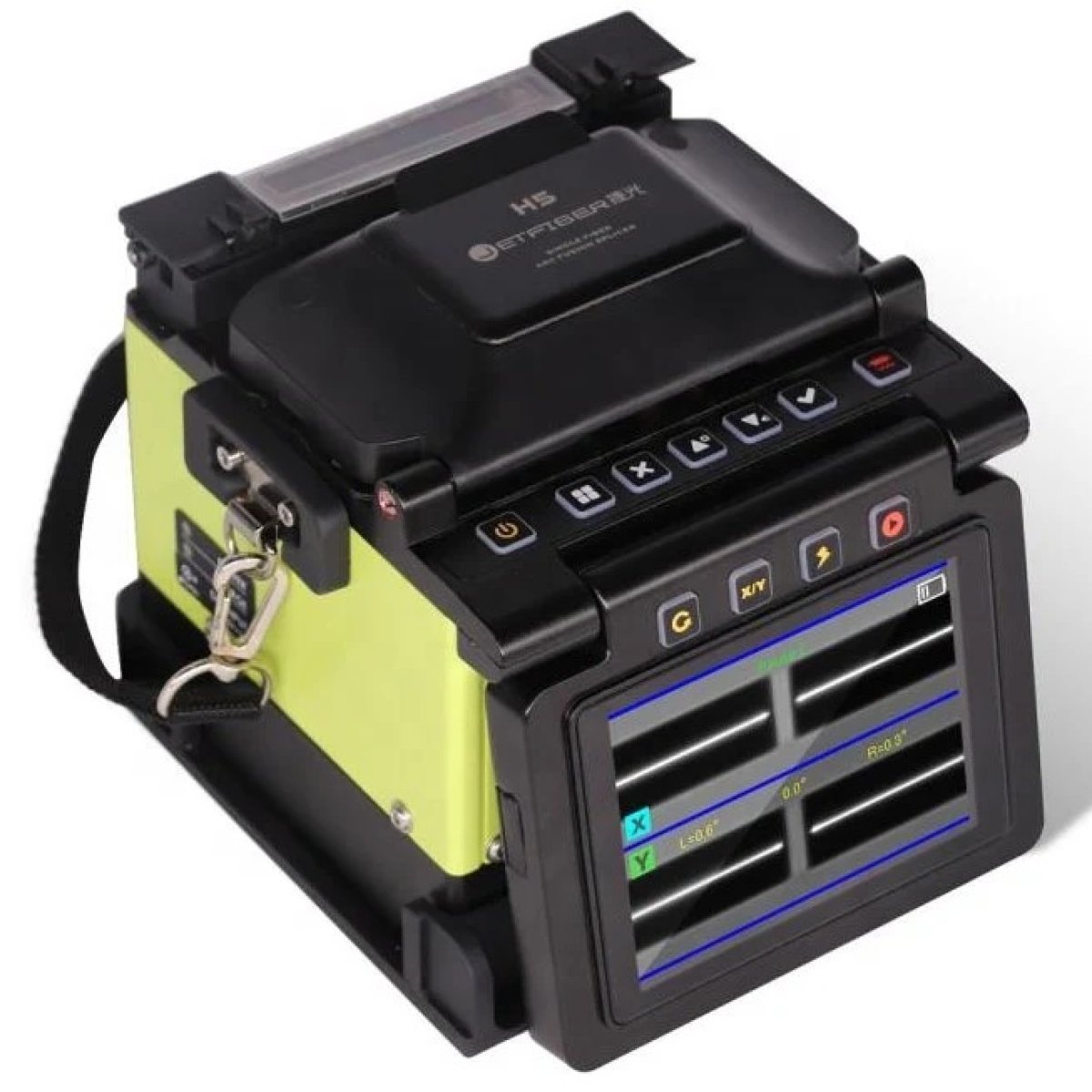
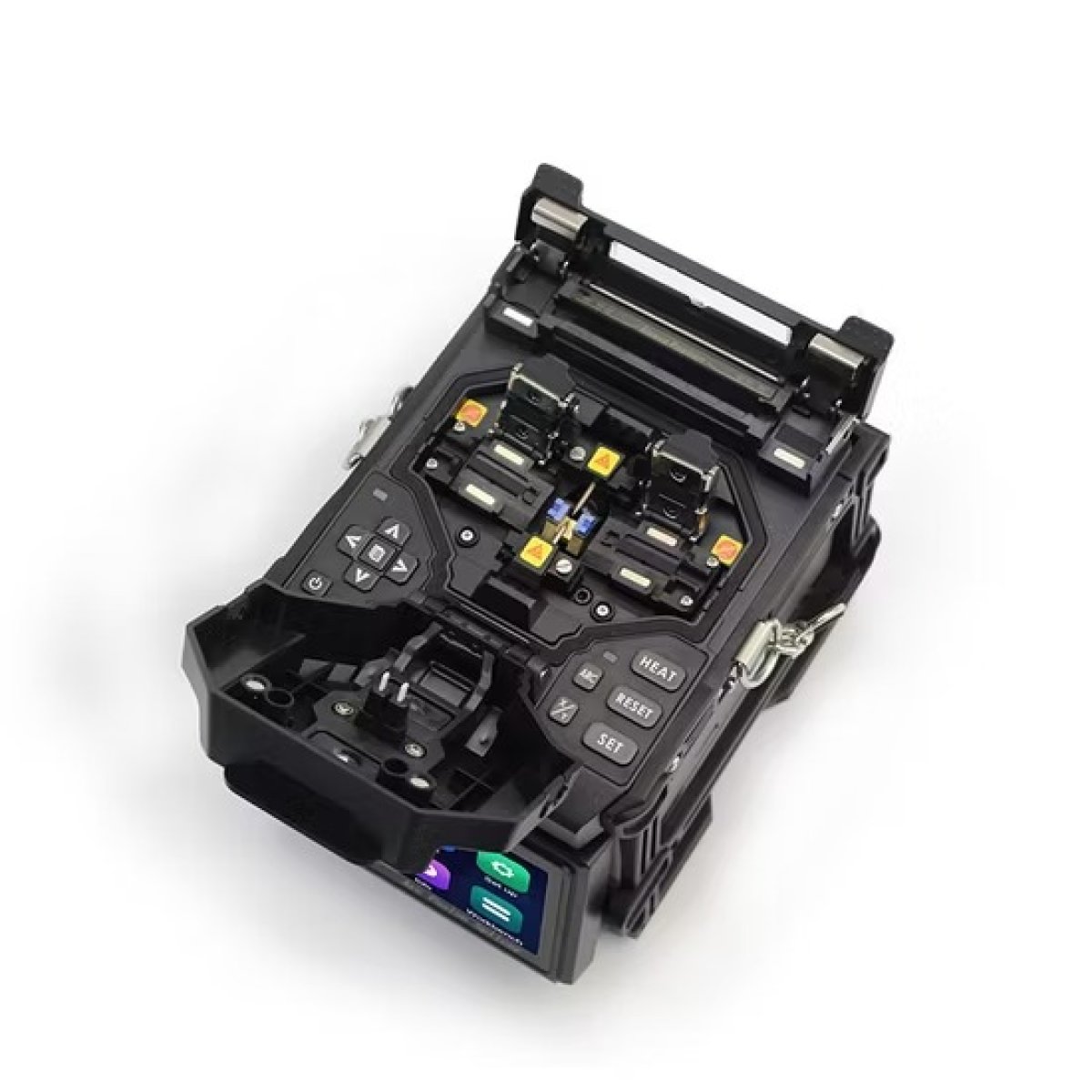
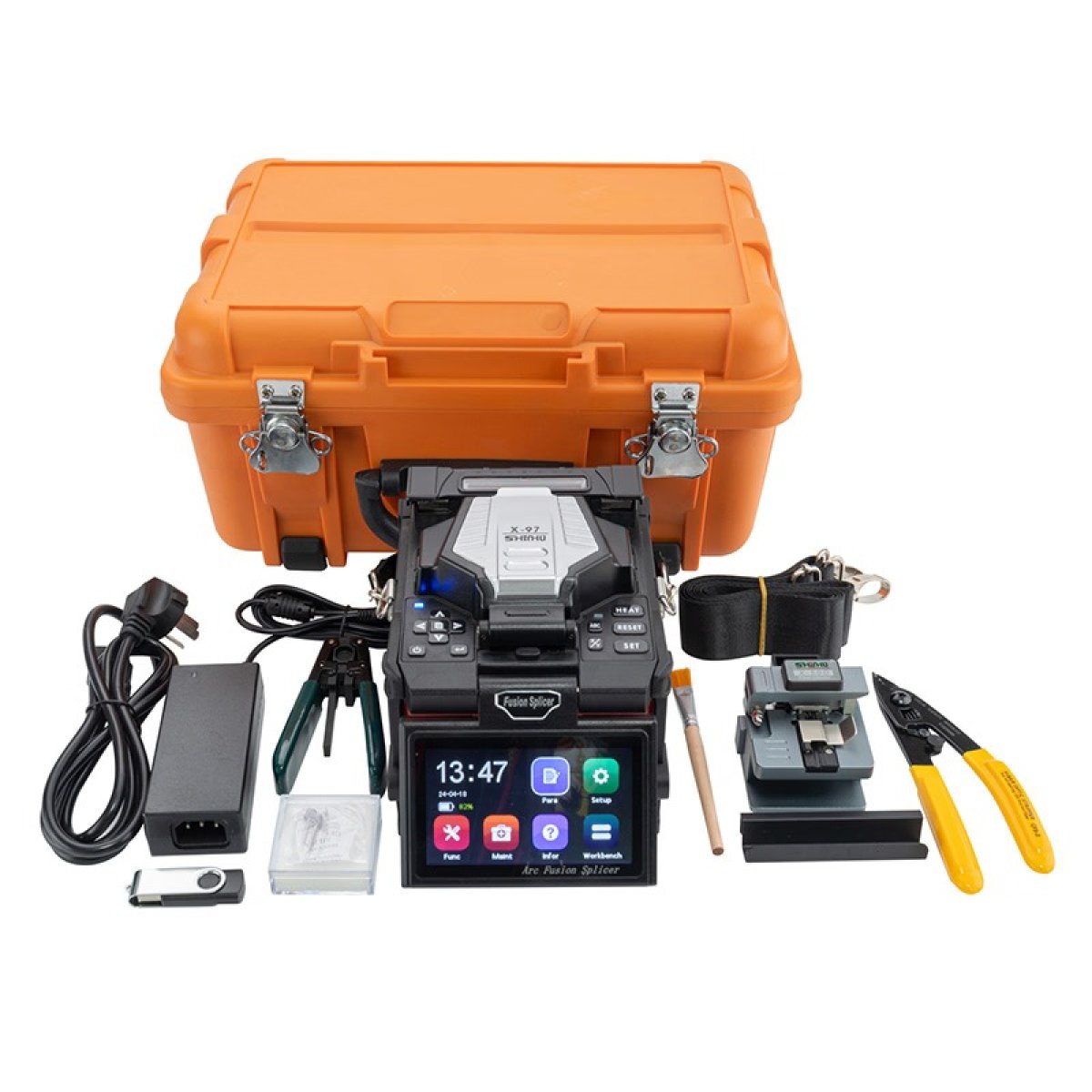
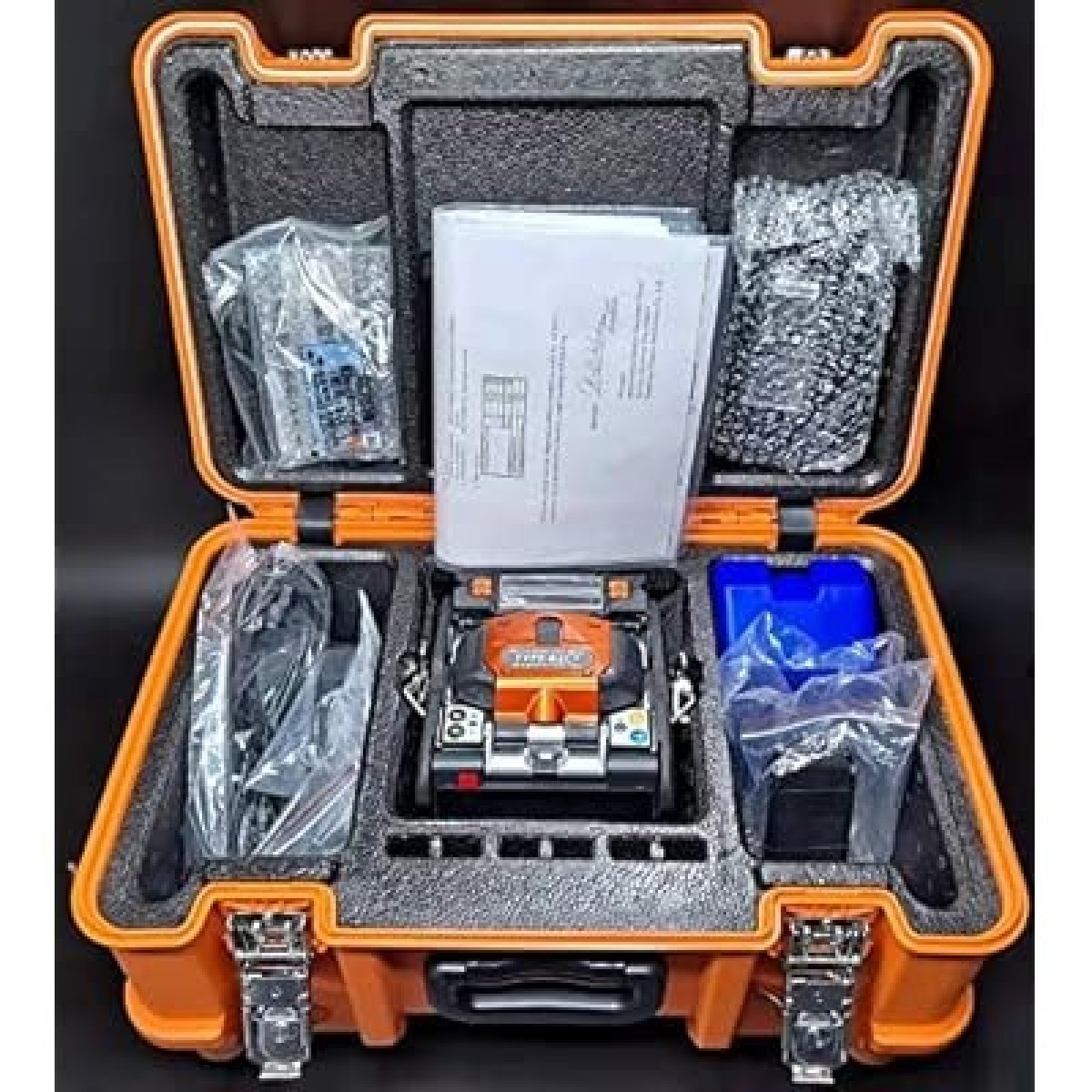
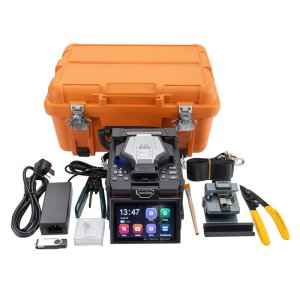
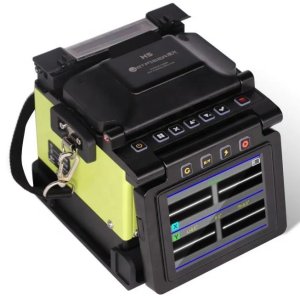
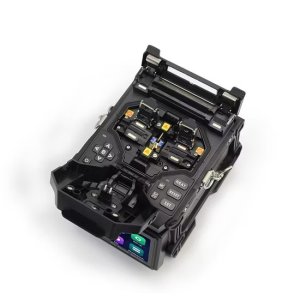
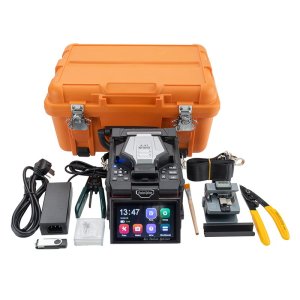
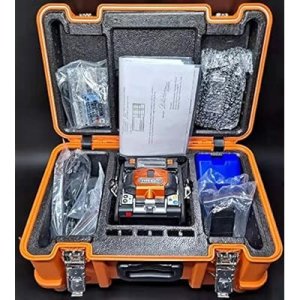
A fiber fusion machine is a specialized tool that uses localized heat to weld two glass fibers end-to-end. The process, known as fusion splicing, creates a seamless connection that allows light signals to pass through with minimal loss and virtually no reflection, making it the most reliable method for fiber optic networking
Long Description
A fusion splicer is an automated instrument essential for building and maintaining telecommunications infrastructure, data centers, and Fiber-to-the-Home (FTTH) networks. It is designed to overcome the fragility of glass fibers by creating a joint that is nearly as strong as the original intact fiber.
Key Processes & Technology:
- Precision Alignment: The machine uses high-resolution cameras and microscopic motors to align the fiber ends. High-end Core Alignment models (like the Fujikura 90S+) align the actual light-carrying cores, while Clad Alignment models align the outer glass cladding.
- Arc Fusion: It generates a controlled electric arc between two electrodes to melt the glass. Before the final melt, the machine often performs a "prefuse" spark to burn off microscopic dust or moisture.
- Loss Estimation: After the splice, the machine analyzes the joint and provides an estimated splice loss (typically as low as 0.01dB to 0.02dB for single-mode fiber) to ensure the connection meets performance standards.
- Protection & Heating: Because the bare glass is fragile once the protective coating is removed, the machine includes an integrated oven. After splicing, a heat-shrink protective sleeve is placed over the joint and "baked" to provide mechanical strength