
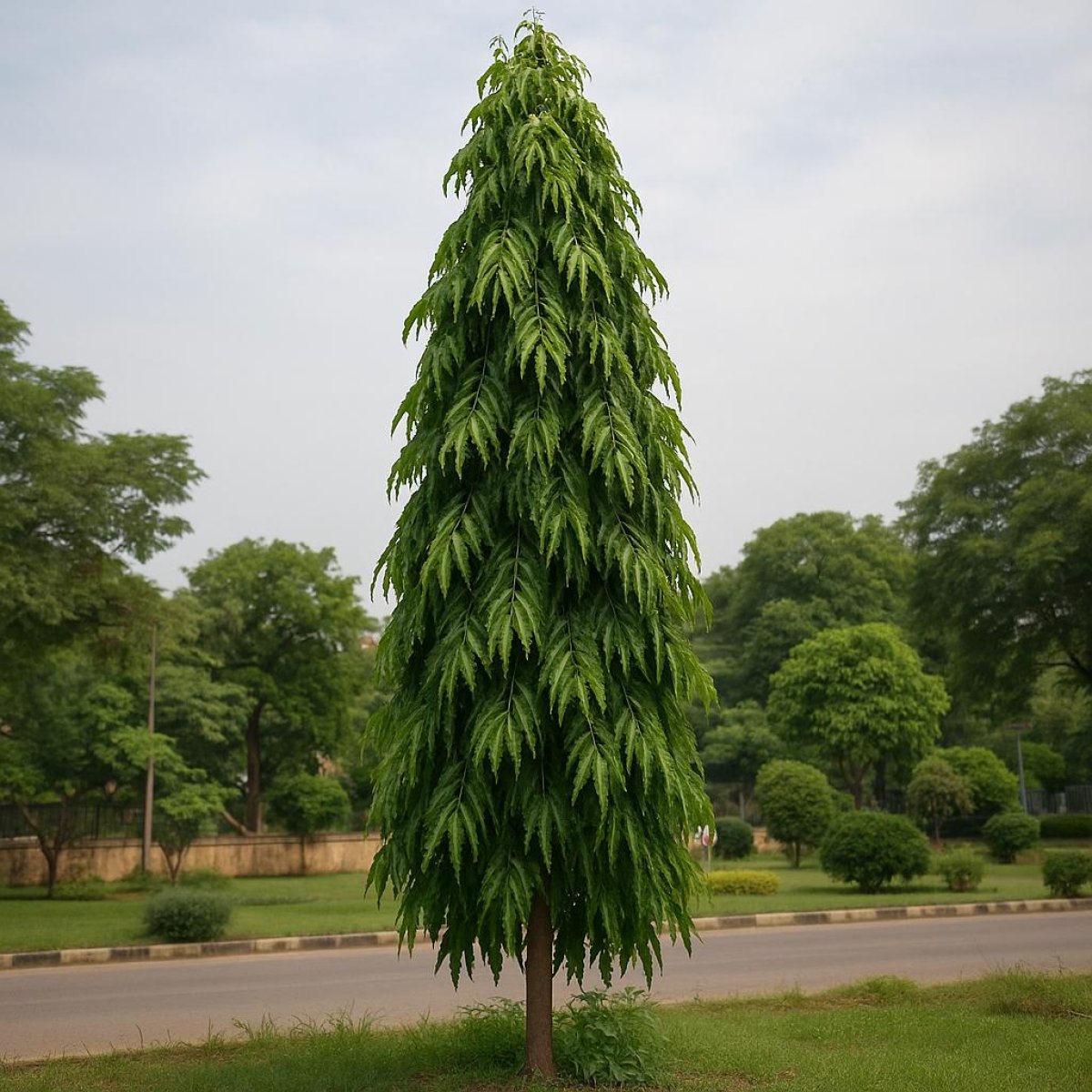
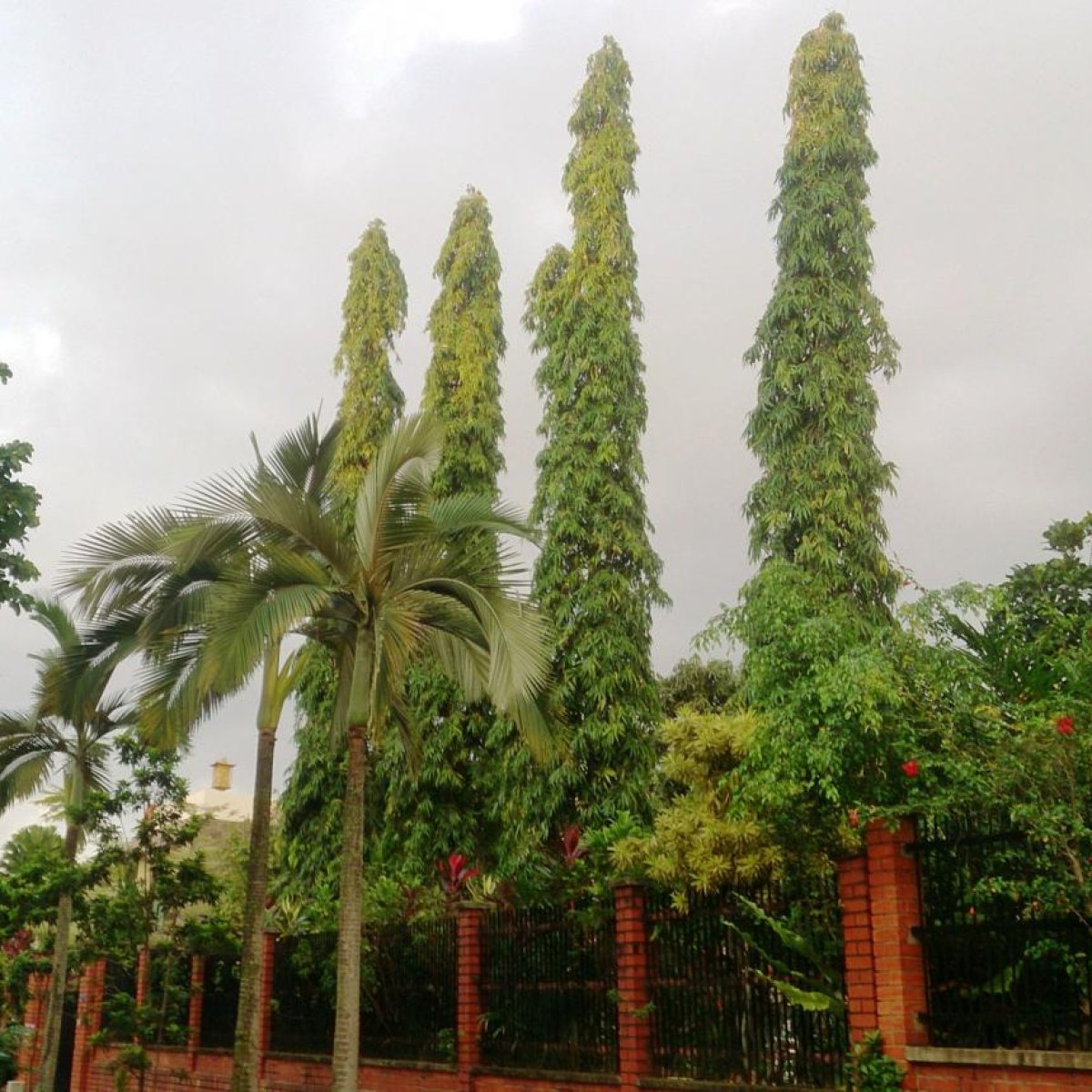
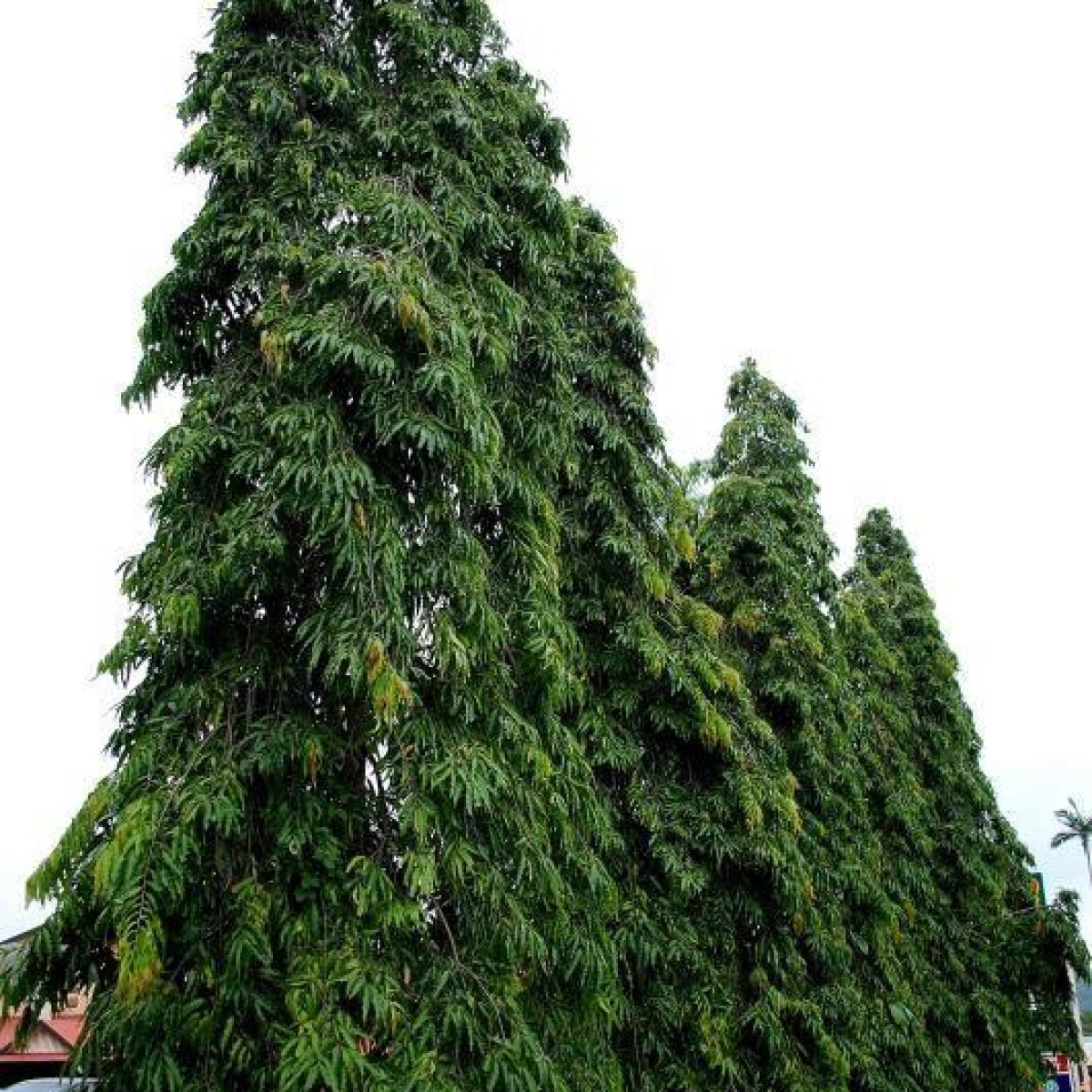
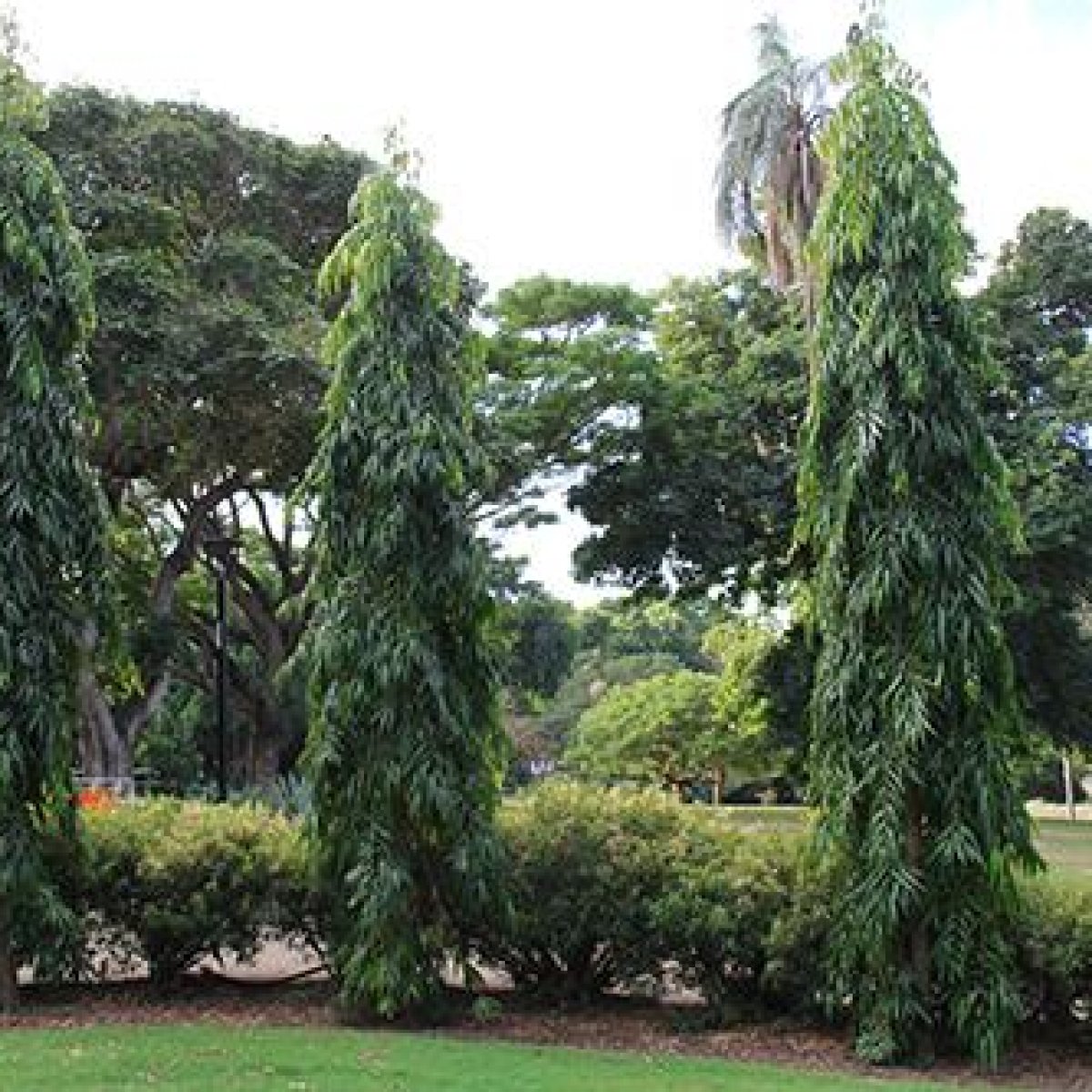
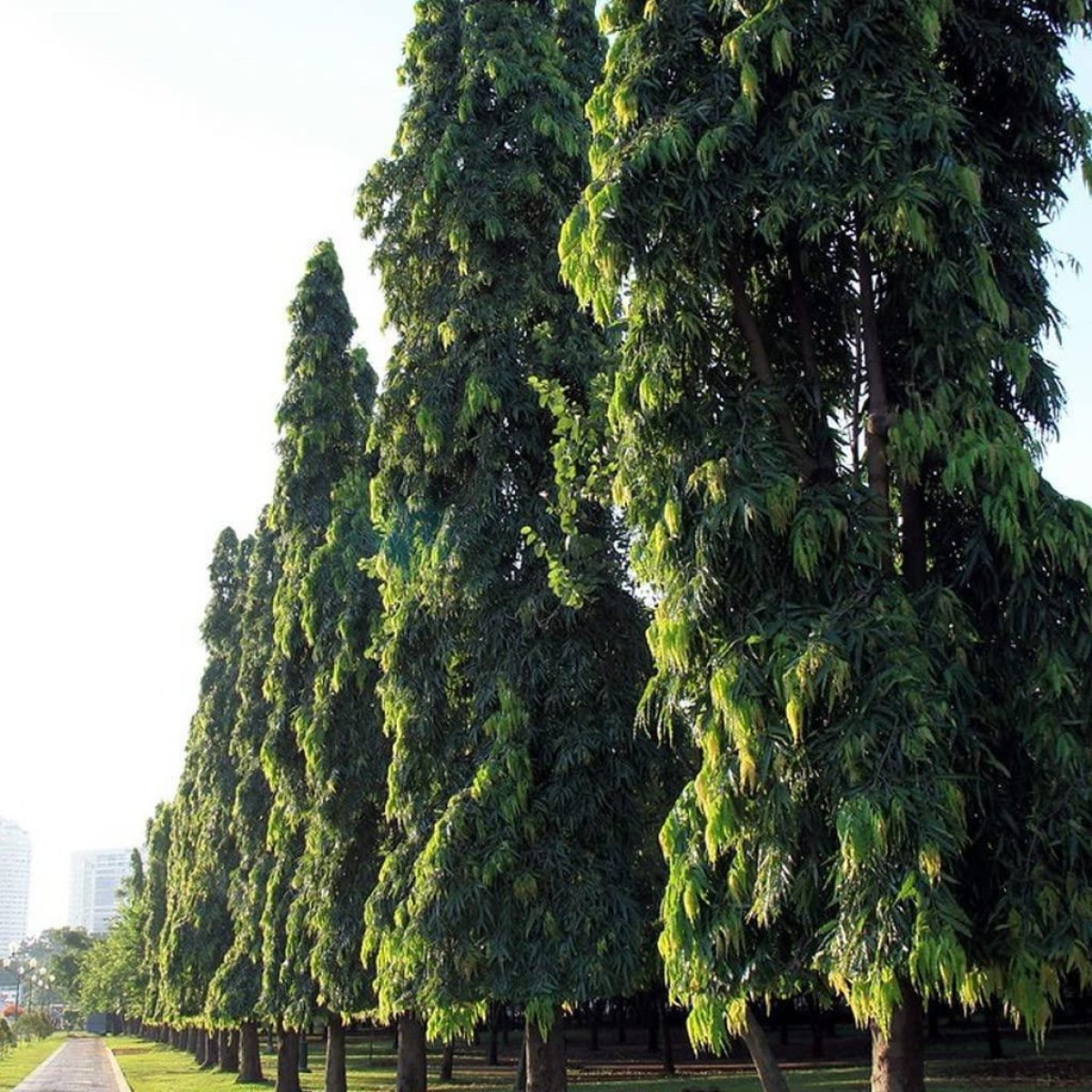
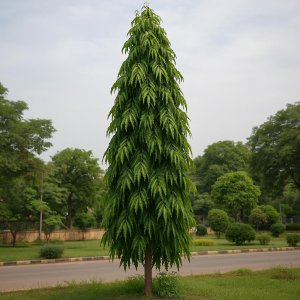
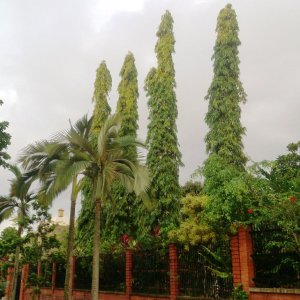
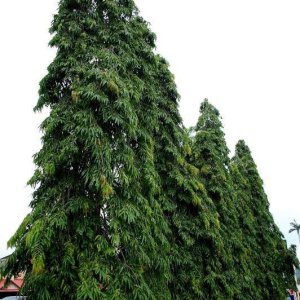
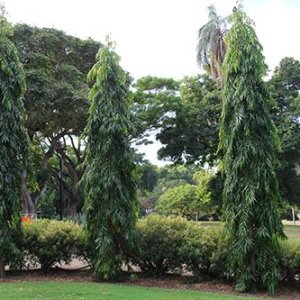
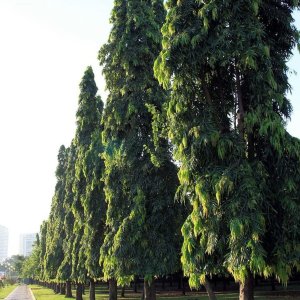
The Indian Mast Tree is a tall, evergreen ornamental tree known for its slender, columnar shape and graceful, drooping foliage. It is widely used for roadside planting, office complexes, parks, schools, and residential landscapes due to its elegant appearance and low maintenance requirements.
The Indian Mast Tree (Polyalthia longifolia), commonly known as the False Ashoka Tree, is a fast-growing evergreen tree native to the Indian subcontinent. Its narrow, upright form and cascading green leaves make it one of the most popular choices for landscaping where space is limited.
The tree typically grows 10–20 meters (33–66 feet) tall while maintaining a slim width of 2–4 meters (6–13 feet). Its dense foliage acts as a natural screen, helping to reduce noise, block dust, and provide privacy. The Indian Mast Tree thrives in full sun to partial shade and adapts well to a wide range of soil types, making it ideal for tropical and subtropical climates, including Bangladesh.
Because of its vertical growth habit, the Indian Mast Tree is frequently planted along boundaries, driveways, roadsides, and around commercial buildings. It requires minimal pruning and is highly resistant to urban pollution, making it an excellent choice for city landscapes.
Key Features
Common Applications