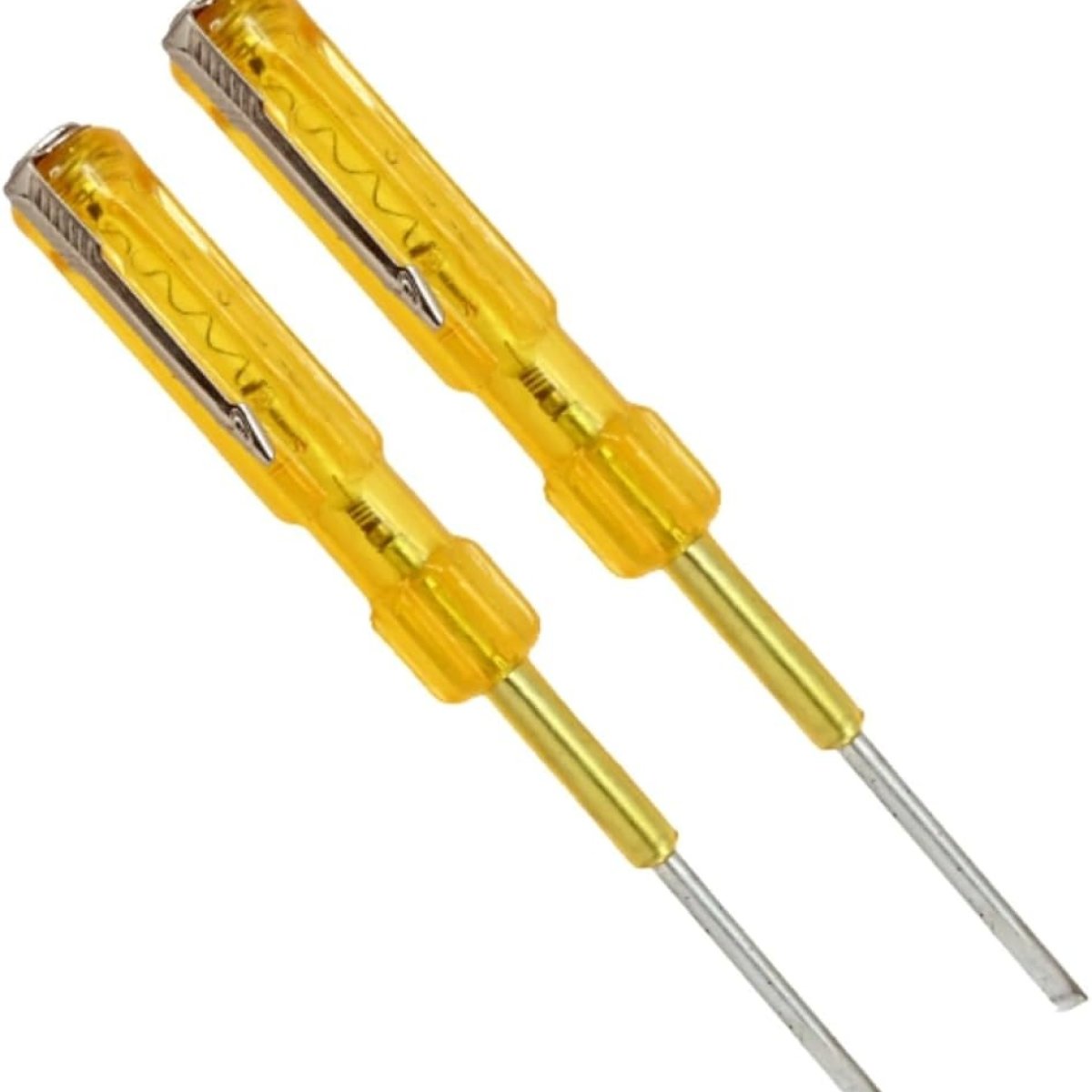
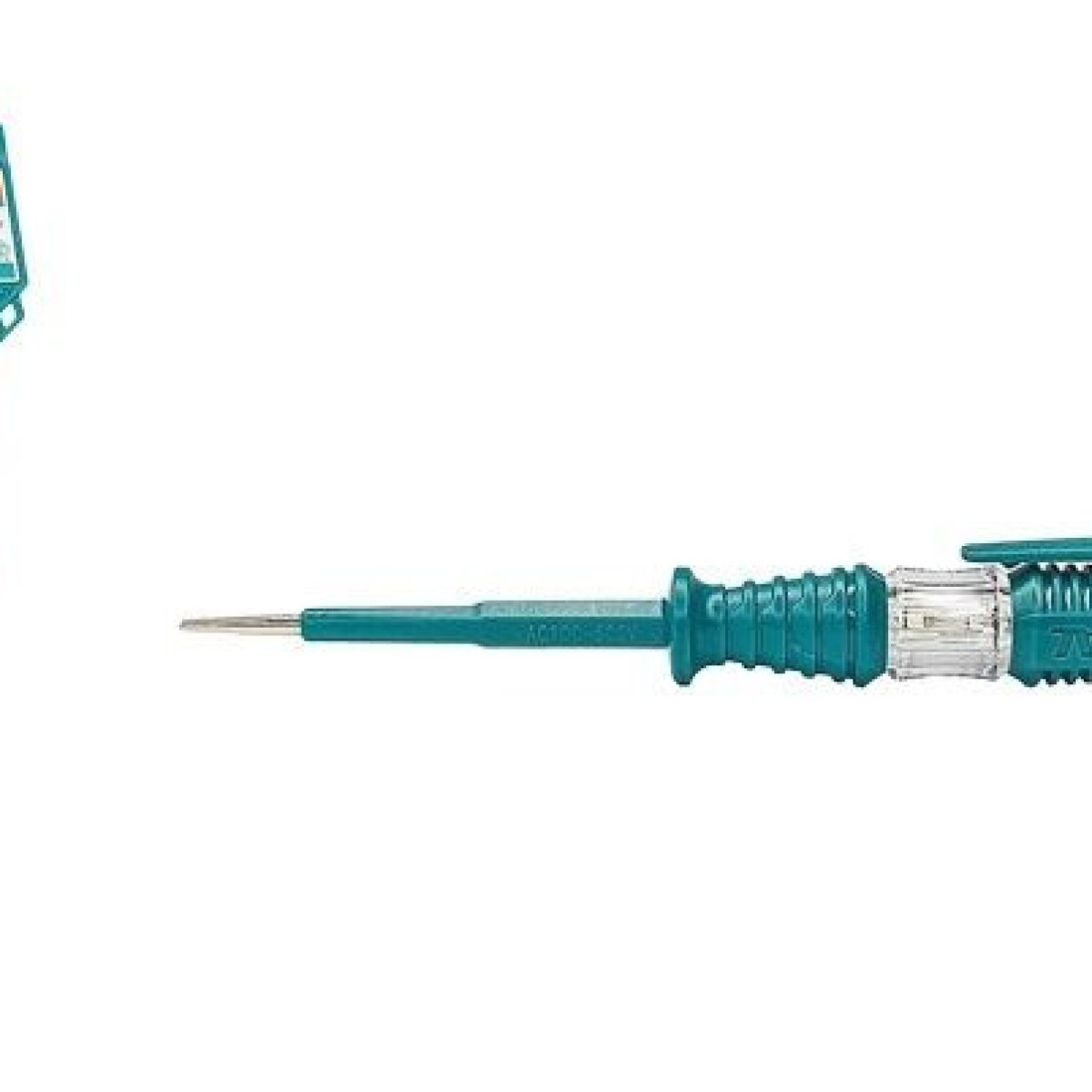
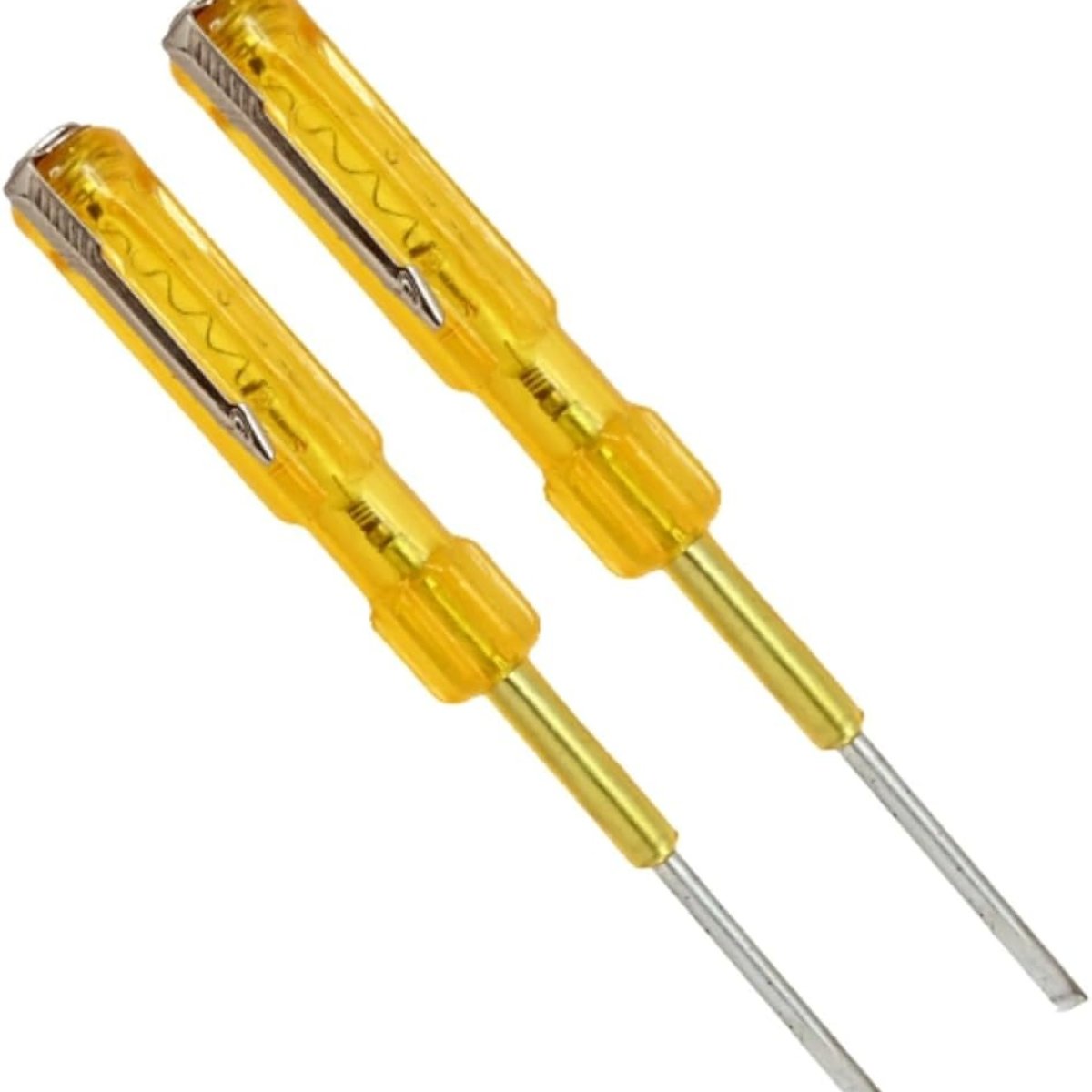
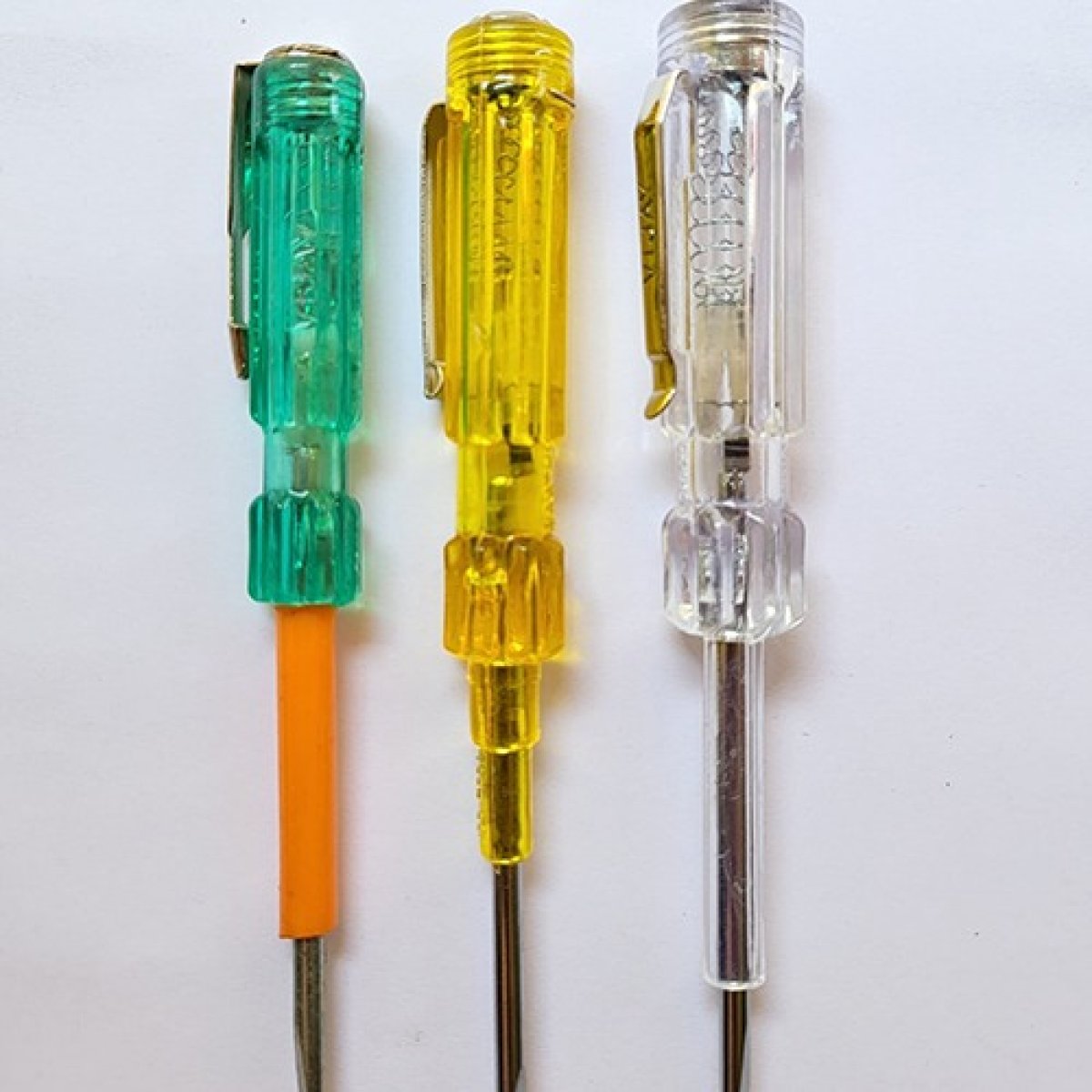
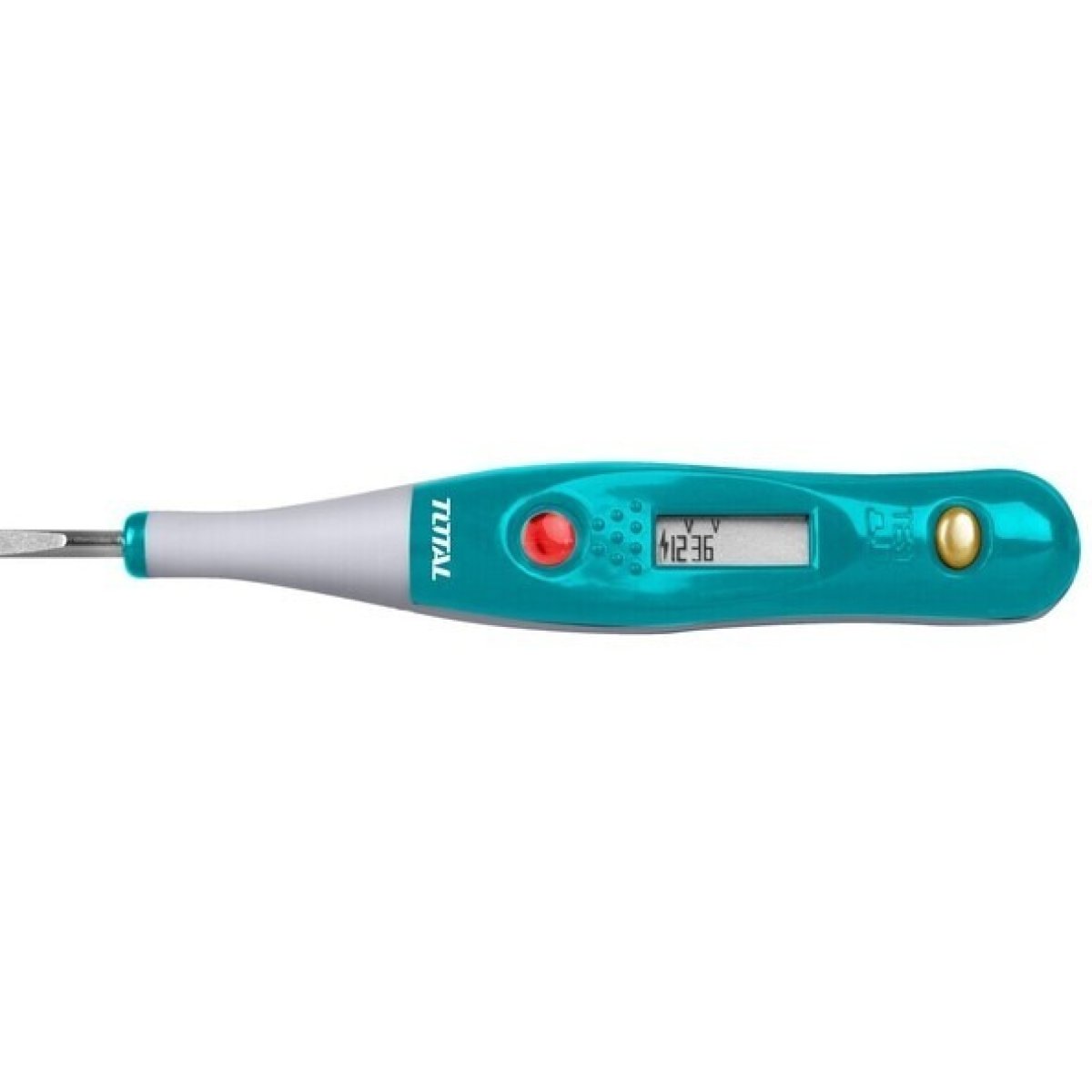
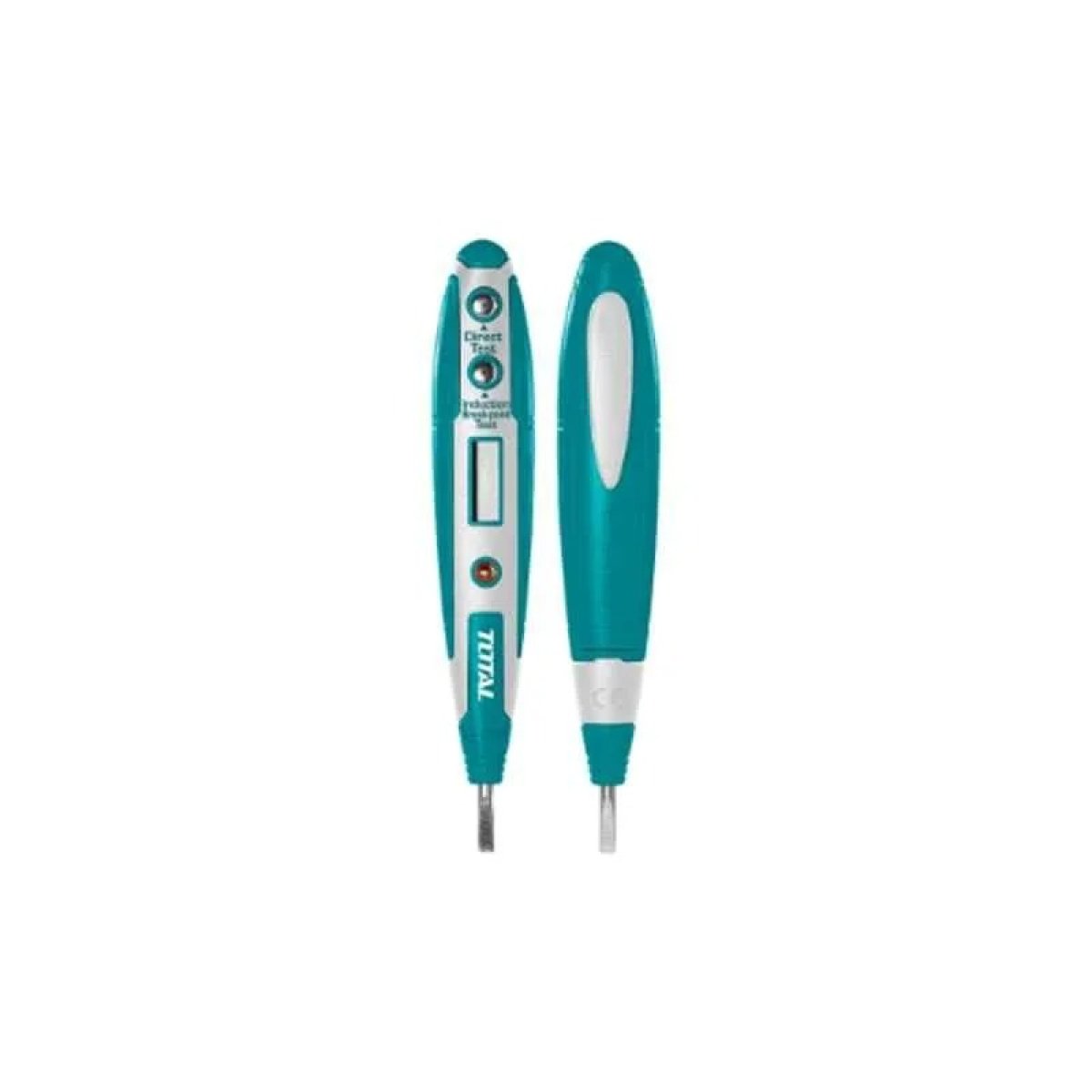
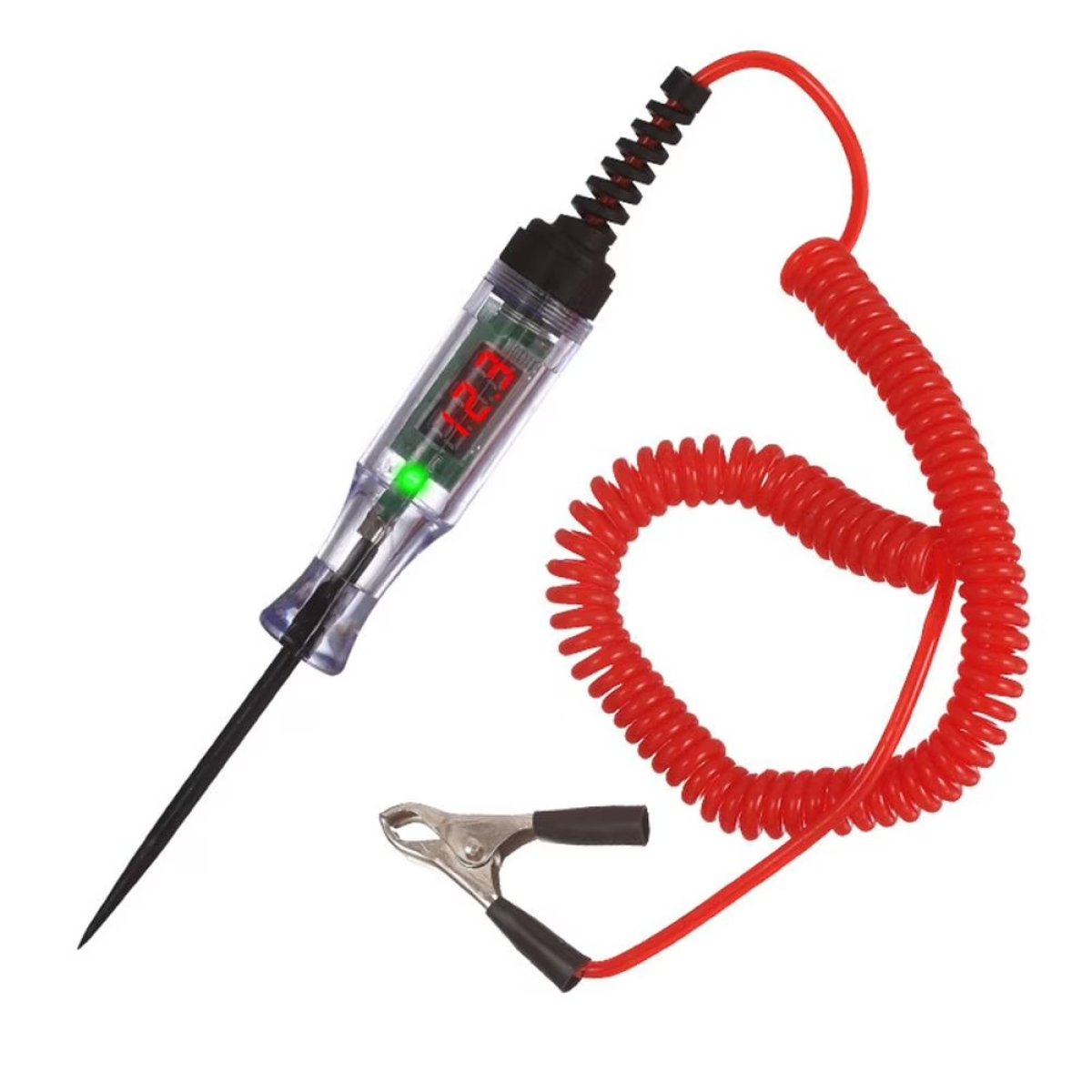
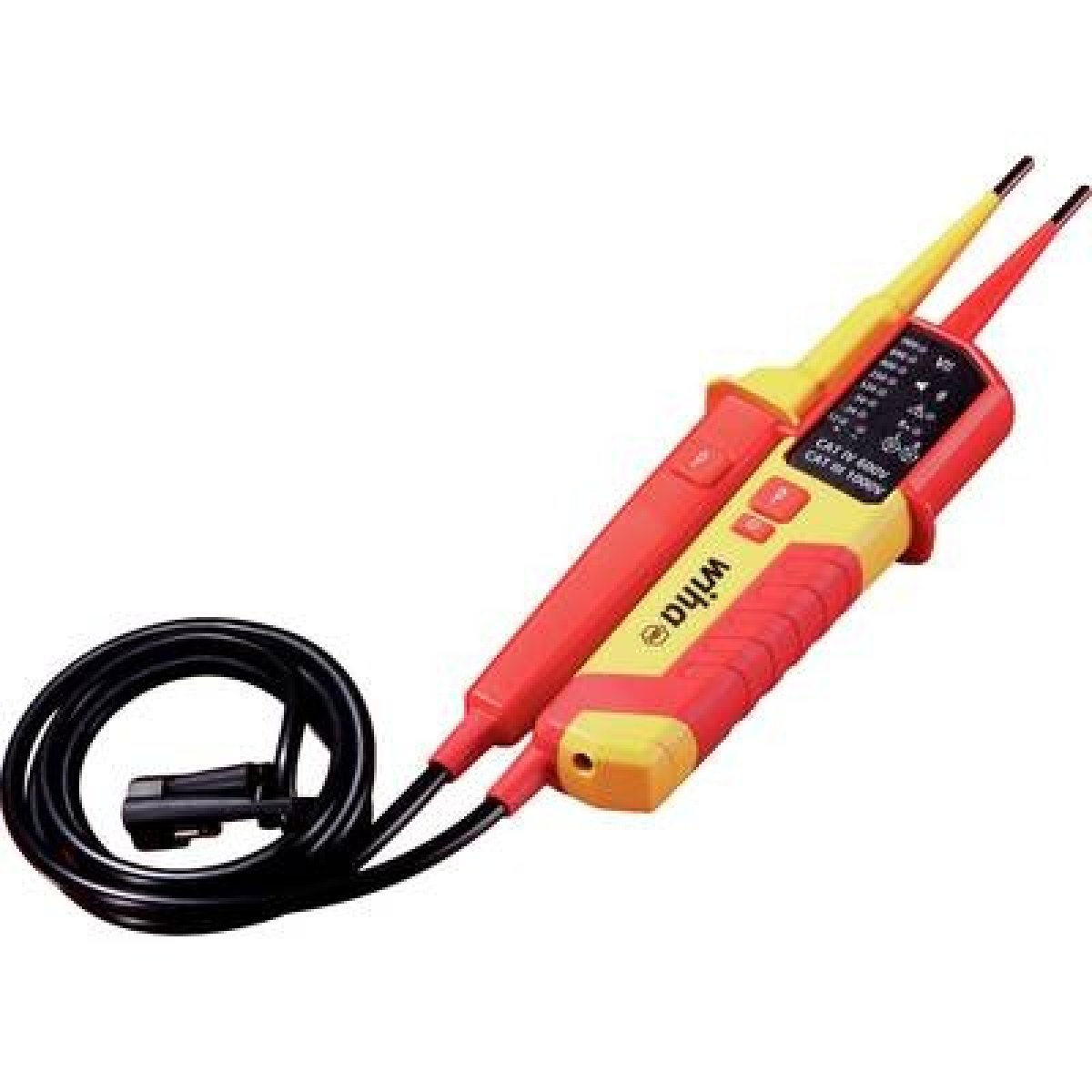
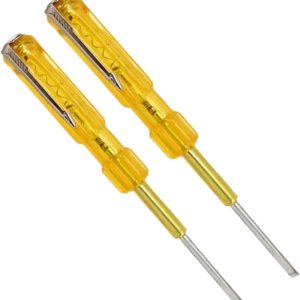
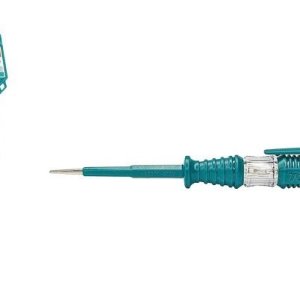
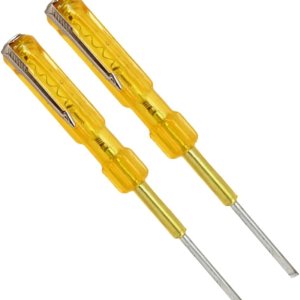
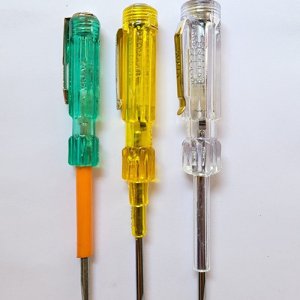
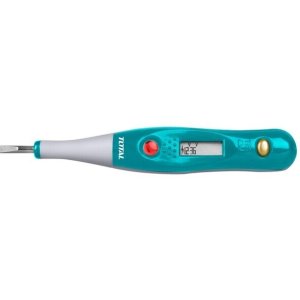
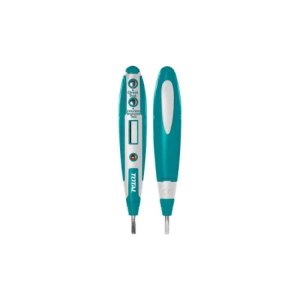
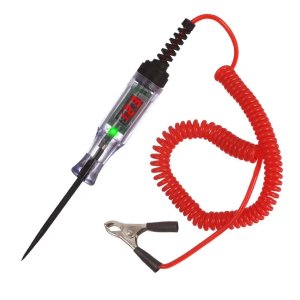
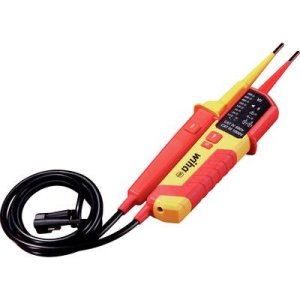
voltage line tester, a common safety instrument used to detect the presence of AC voltage in electrical circuits. It functions as both a simple flat-head screwdriver and a diagnostic tool.
The tester works by creating a high-resistance electrical circuit through the tool and the person holding it.
- Contact: When the metal tip touches a live electrical point (like a socket terminal or a bare wire), current enters the blade.
- Safety Resistor: Inside the transparent handle, the current passes through a high-value resistor (typically 1 Mega Ohm). This resistor is critical because it drops the current to a level that is safe for a human to touch (less than 1 milliampere).
- Neon Glow: After the resistor, the current reaches a small neon bulb. For the bulb to light up, the circuit must be completed.
- The Human "Ground": You complete the circuit by placing your finger on the metal cap at the top of the handle. Your body acts as a path to the ground, allowing a tiny, imperceptible amount of current to flow, which causes the neon bulb to glow and indicate the line is "live."