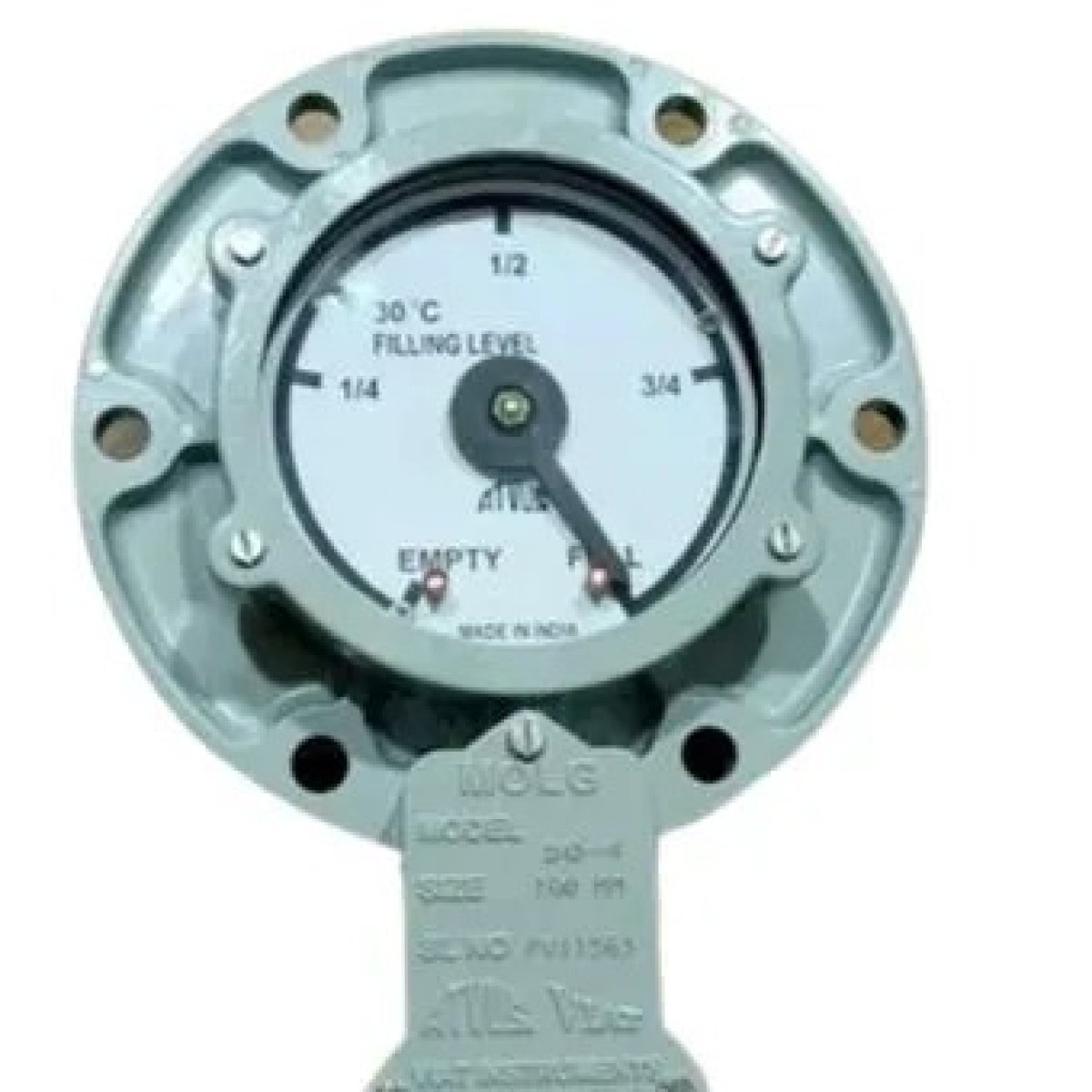
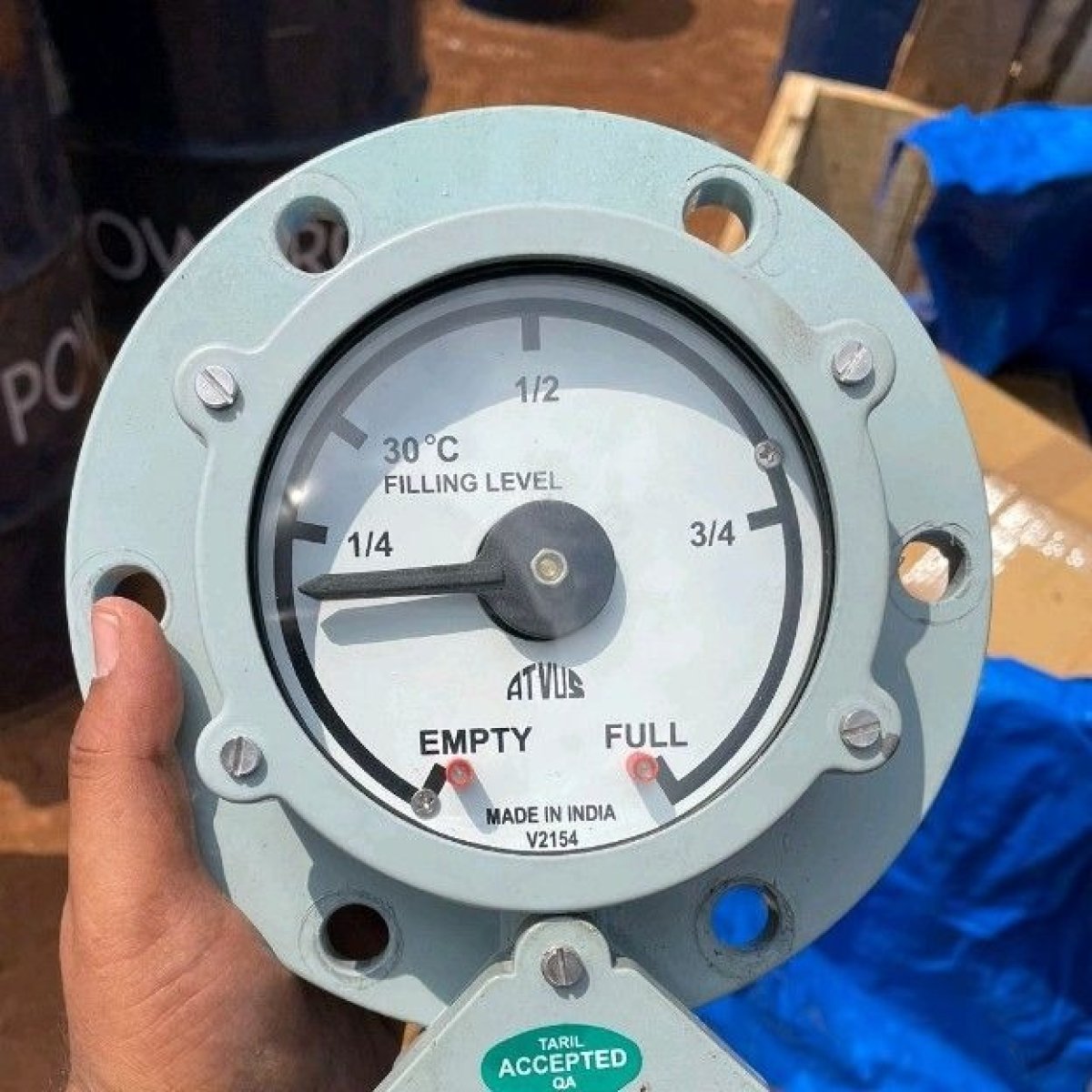
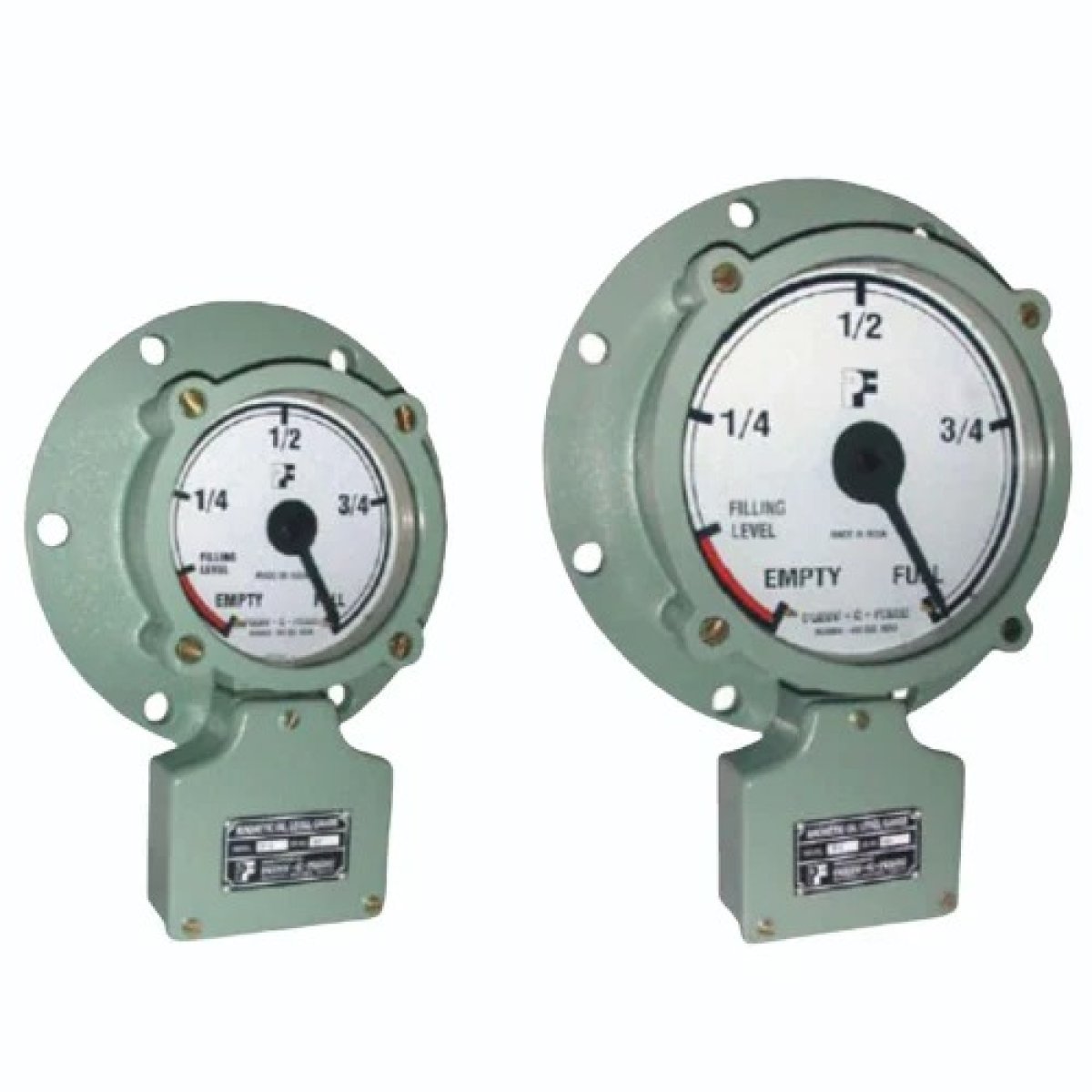
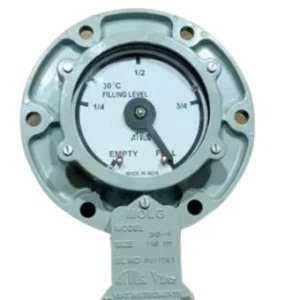
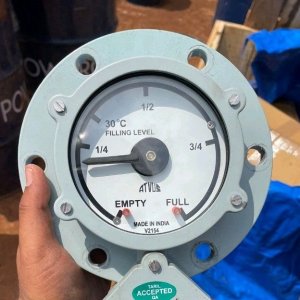
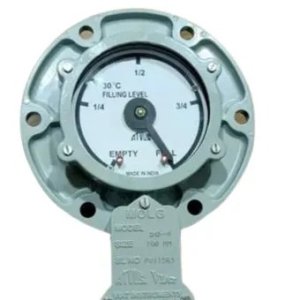
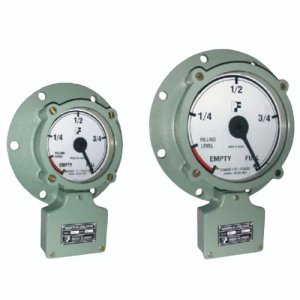
A MOLI is a leak-proof instrument that uses magnetic coupling to translate the movement of an internal float into a visual level reading on an external dial. By using magnets separated by a solid metallic wall, the device ensures that there is no direct mechanical link between the oil inside the tank and the indicator outside, preventing oil leaks and contamination.
The MOLI is a critical safety component, as maintaining the correct oil level is essential for the transformer's cooling and electrical insulation. [
1,
2]
- Construction & Components:
- Float: A lightweight hollow ball or drum made of materials like brass or closed-cell foam that floats on the oil surface.
- Float Arm & Gears: The float is attached to an arm connected to a bevel gear arrangement inside the conservator.
- Magnetic Coupling: The internal gear drives a driving magnet. On the outside of the tank wall, a follower (driven) magnet is positioned to move in synchronization with the internal magnet's magnetic field.
- Dial & Pointer: The external magnet is linked to a pointer that indicates the oil level (e.g., 1/4, 1/2, 3/4, or Full) on a graduated dial.
- Working Principle: As the transformer oil expands or contracts due to temperature changes, the float rises or falls. This mechanical movement rotates the internal magnet, which then pulls the external magnet and pointer to the corresponding position on the dial without any physical penetration of the tank.
- Protection Features:
- Alarm & Trip: Most indicators include integrated mercury or microswitches. If the oil level drops to a "Low Reservoir Margin" (LRM), the switch closes to trigger a substation alarm. If it continues to drop, it can send a signal to trip the transformer to prevent catastrophic insulation failure.
- Temperature Calibration: Many dials are marked with the expected oil level at specific ambient temperatures (e.g., 30°C or 35°C) to help maintenance personnel verify if the level is normal or indicates a leak.