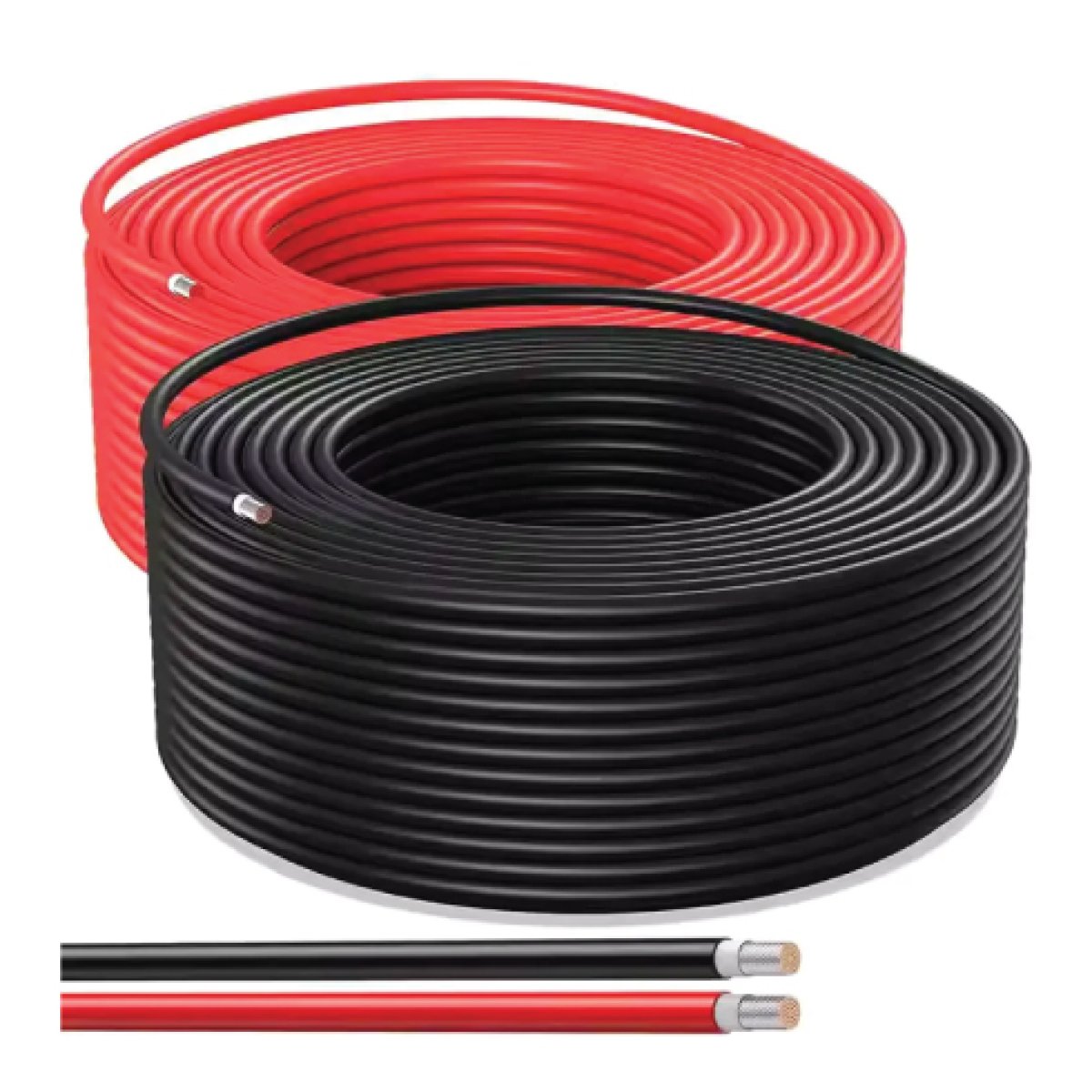
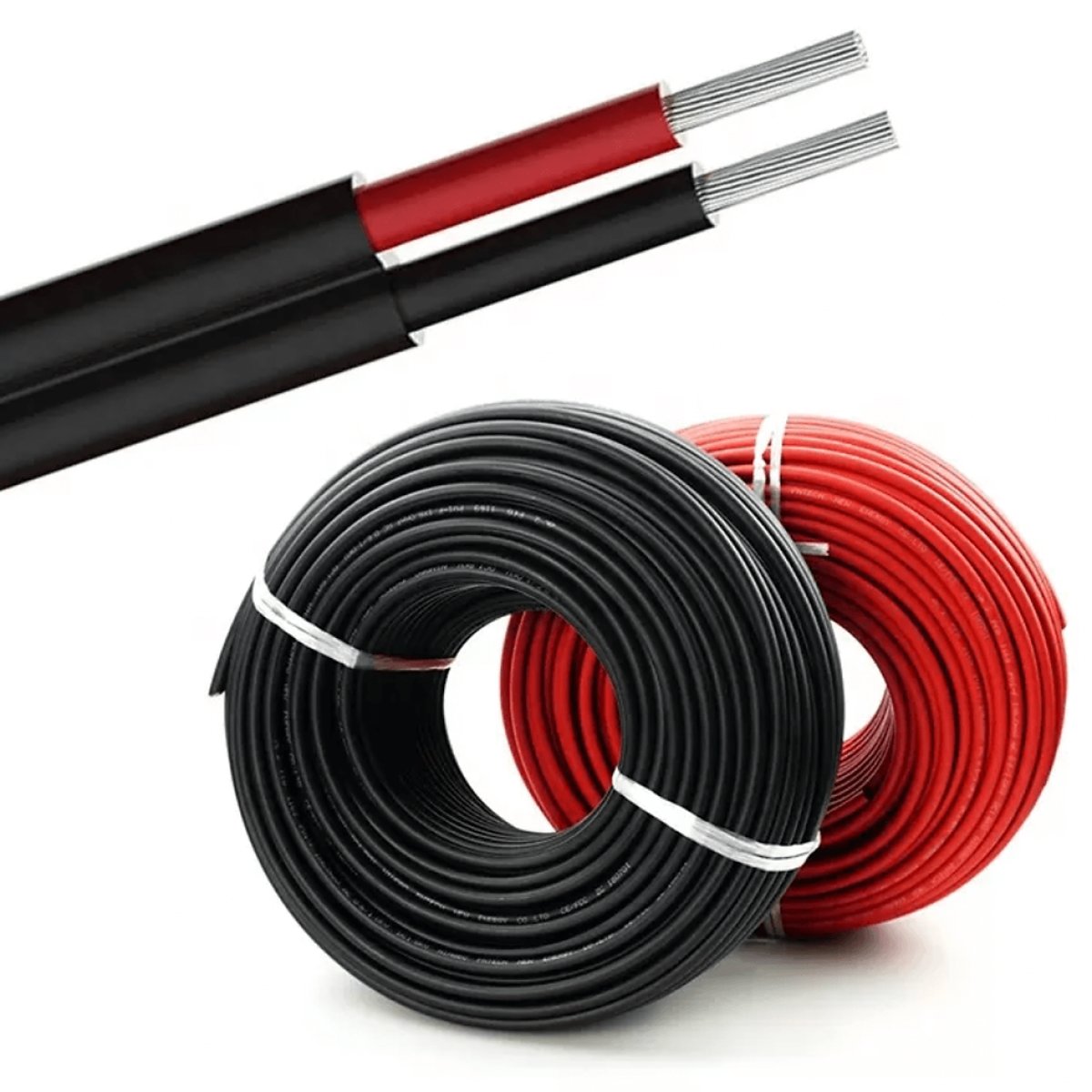
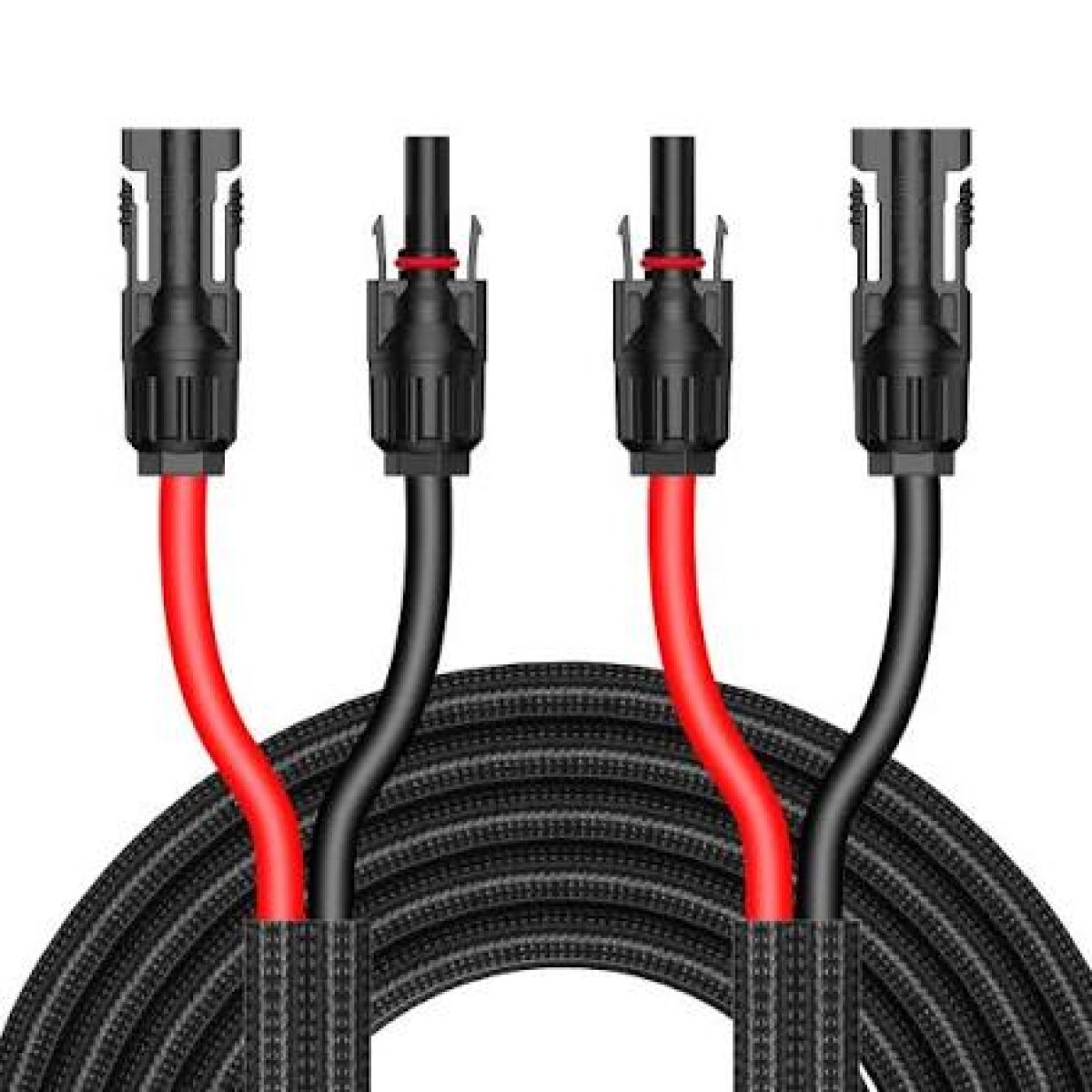
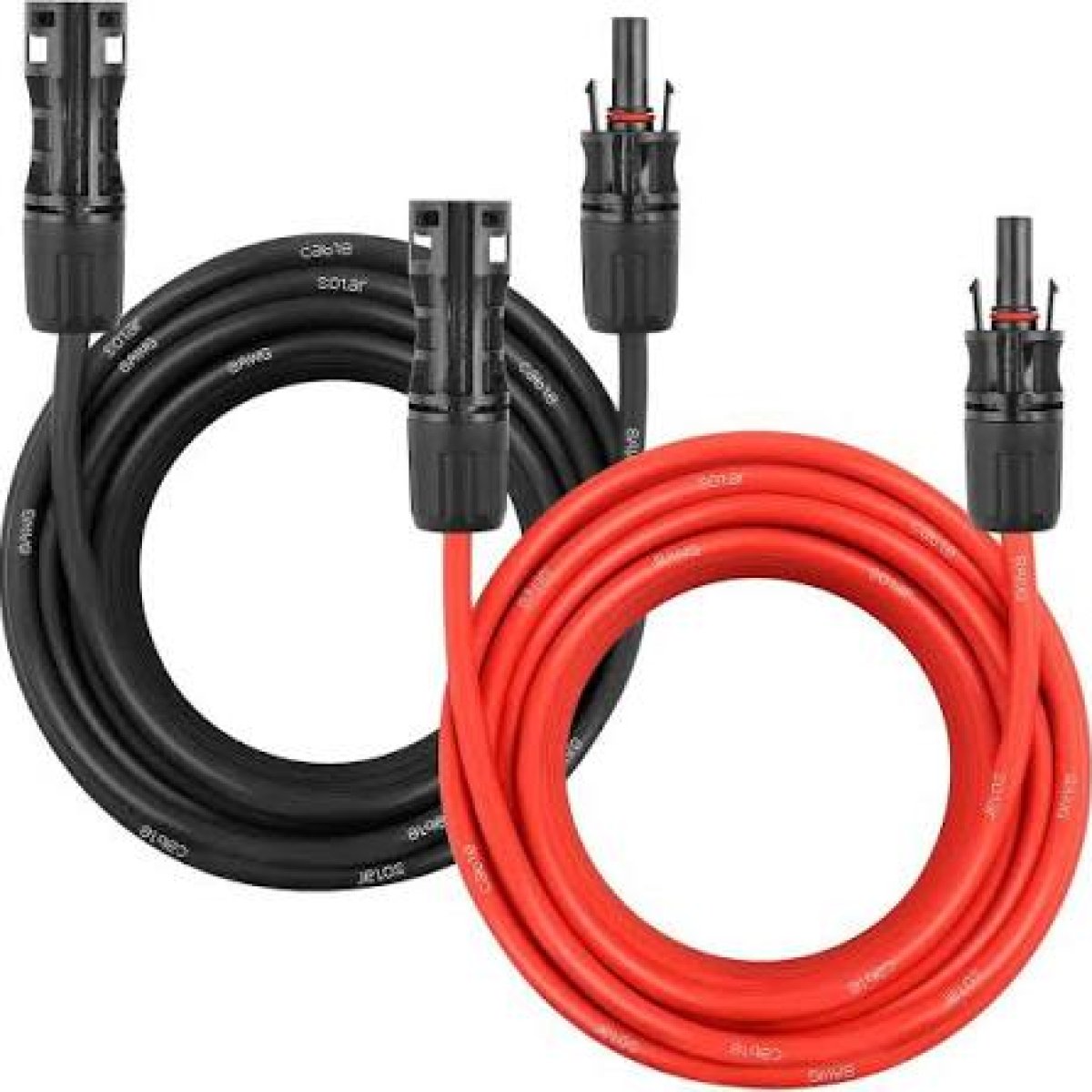
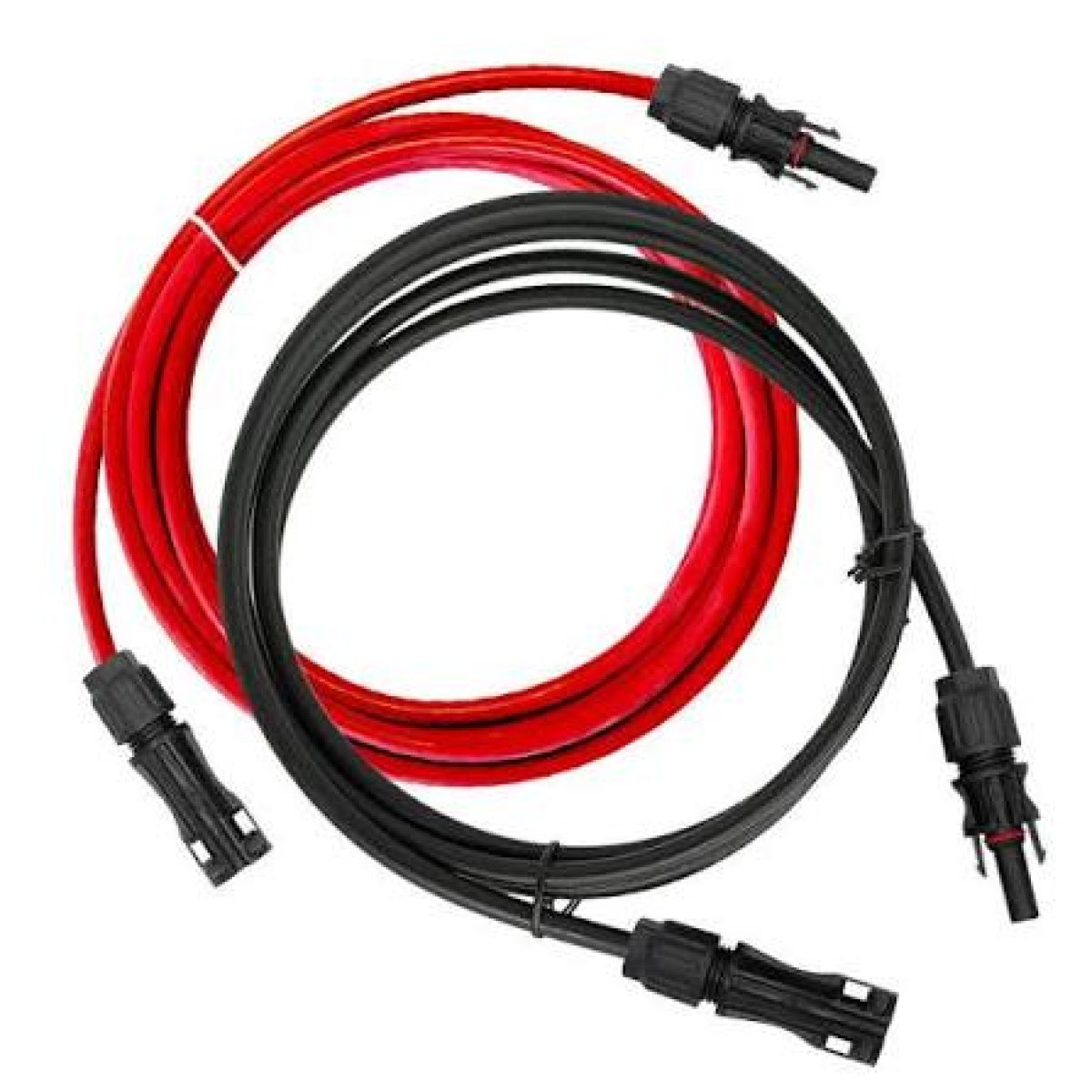
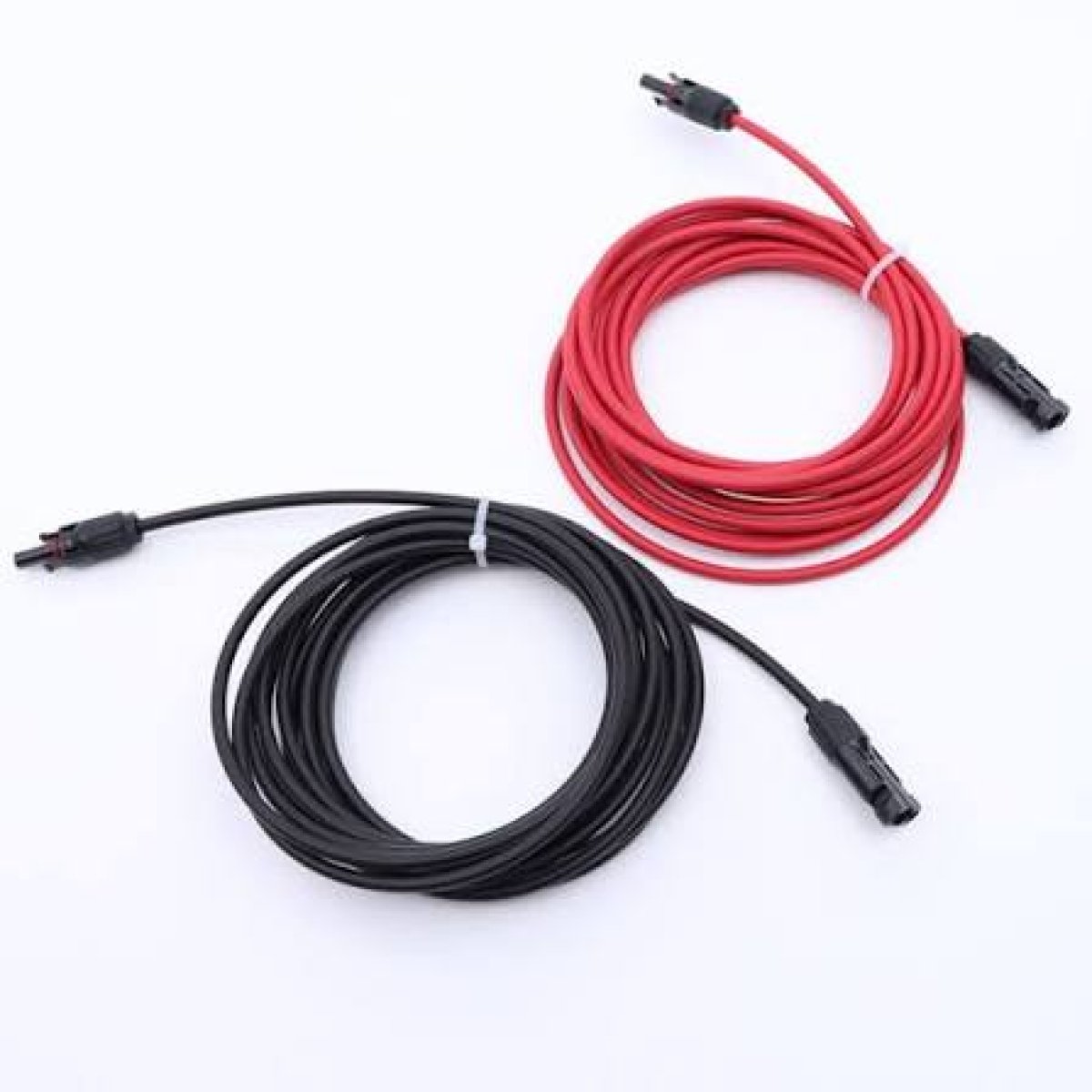
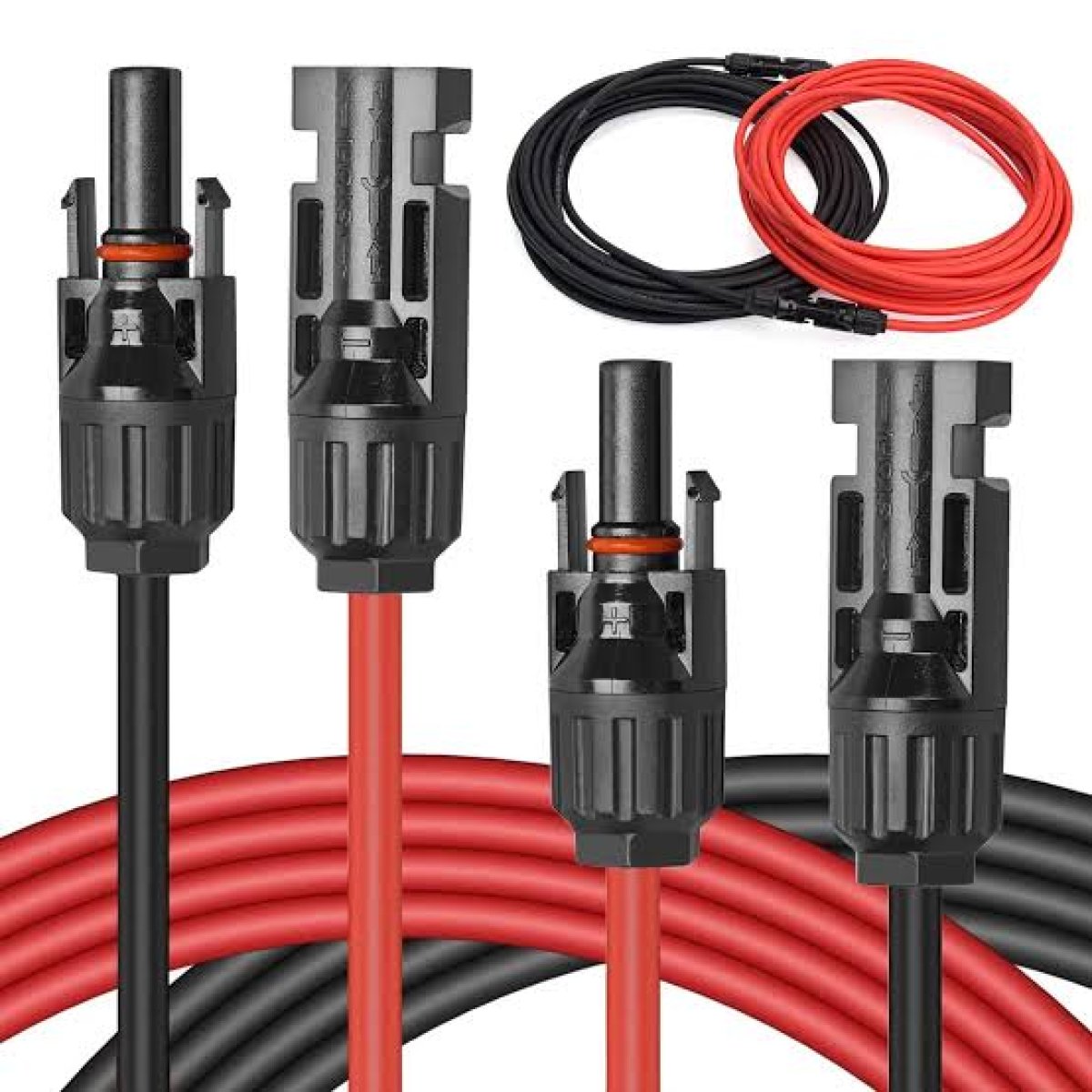
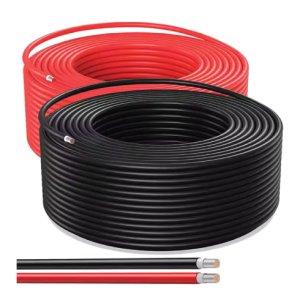
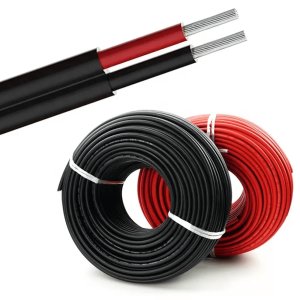
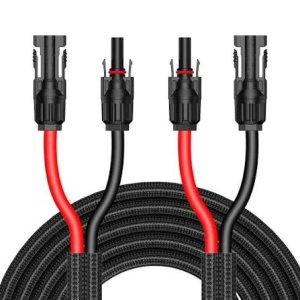
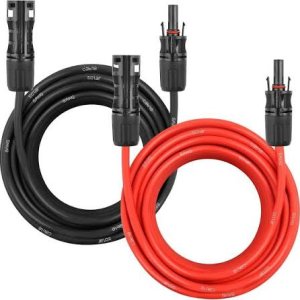
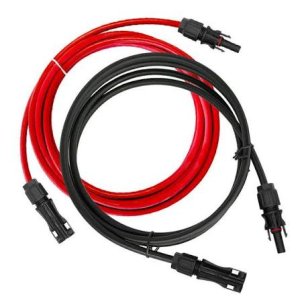
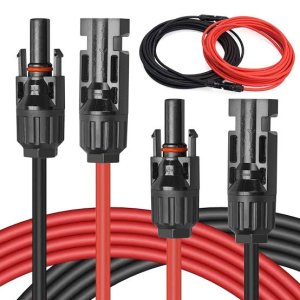
A pair of heavy-duty, UV-resistant, and waterproof (IP67/IP68) solar extension cables made of tinned copper. Designed for outdoor solar power systems, they typically come in 10 AWG or 12 AWG sizes to minimize power loss and withstand extreme weather conditions.
These cables are critical components in both residential and commercial solar installations, engineered to bridge the distance between solar arrays and the rest of the system while maintaining high efficiency. [
1,
2]
- Materials and Construction:
- Conductor: Most high-quality solar cables use tinned copper. The tin coating prevents the copper from oxidizing (turning green) when exposed to air and moisture, ensuring long-term conductivity.
- Insulation & Jacket: They feature advanced double insulation, often made of XLPE (Cross-linked Polyethylene) or XLPO. These materials provide superior resistance to ultraviolet (UV) radiation, moisture, and extreme temperatures.
- Technical Specifications:
- Voltage Rating: Typically rated for 1000V to 1500V DC.
- Temperature Range: Engineered to operate in environments ranging from -40°C to +120°C (-40°F to 248°F).
- Safety Standards: Look for certifications like TÜV, UL 4703, or CE, which ensure the cable is flame-retardant and meets international safety benchmarks.
- Key Functions:
- Efficiency: Using a thicker gauge (like 10 AWG) for longer runs helps minimize voltage drop, ensuring that more of the energy captured by your panels actually reaches your battery or grid.
- Weatherproofing: Designed for permanent outdoor use, they are resistant to ozone, acids, and alkalis, with a typical service life of 25 to 30 years