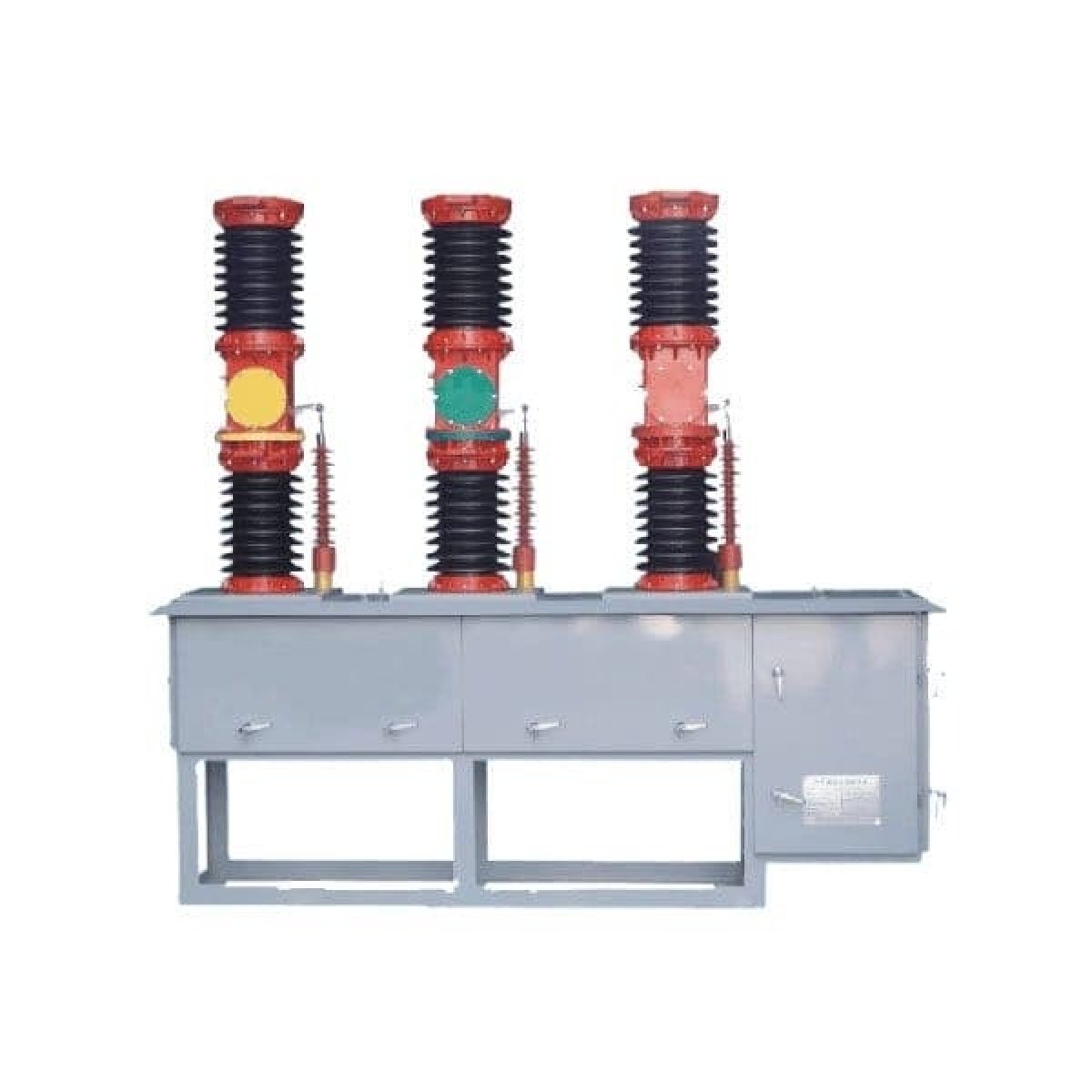
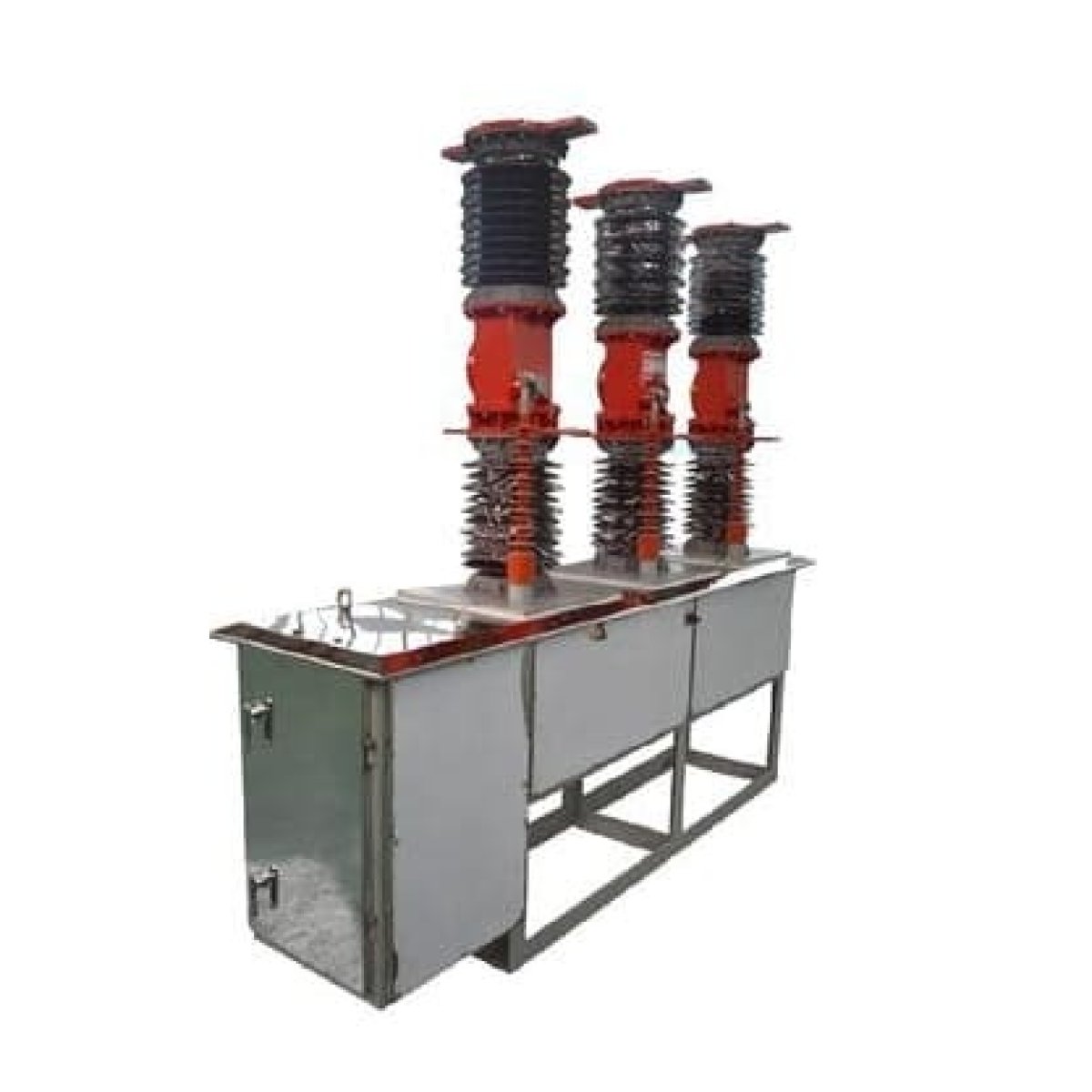
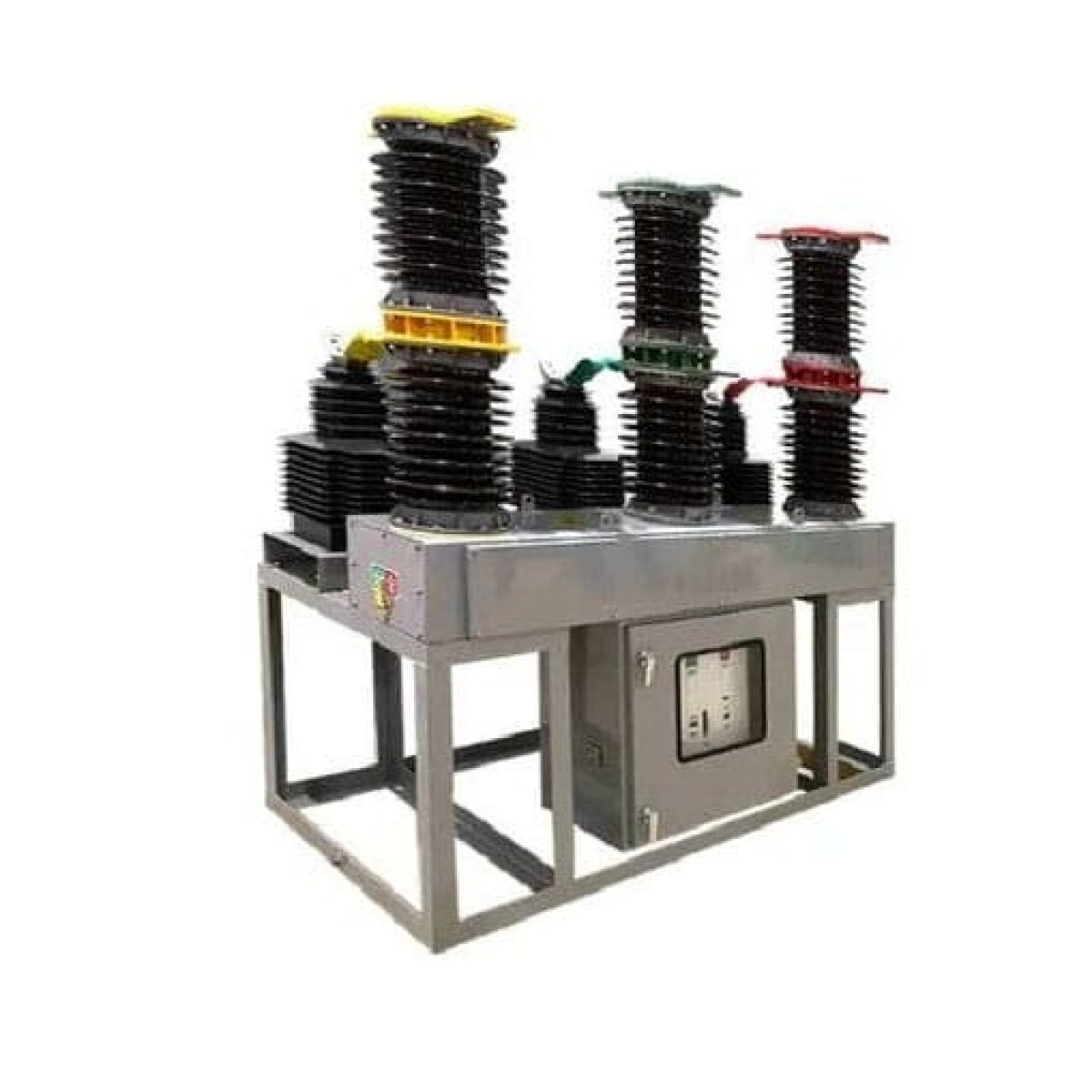
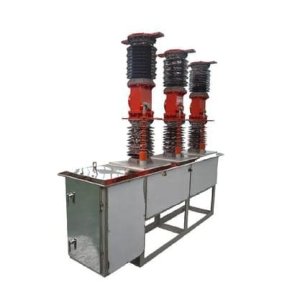
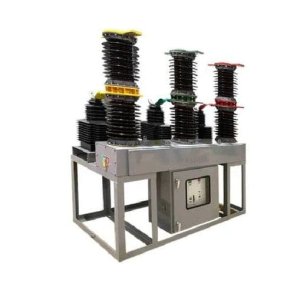
A VCB is a high-performance, compact circuit breaker where the separation of current-carrying contacts happens within a permanently sealed vacuum interrupter. The vacuum provides such high dielectric strength that the arc formed during contact separation is extinguished almost instantly, safely interrupting the circuit within milliseconds.
The reliability of a VCB stems from its ability to operate in a medium that contains virtually no particles to ionize and sustain an electrical arc.
- Core Technology: The Vacuum Interrupter
- Often called the "vacuum bottle," this is a hermetically sealed chamber housing the fixed and movable contacts.
- It maintains a deep vacuum pressure (typically \(10^{-6}\) to \(10^{-2}\) torr) to ensure high insulation strength.
- Working Principle
- Contact Separation: When a fault is detected, an actuator mechanism pulls the moving contact away from the fixed contact.
- Arc Formation: A brief arc is formed, sustained only by the vaporization of the contact metal itself.
- Extinction: As the AC current reaches its natural zero crossing, the metal vapor rapidly condenses on internal shields. The dielectric strength of the vacuum recovers thousands of times faster than air, preventing the arc from restriking.
- Key Components
- Contacts: Usually made of advanced alloys like Copper-Chromium (CuCr) for high electrical conductivity and resistance to welding.
- Bellows: Stainless steel bellows allow the movable contact to travel without breaking the vacuum seal.
- Operating Mechanism: Typically uses a spring-charged or magnetic actuator to provide the force needed for rapid switching.
- Advantages over Other Types
- Safe & Clean: Unlike oil breakers, there is zero risk of fire or explosion. Unlike SF6 breakers, they are eco-friendly and use no greenhouse gases.
- Durability: They are rated for 10,000 to 20,000 operations, making them ideal for heavy industrial use where frequent switching is required.
- Maintenance-Free: The "sealed-for-life" vacuum interrupter protects contacts from oxidation, moisture, and dust.