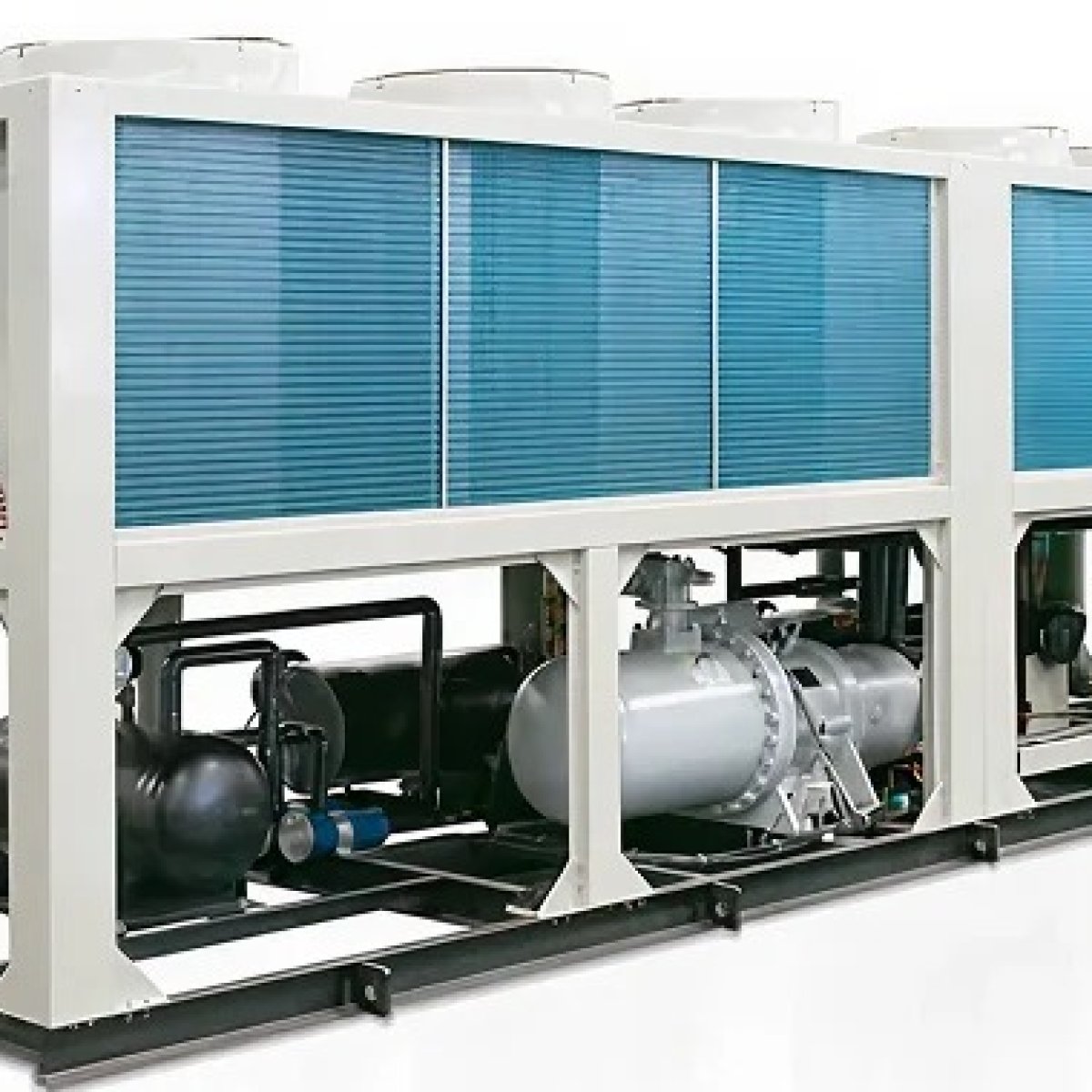
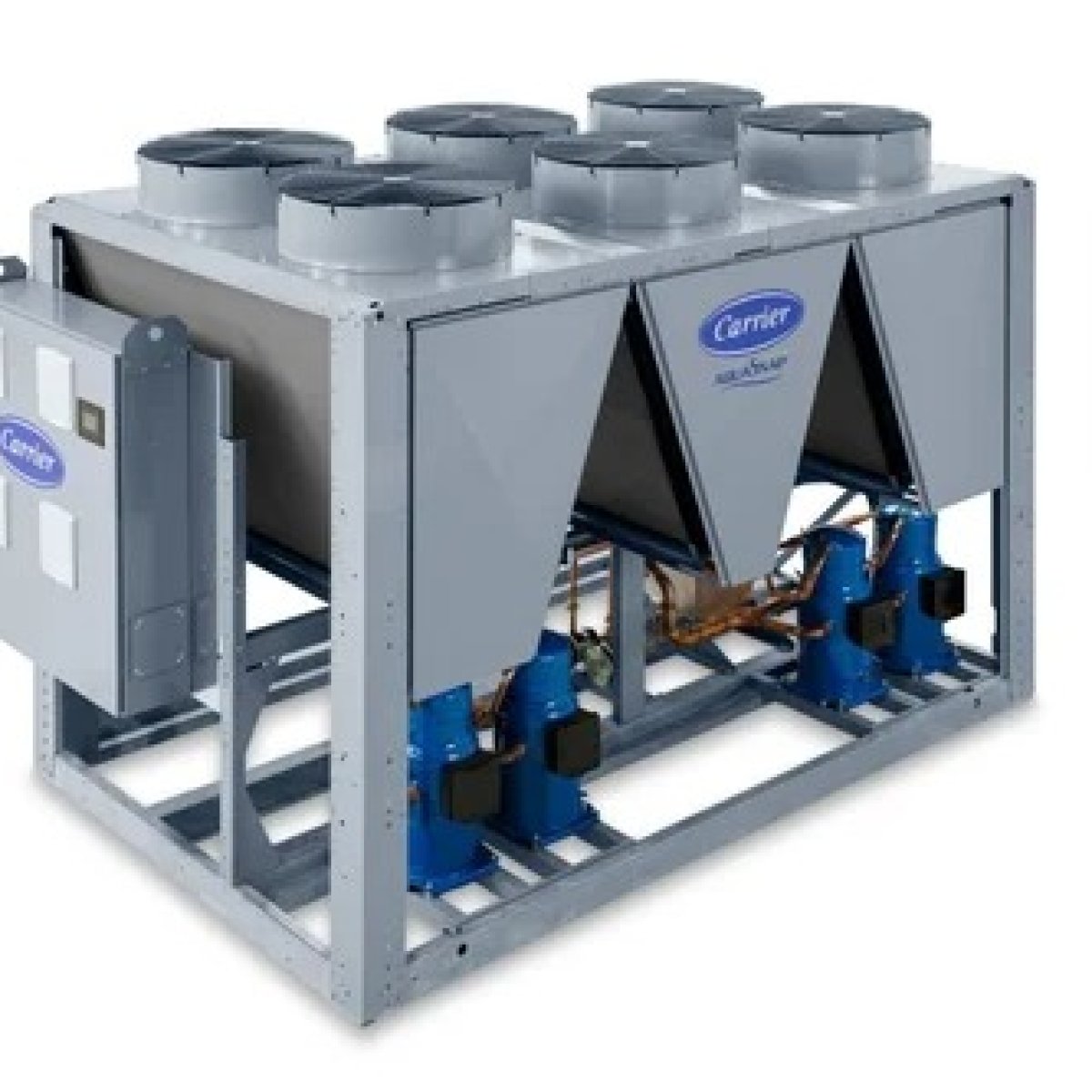
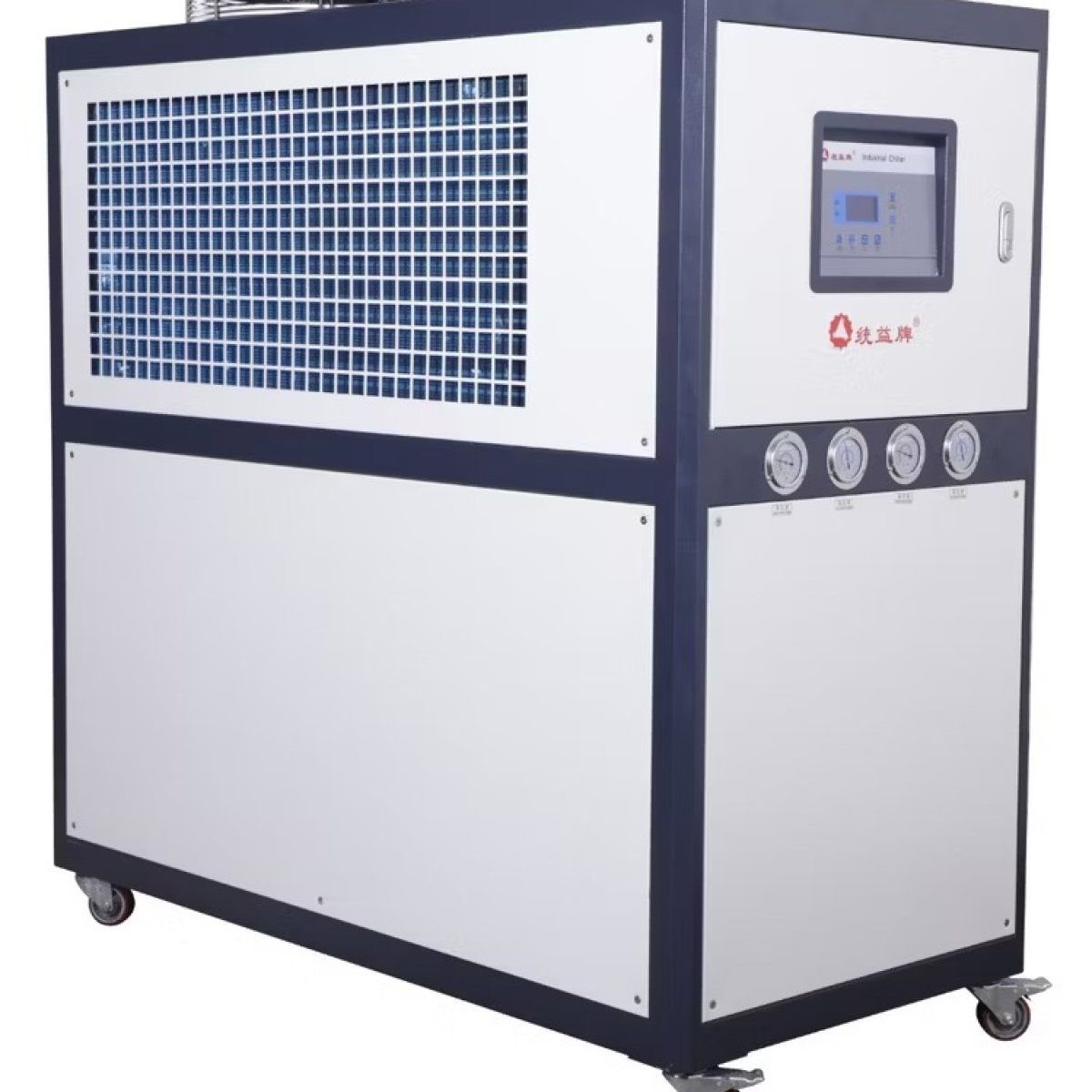
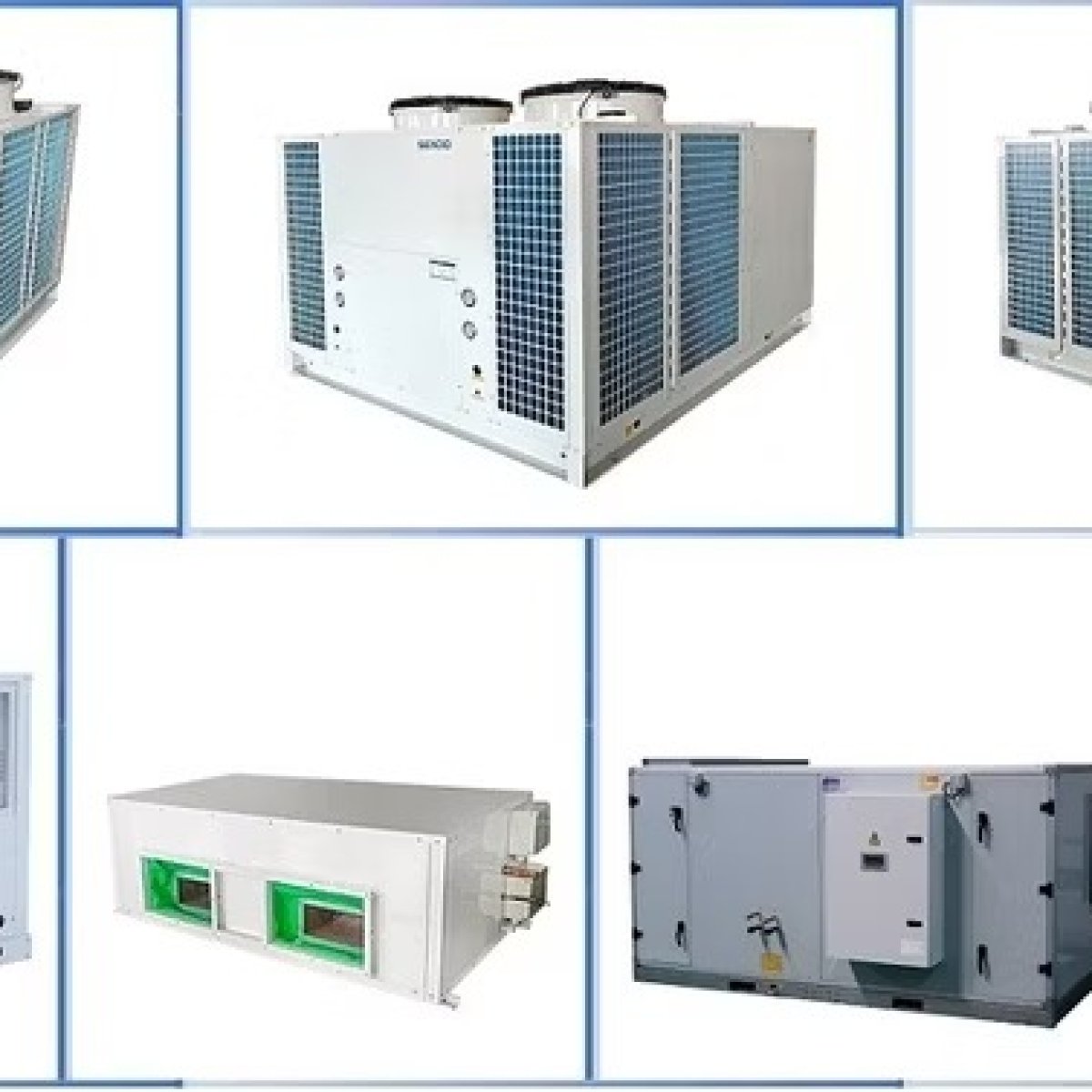
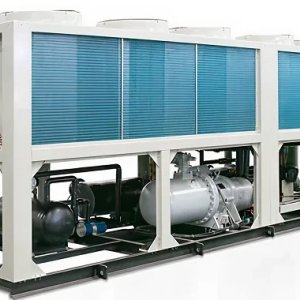
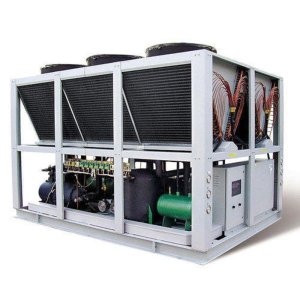
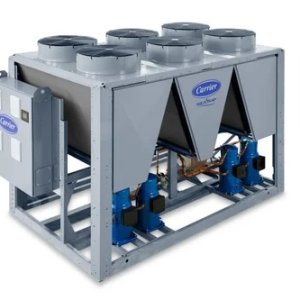
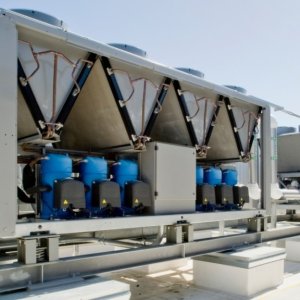
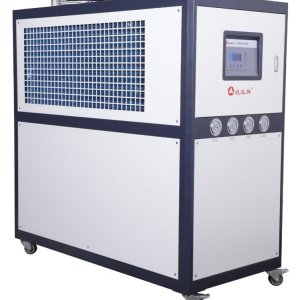
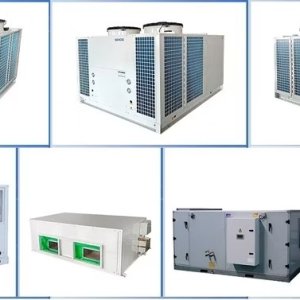
An air-cooled chiller is a high-capacity refrigeration system used to produce chilled water for large-scale air conditioning (HVAC) or industrial processes. It is a "packaged" unit, meaning it contains all the necessary refrigeration components—compressors, condensers, and fans—in a single frame. Because it uses ambient air to reject heat, it eliminates the need for external cooling towers or bulky water-pumping infrastructure.
Air-cooled chillers are the backbone of cooling for commercial buildings like hospitals, malls, and data centers. They operate on a vapor-compression cycle to remove heat from a liquid (water or a glycol mix) which is then circulated to provide cooling elsewhere.
- Key Components & Construction:
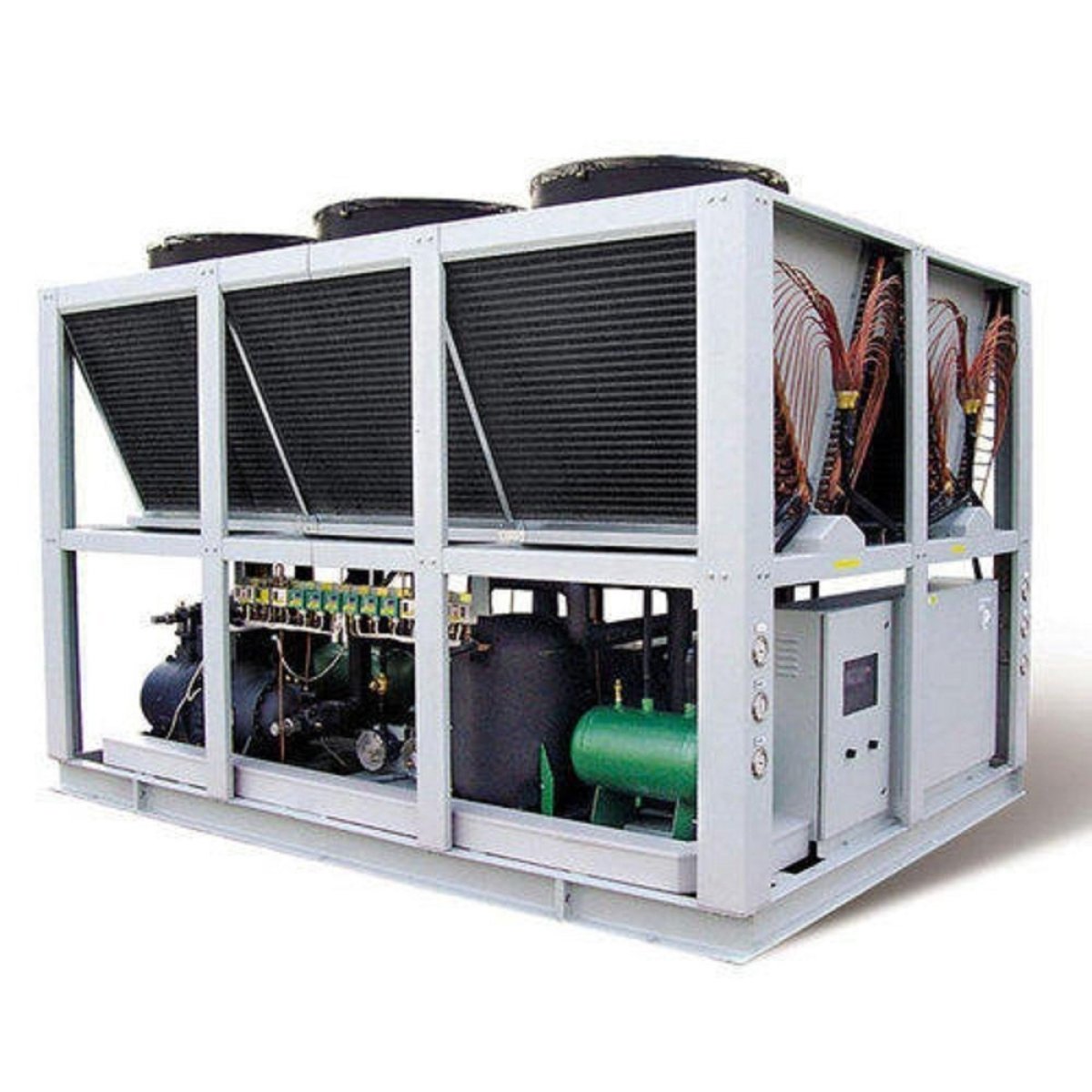
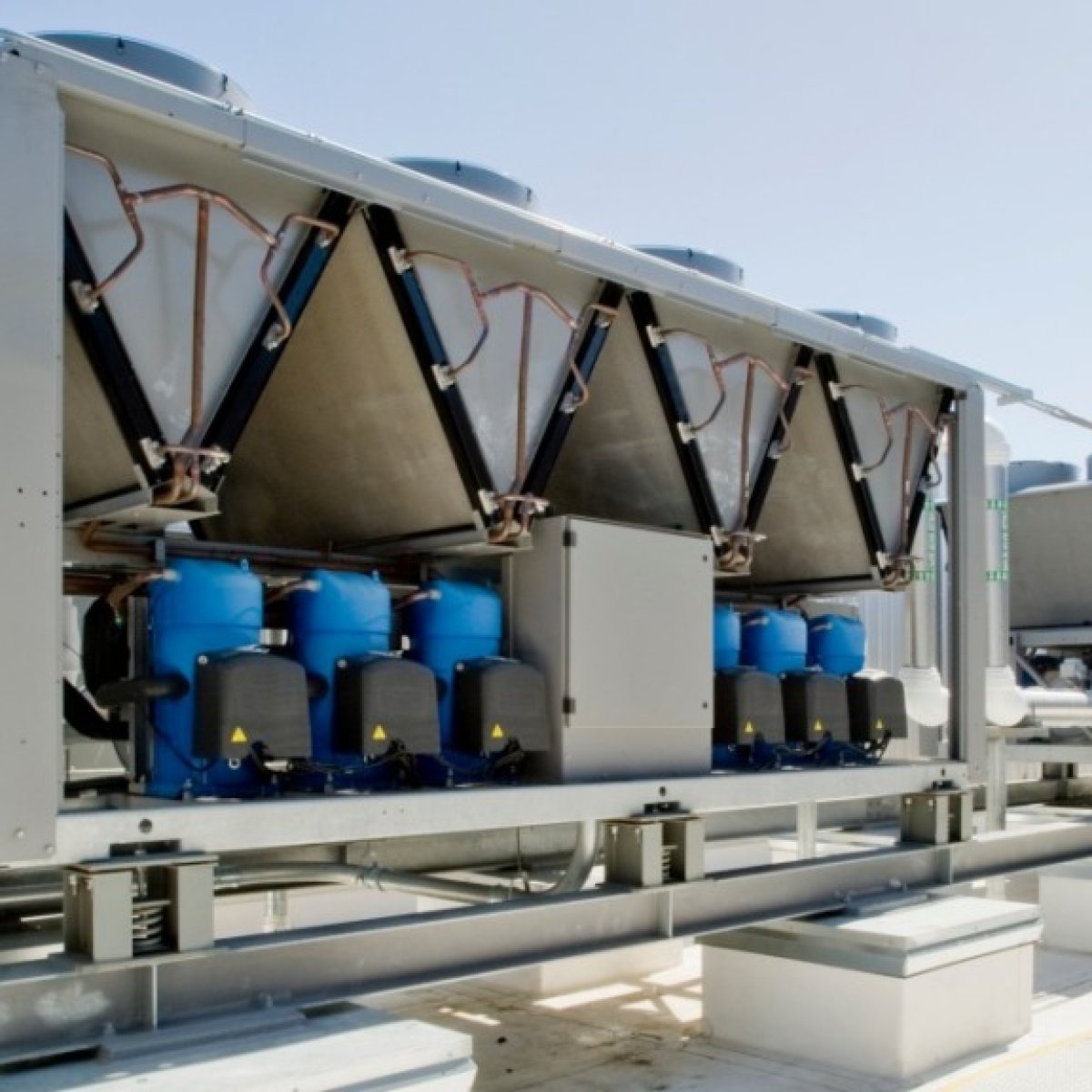
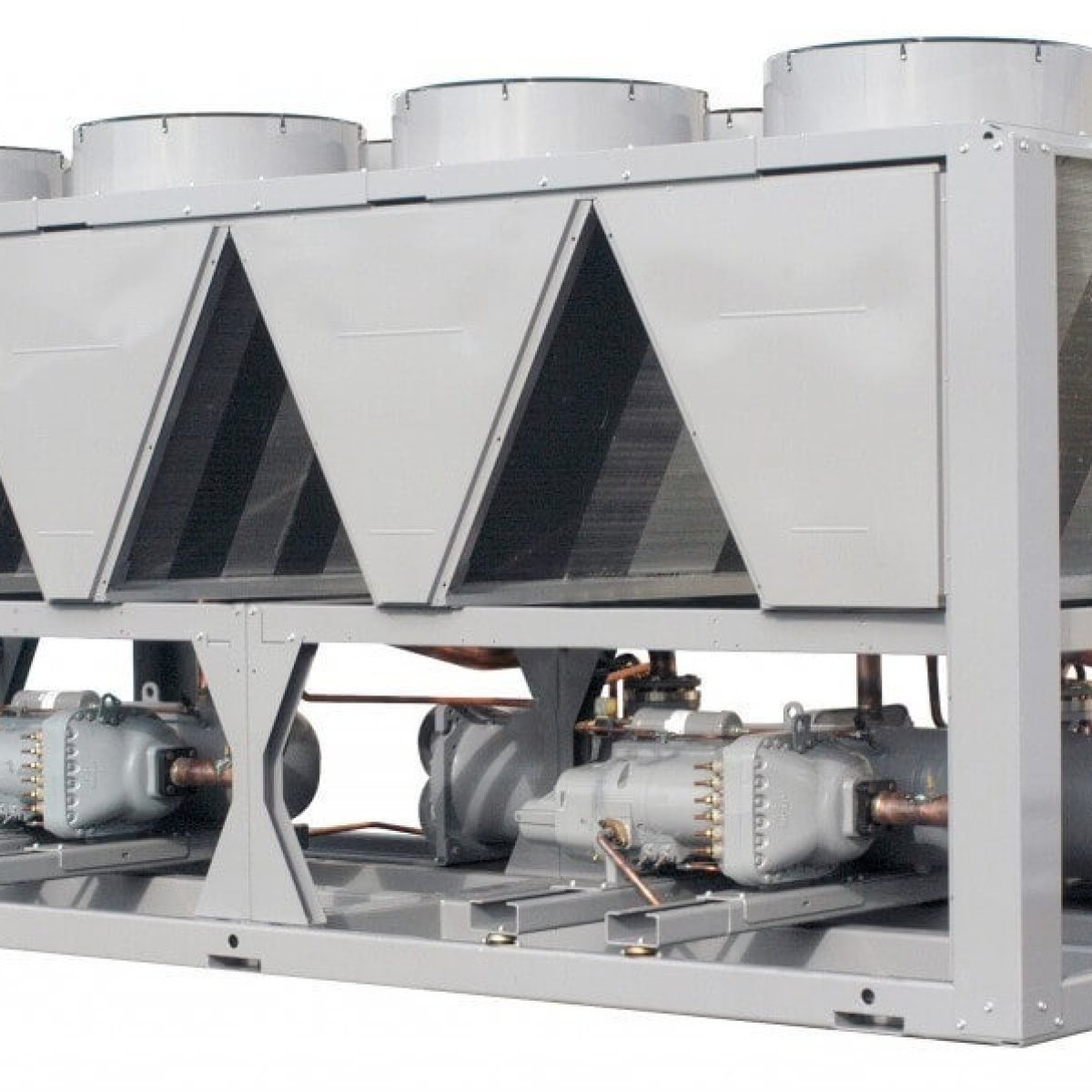
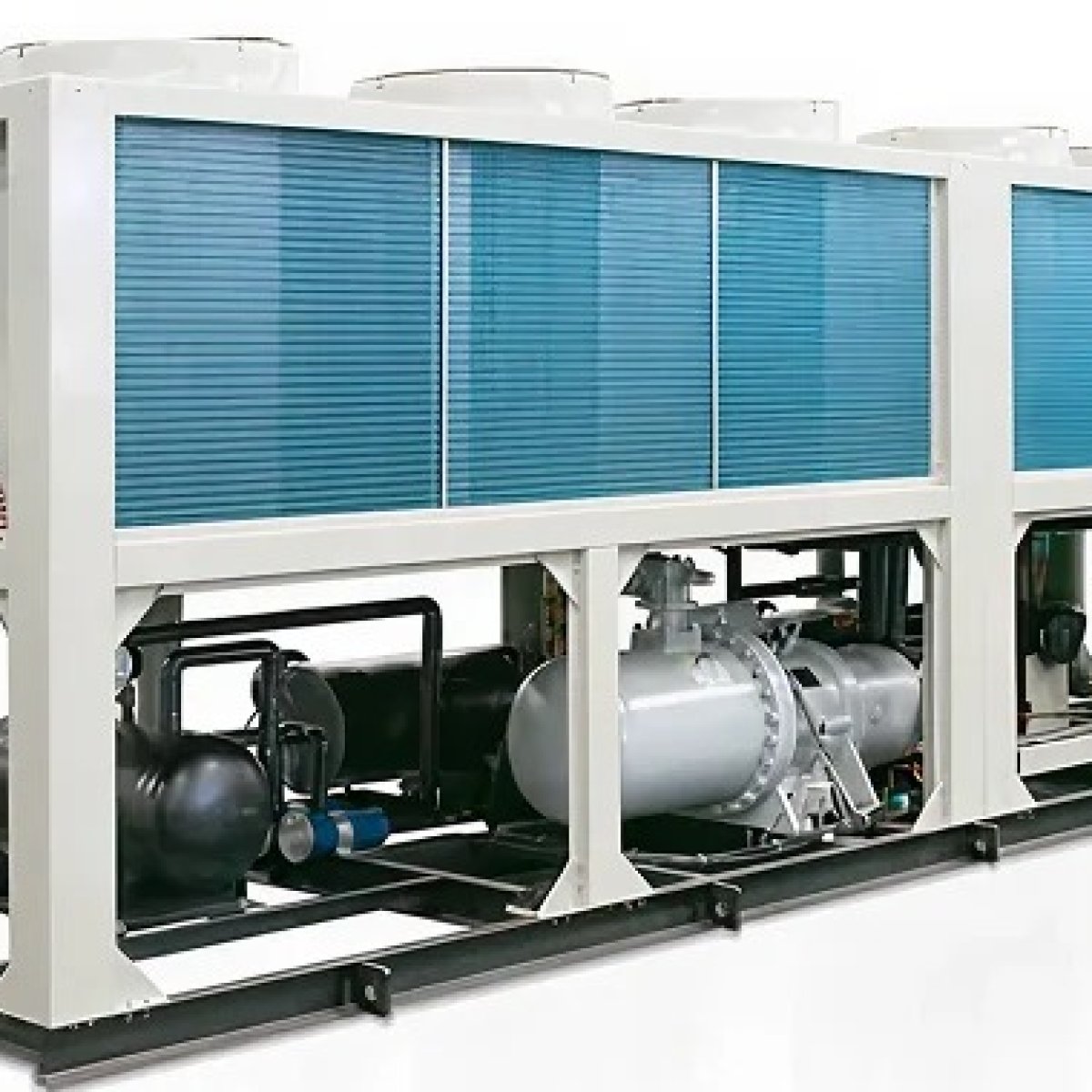
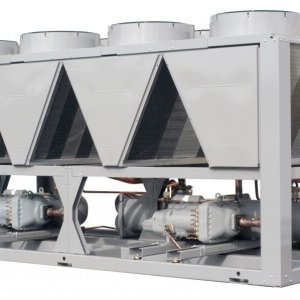
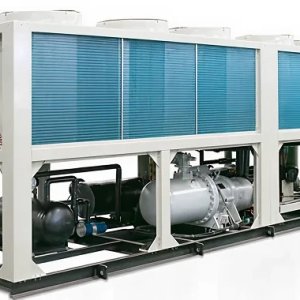
- Screw Compressors: The large cylindrical units visible at the base are screw compressors. They are chosen for their high efficiency and ability to precisely match the cooling load of the building.
- V-Shaped Condenser Coils: The angled, black-finned sections provide a massive surface area for heat exchange. The V-configuration allows for a more compact footprint while maximizing airflow.
- Axial Fans: The large fans on top pull outside air through the condenser coils, carrying away the heat extracted from the building.
- Evaporator: An internal heat exchanger where the refrigerant absorbs heat from the "chilled water" loop, cooling it down to typical temperatures of \(40^{\circ }\text{F}\) to \(45^{\circ }\text{F}\) (\(4.4^{\circ }\text{C}\) to \(7.2^{\circ }\text{C}\)).
- Performance Advantages:
- Simplicity: Unlike water-cooled chillers, these do not require cooling towers, condenser water pumps, or intensive water treatment, leading to lower installation and maintenance costs.
- Space Efficient: They are typically installed outdoors (on rooftops or at ground level) to save valuable indoor mechanical room space.
- Environmental Impact: Modern units use eco-friendly refrigerants and advanced controls to minimize energy consumption during part-load conditions.