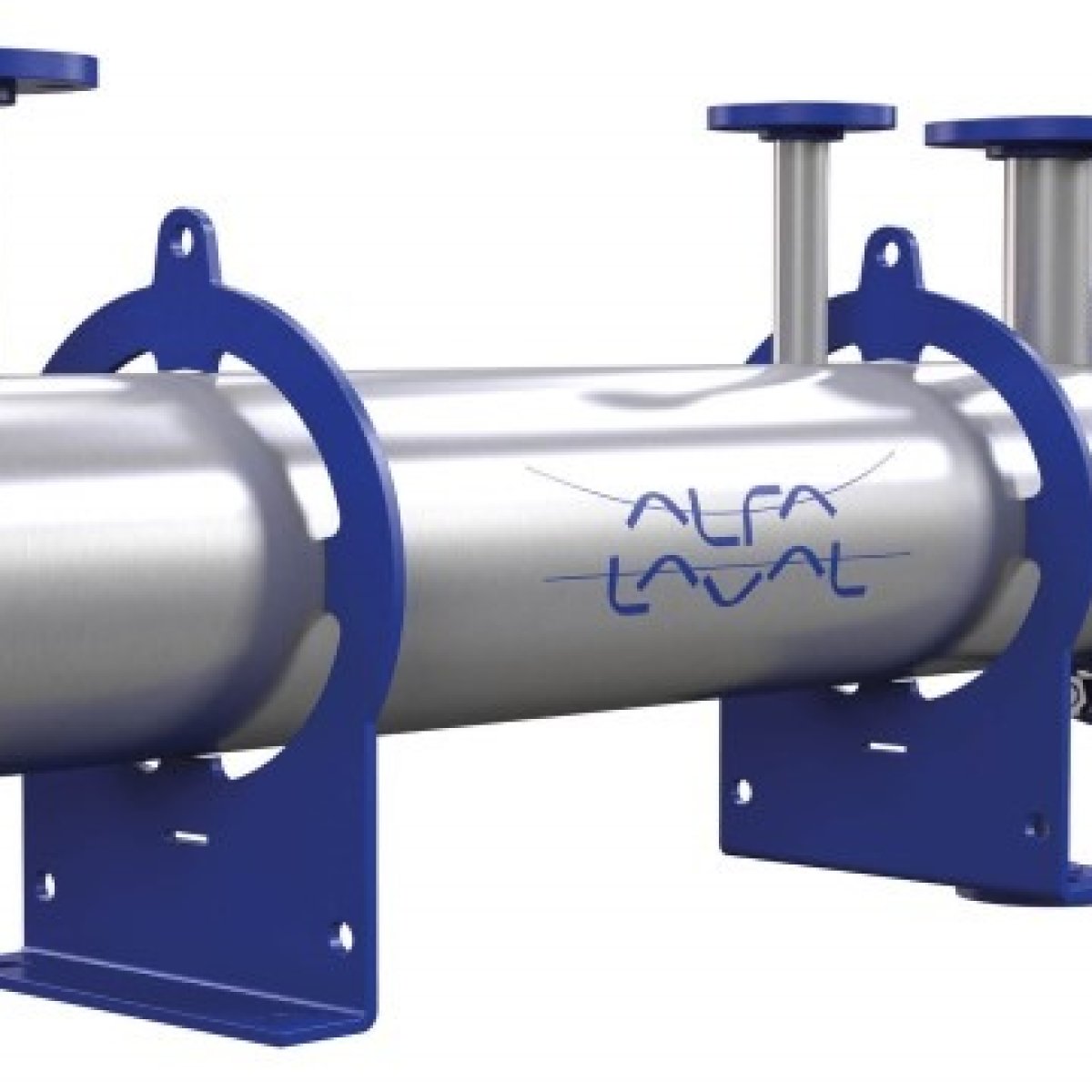
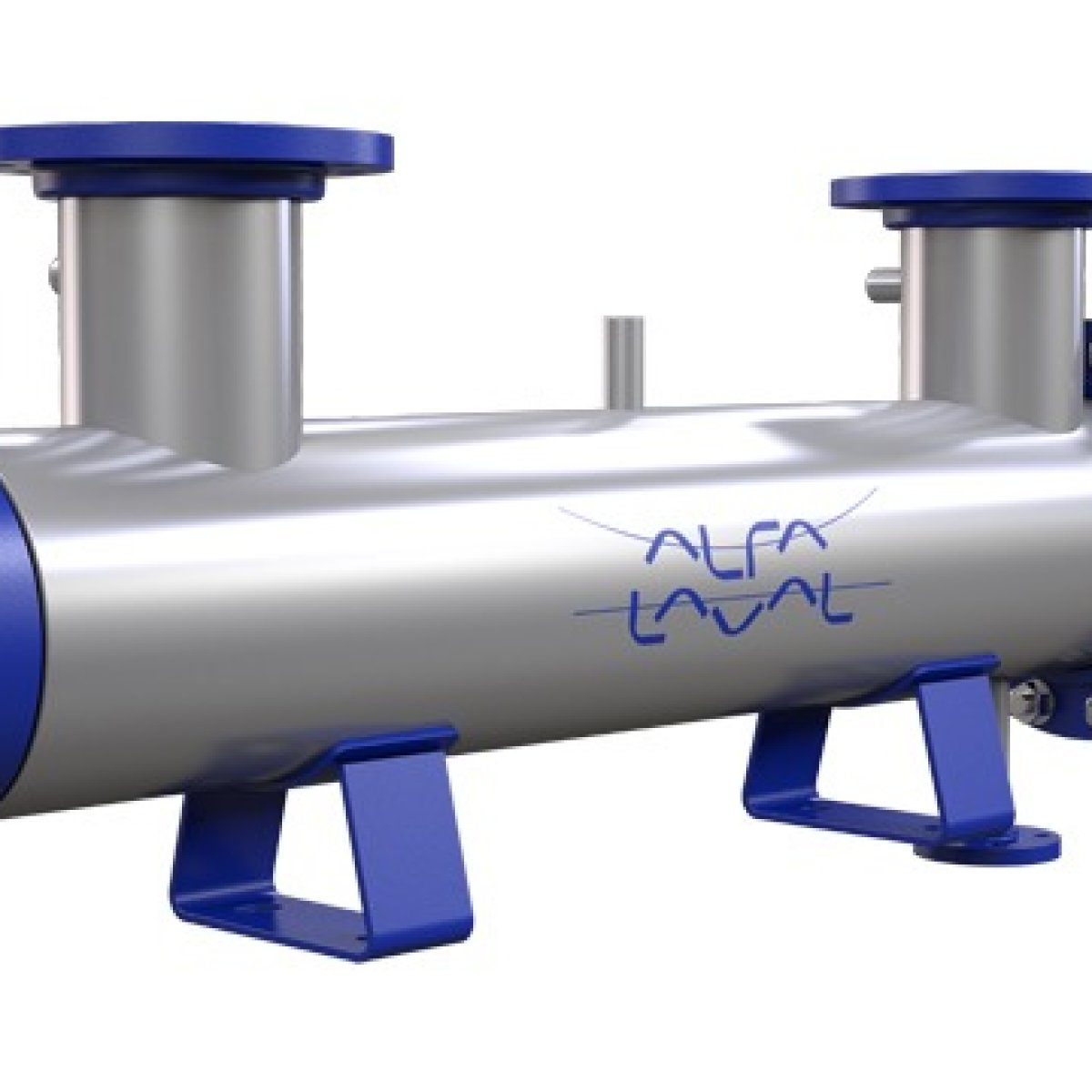
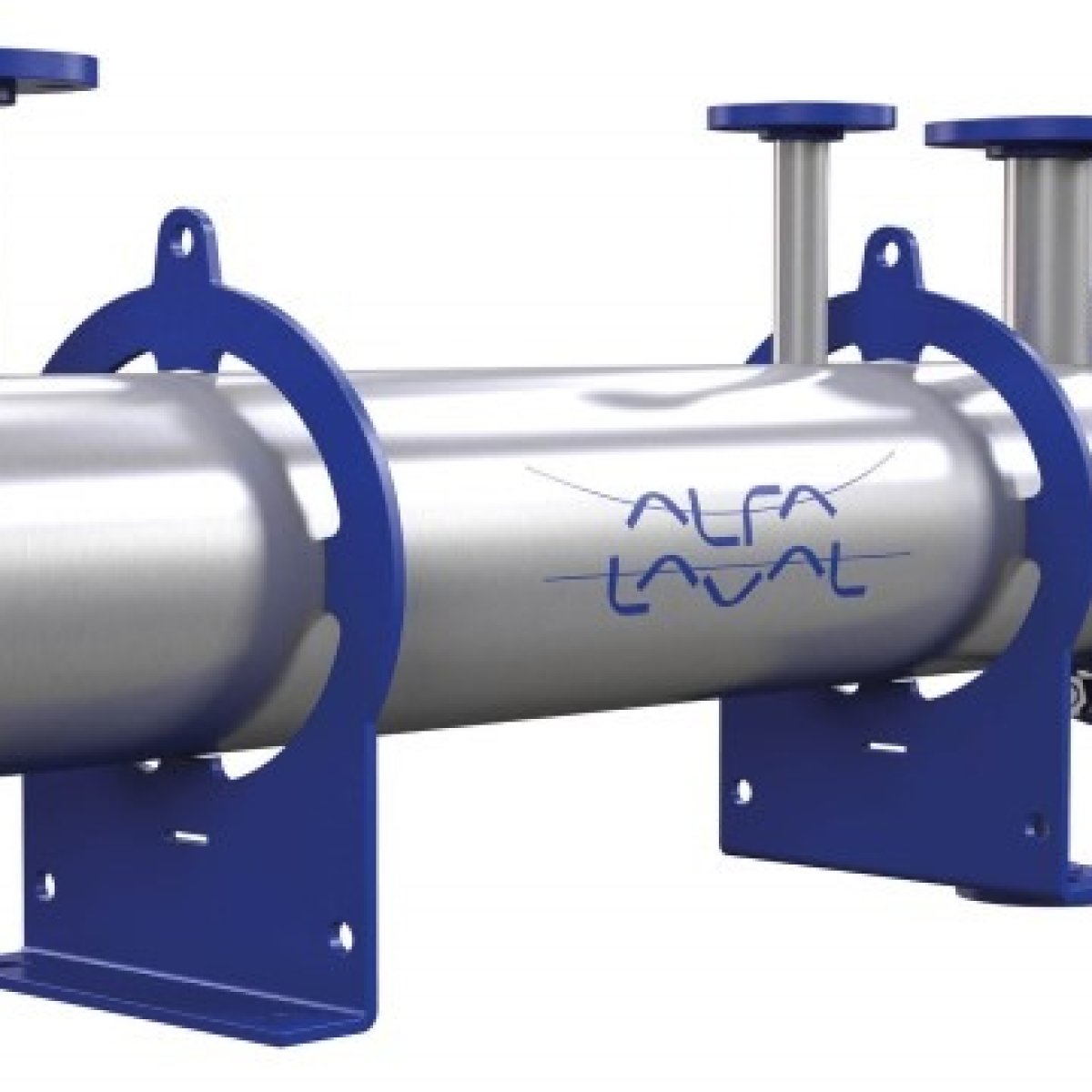
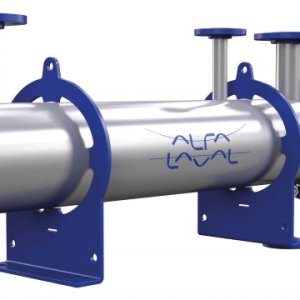
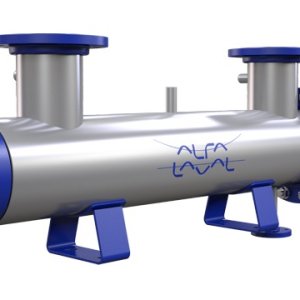
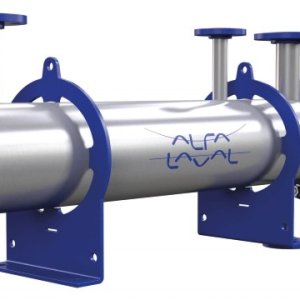
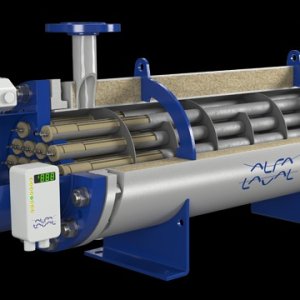
A shell and tube heat exchanger is a specialized piece of equipment designed to transfer heat between two separate fluids—one flowing through a bundle of internal tubes and the other through the surrounding "shell." It is an essential component in pharmaceutical and food processing for precisely heating or cooling liquids while maintaining strict isolation between the two substances to prevent contamination.
The Alfa Laval shell and tube design is engineered for high-thermal efficiency and compliance with rigorous global hygiene standards (like ASME BPE).
- Operating Principle:
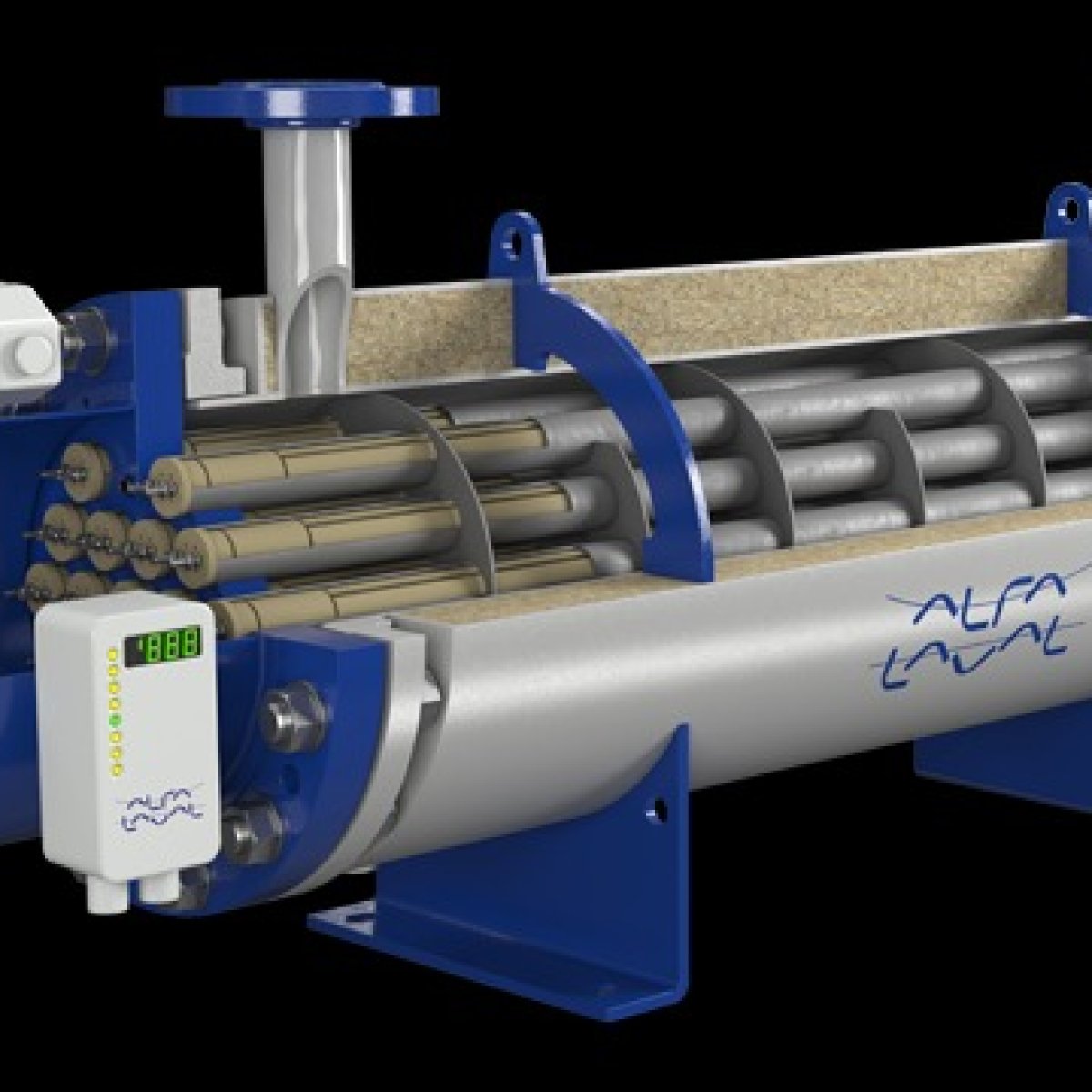
- Double Bundle Design: One fluid (the "product") flows through a set of seamless internal tubes. The second fluid (the "utility," like hot water or steam) flows through the outer shell.
- Heat Transfer: Heat passes through the tube walls to warm or cool the product without the two liquids ever mixing.
- Key Components:
- Shell & Tubes: Typically made of high-grade 316L stainless steel for maximum corrosion resistance and durability.
- Flanged Connections: The vertical pipes on top (flanges) allow for easy connection to existing piping systems.
- Removable Heads: The bolted flange on the right side allows the internal tube bundle to be accessed for inspection and deep cleaning.
- Support Saddles: The blue metal bases provide stable mounting on the factory floor or within a modular skid.
- Primary Benefits:
- Leak Protection: Designed with "leak detection" features where any potential failure in the seals is visible outside the unit, preventing internal cross-contamination.
- Fully Drainable: The interior is polished and contoured to ensure no liquid stays trapped inside, which is critical for preventing bacterial growth between production batches.
- Applications:
- Heating Water-for-Injection (WFI) in pharmaceutical plants.
- Pasteurization of dairy and beverage products.
- Cooling pure steam or aggressive chemicals in industrial labs.