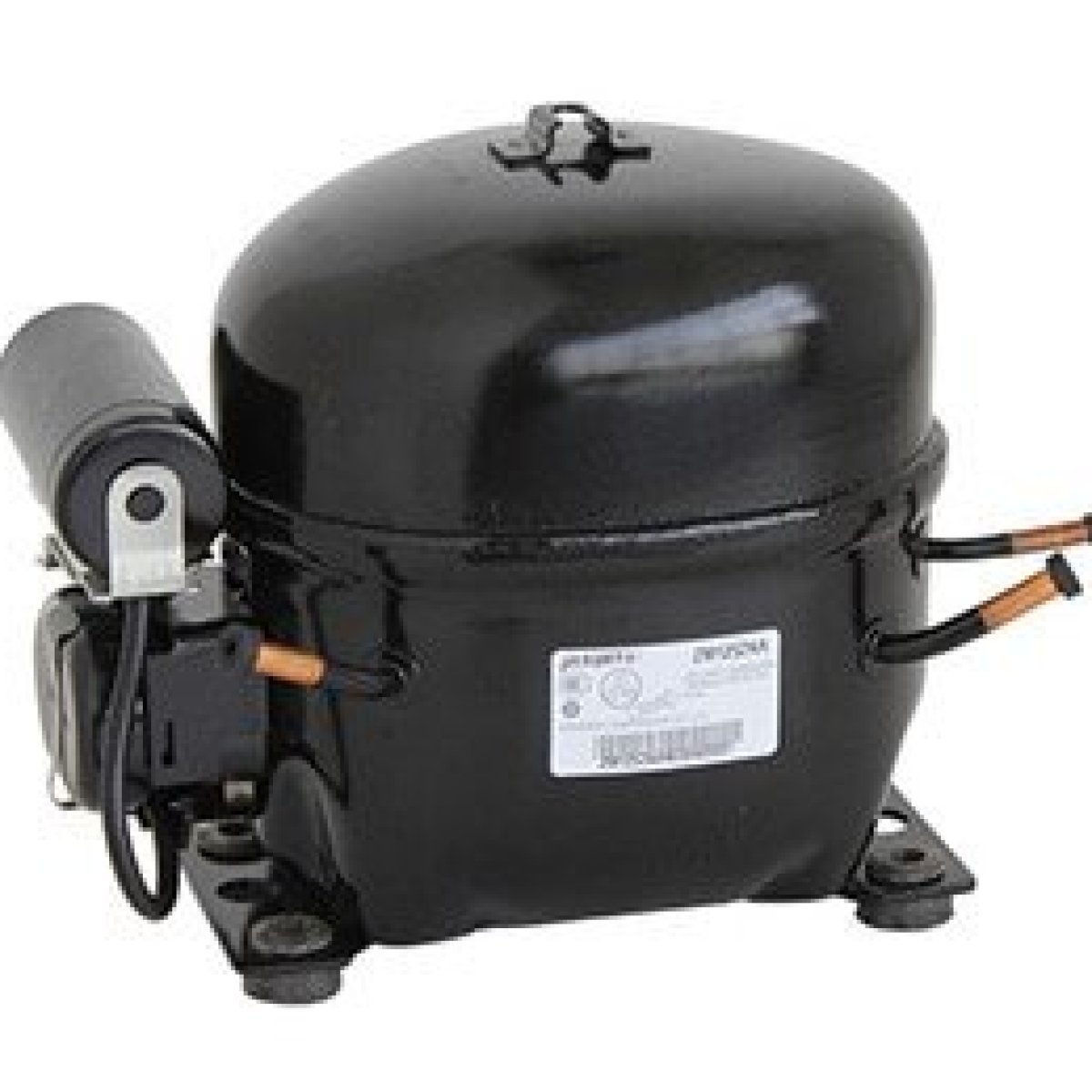
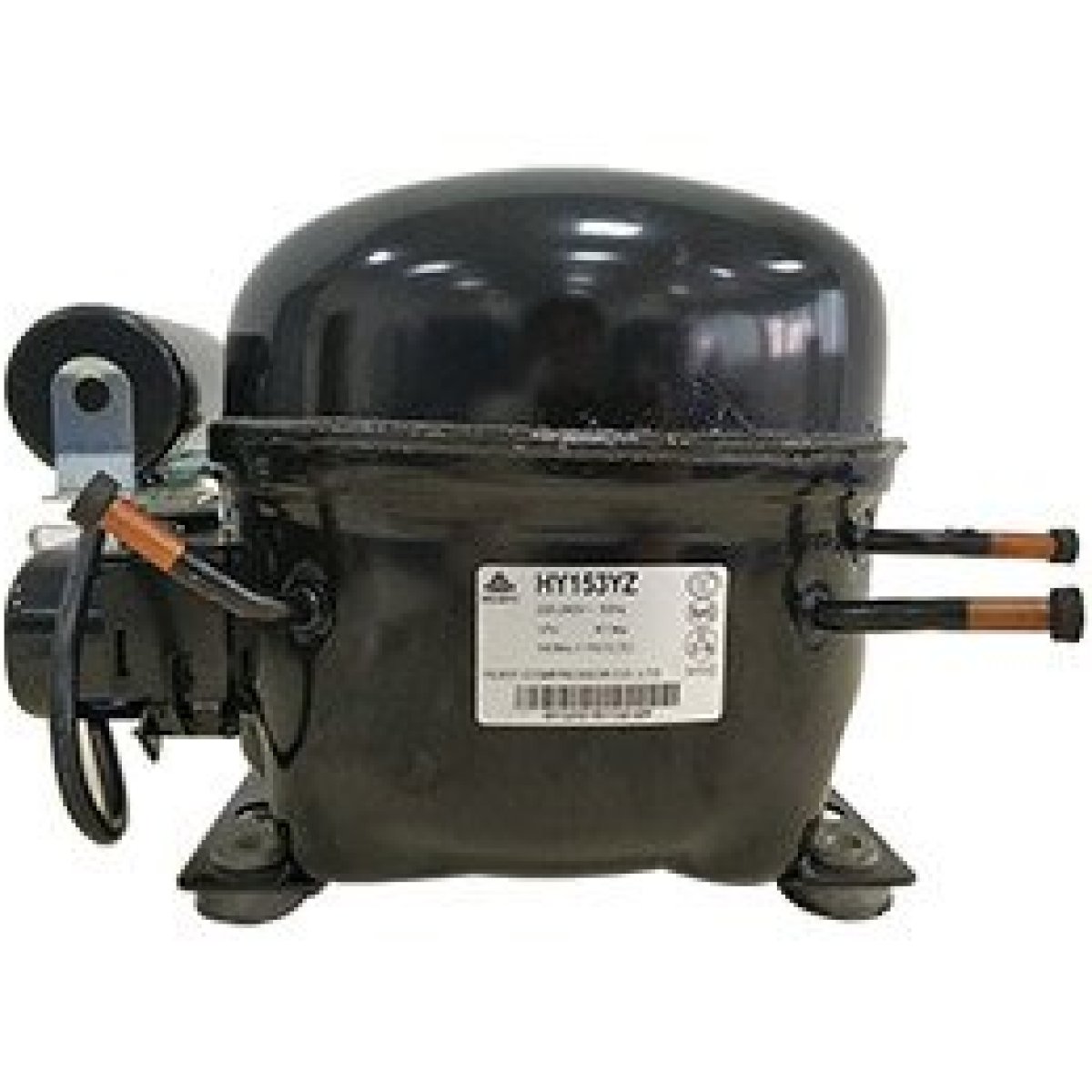
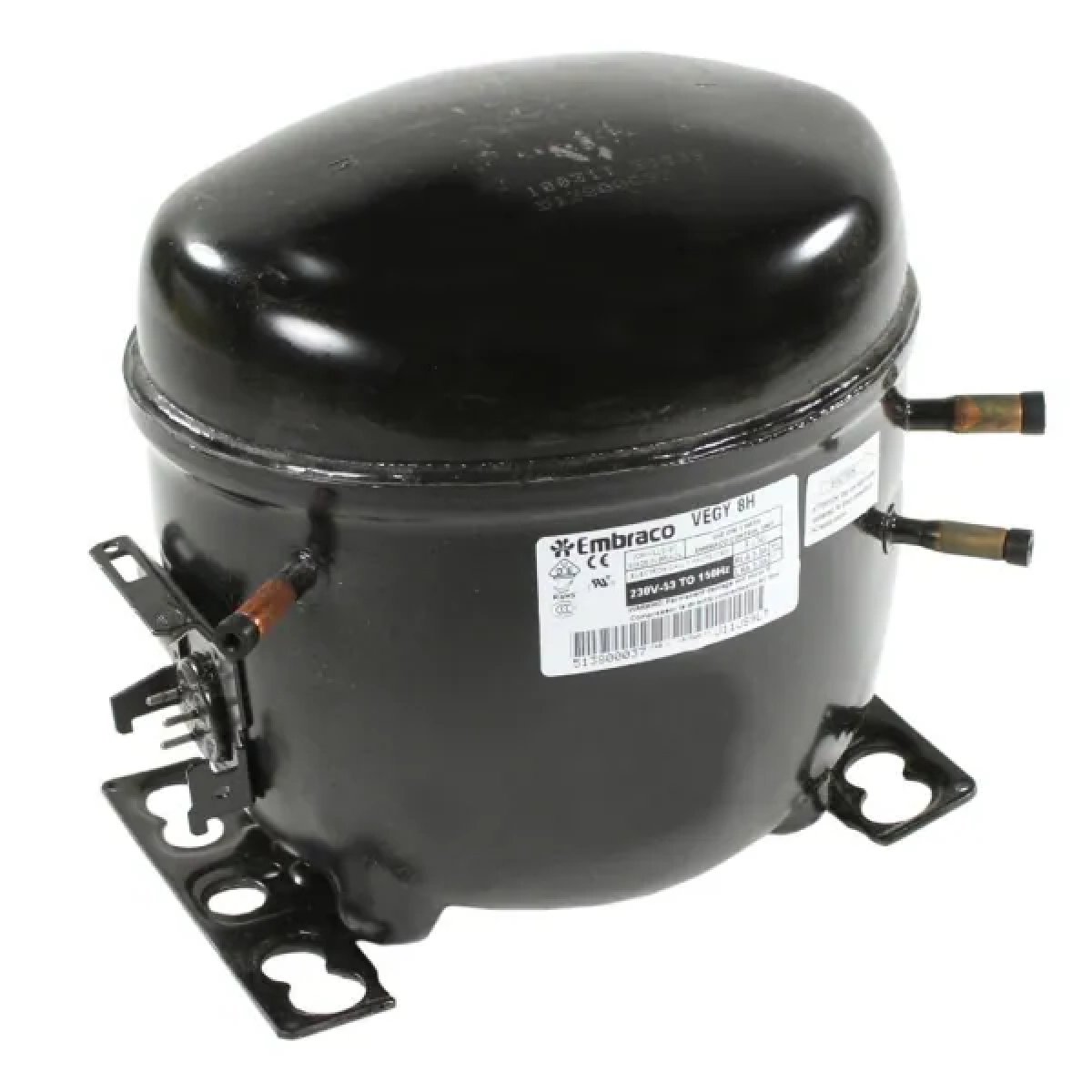
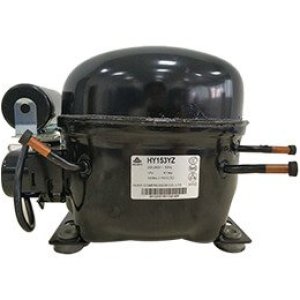
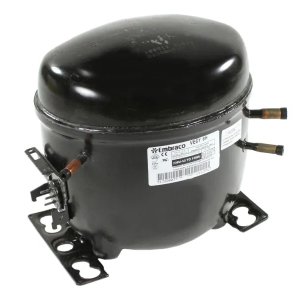
The Compressor is the most critical part of a refrigerator, often referred to as the "heart" of the system. It is a motor-driven pump typically located at the bottom rear of the unit.
Primary Function
The compressor's job is to circulate the refrigerant throughout the entire system. It performs two vital roles: [1, 2, 3, 4]
Suction: It pulls in low-pressure, low-temperature refrigerant vapor from the evaporator.
Compression: It squeezes this vapor into a high-pressure, high-temperature gas before pushing it into the condenser. This pressure increase is what makes the cooling cycle possible.
Key Internal Components
Modern household refrigerators almost always use hermetically sealed compressors, meaning all parts are welded inside a single steel shell to prevent leaks. [1, 2]
Electric Motor: Consists of a stator (stationary windings) and a rotor (spinning part) that provides the mechanical power.
Piston and Cylinder: In standard reciprocating models, a piston moves up and down to compress the gas, much like a car engine or bicycle pump.
Crankshaft: Connects the motor to the piston to convert rotating motion into a pumping motion.
Valves: Suction and discharge valves control the entry and exit of the refrigerant gas