
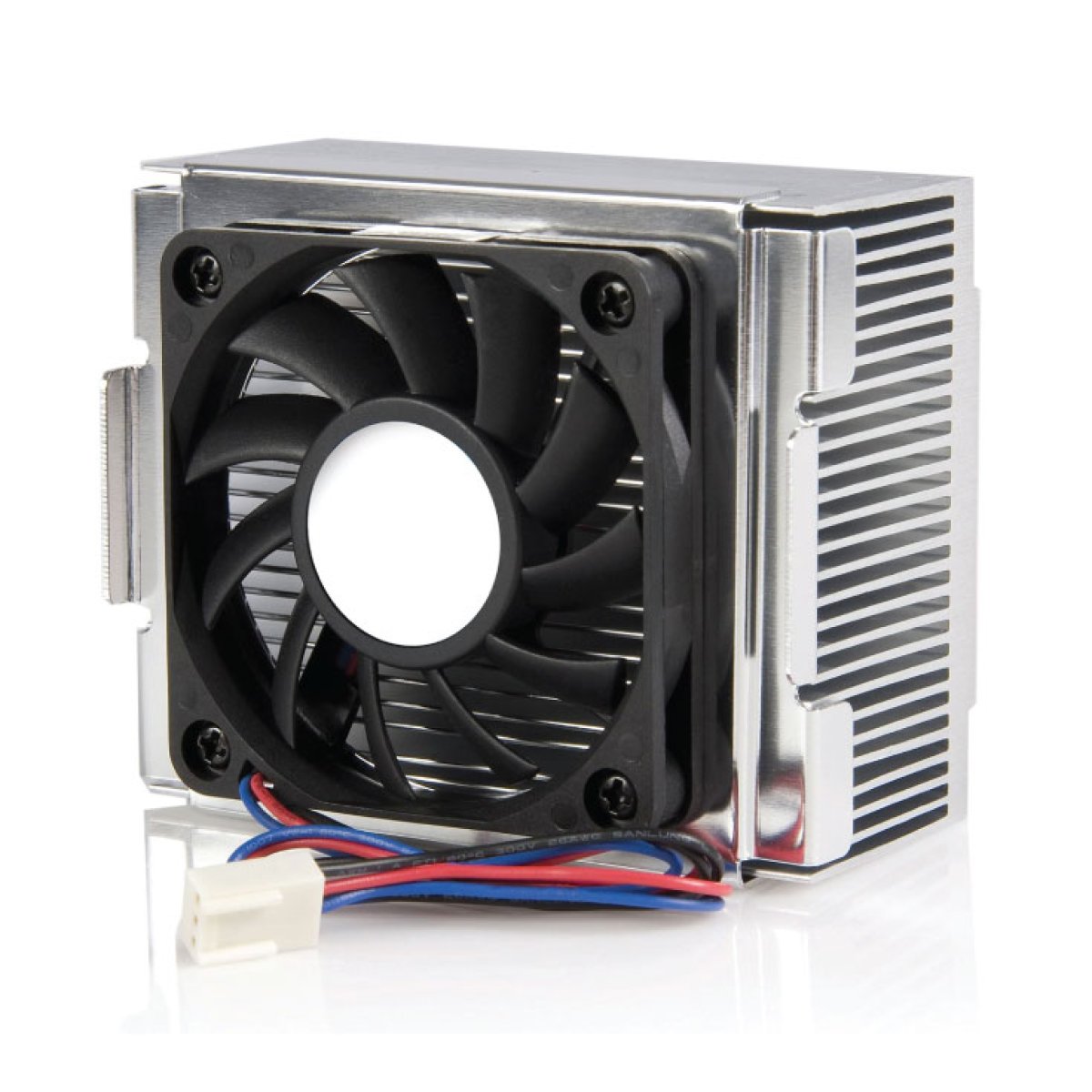
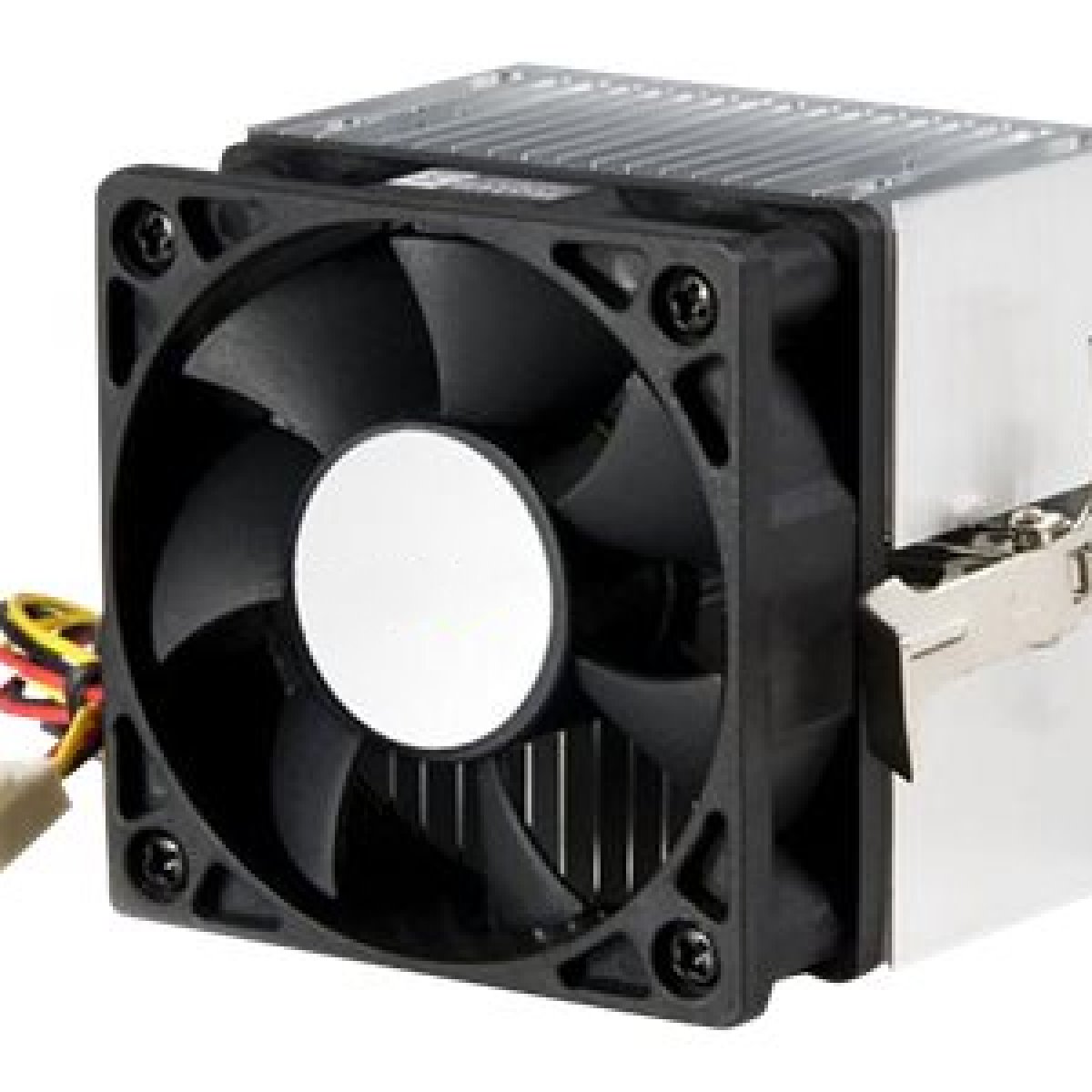
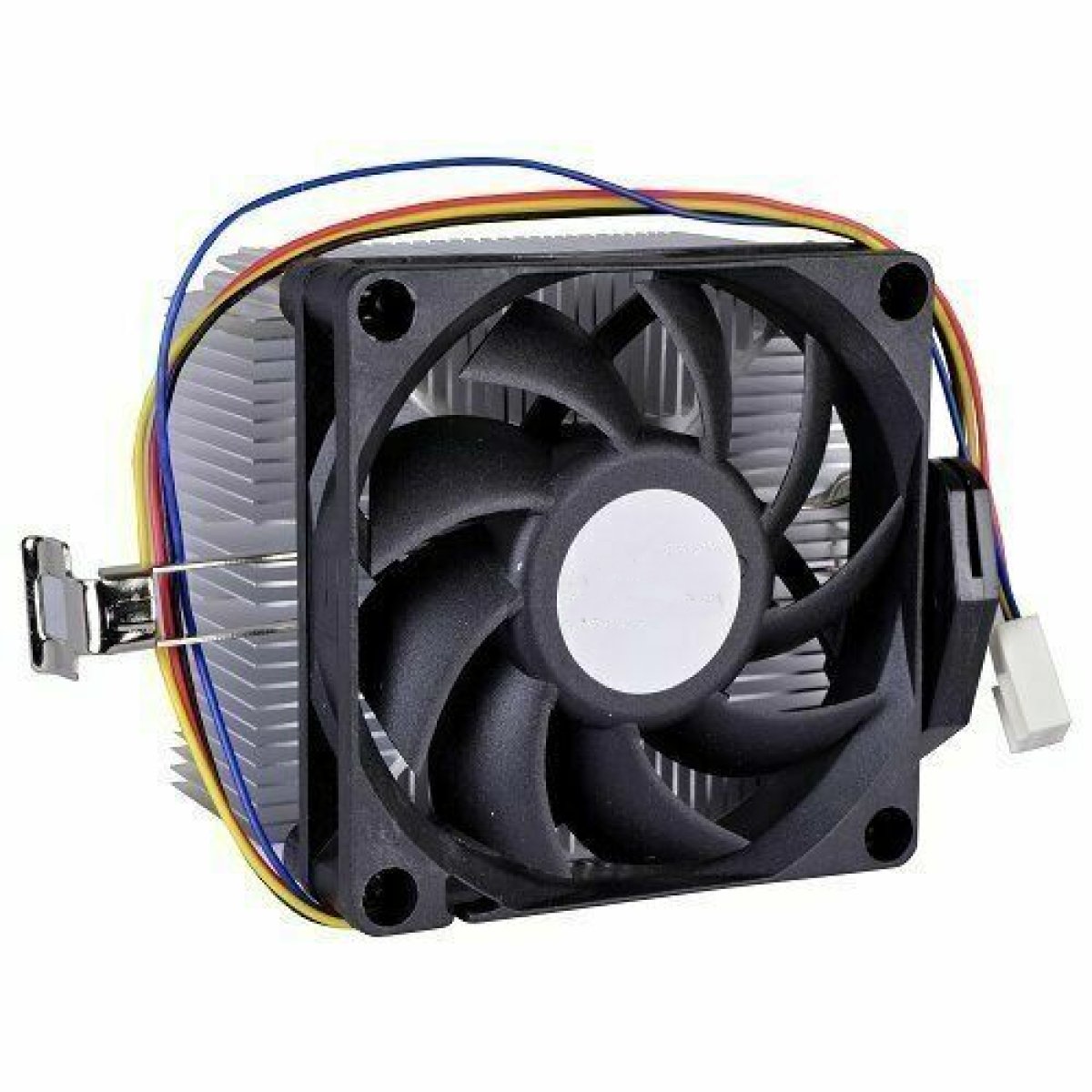
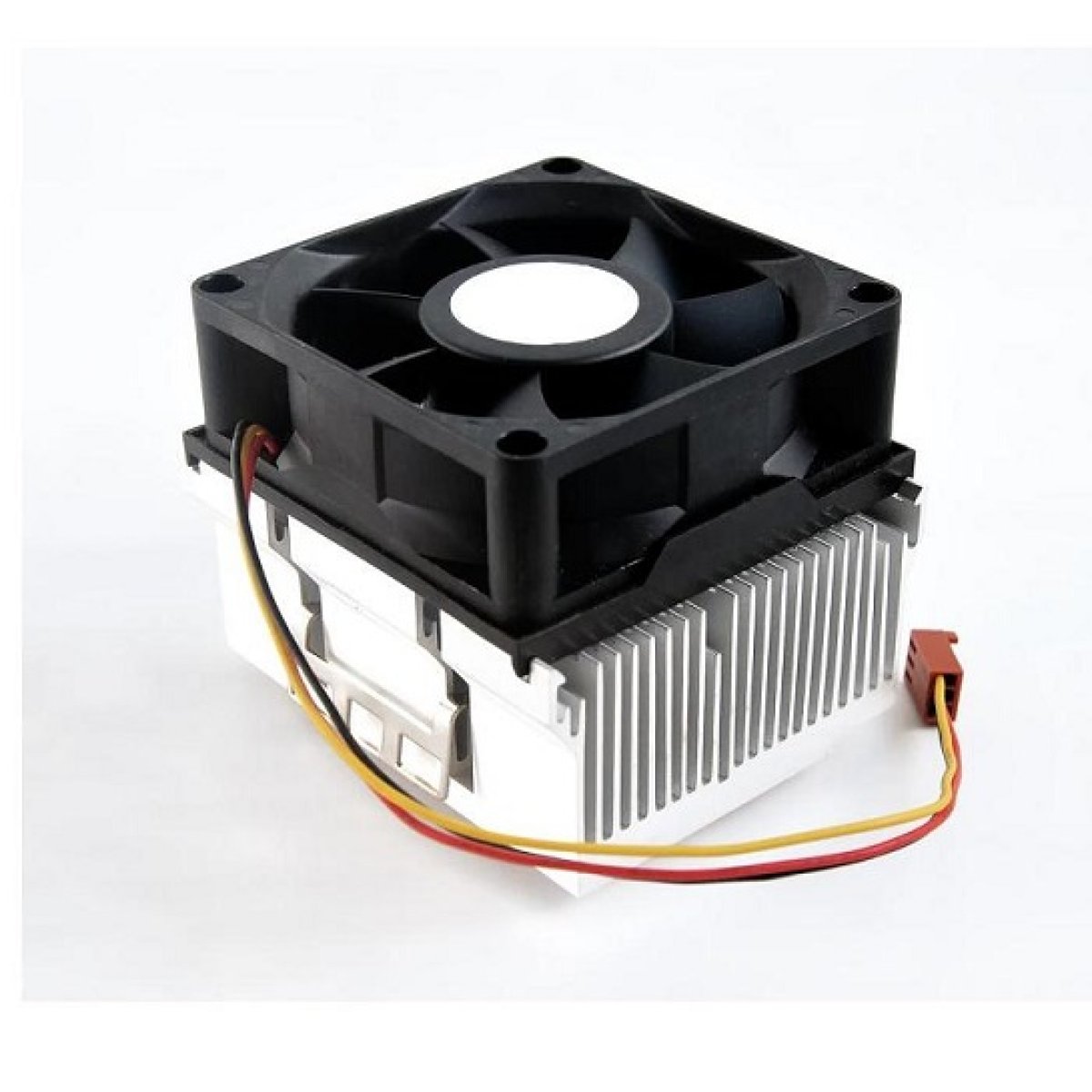
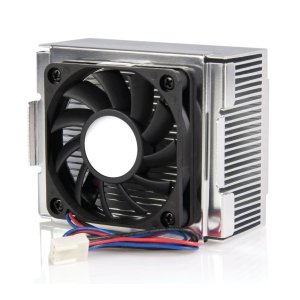
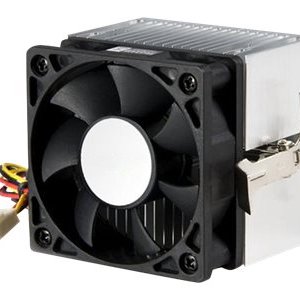
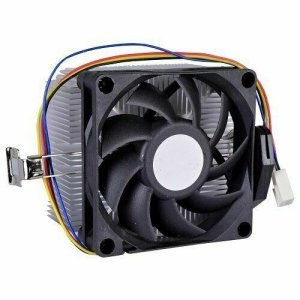
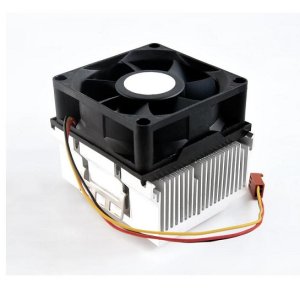
A cooling fan and heat sink are thermal management components that dissipate heat from server hardware to maintain safe operating temperatures.
Cooling fans and heat sinks are essential components in server systems designed to prevent overheating and ensure stable, continuous operation. Servers run 24/7 and generate significant heat, especially from high-performance components like CPUs, GPUs, memory, and power supplies. Effective cooling is critical to maintain performance and extend hardware lifespan.
A heat sink is a passive cooling device, typically made of aluminum or copper, that absorbs heat from a component (such as a CPU) and spreads it across a larger surface area. This allows the heat to dissipate more efficiently into the surrounding air.
A cooling fan is an active component that moves air across the heat sink and other internal parts of the server, helping to remove hot air and bring in cooler air. In server environments, fans are often high-speed, high-efficiency units designed for continuous operation and optimized airflow within rack-mounted systems.
Server cooling systems are usually redundant, meaning multiple fans are installed so that if one fails, others continue to maintain proper airflow. Many servers also support hot-swappable fans, allowing replacement without shutting down the system.
Advanced server cooling setups may include intelligent thermal monitoring, automatic fan speed control, and airflow optimization to maintain ideal temperatures while minimizing power consumption and noise.
Overall, cooling fans and heat sinks play a vital role in protecting server components from overheating, ensuring reliability, performance, and long-term stability in demanding data center environments.