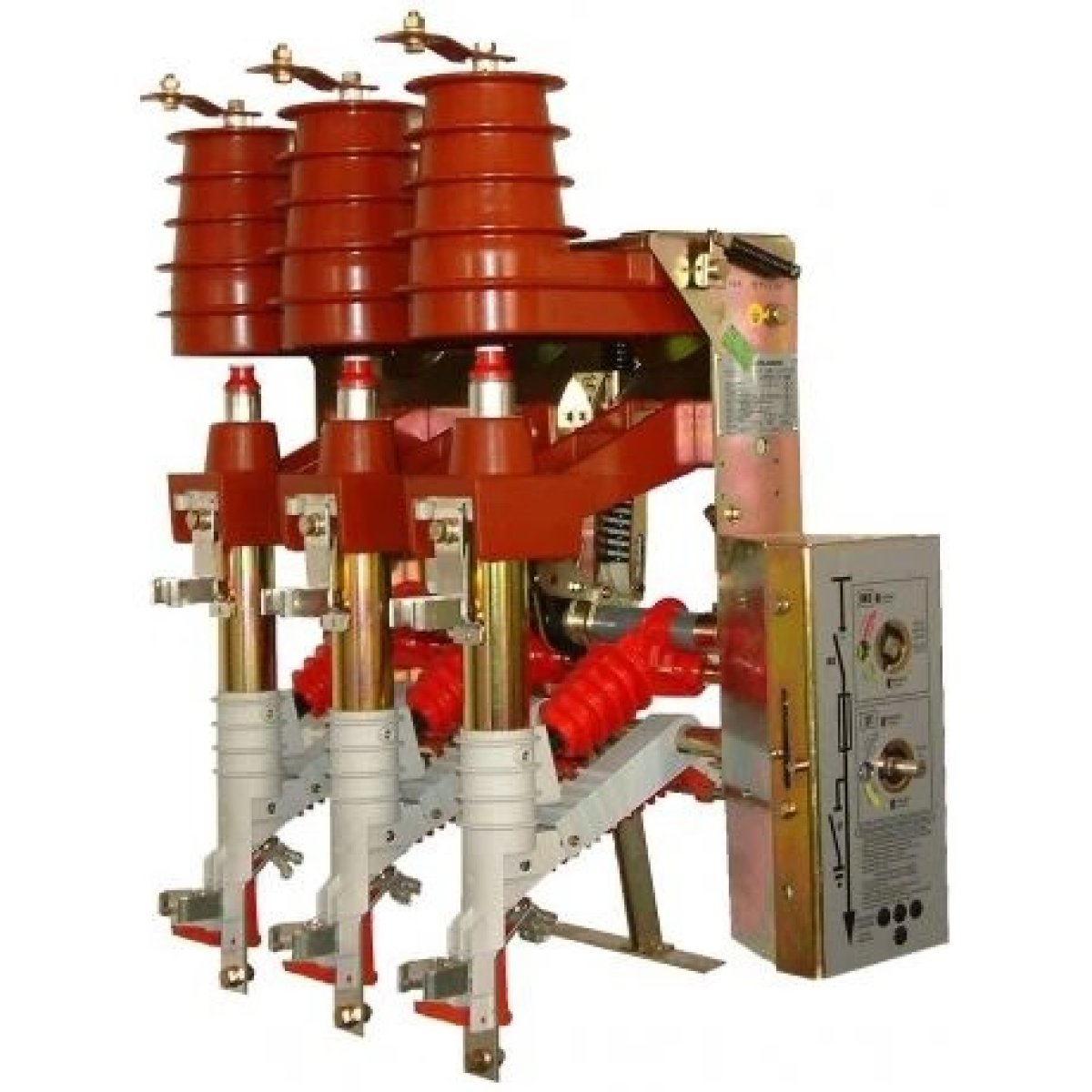
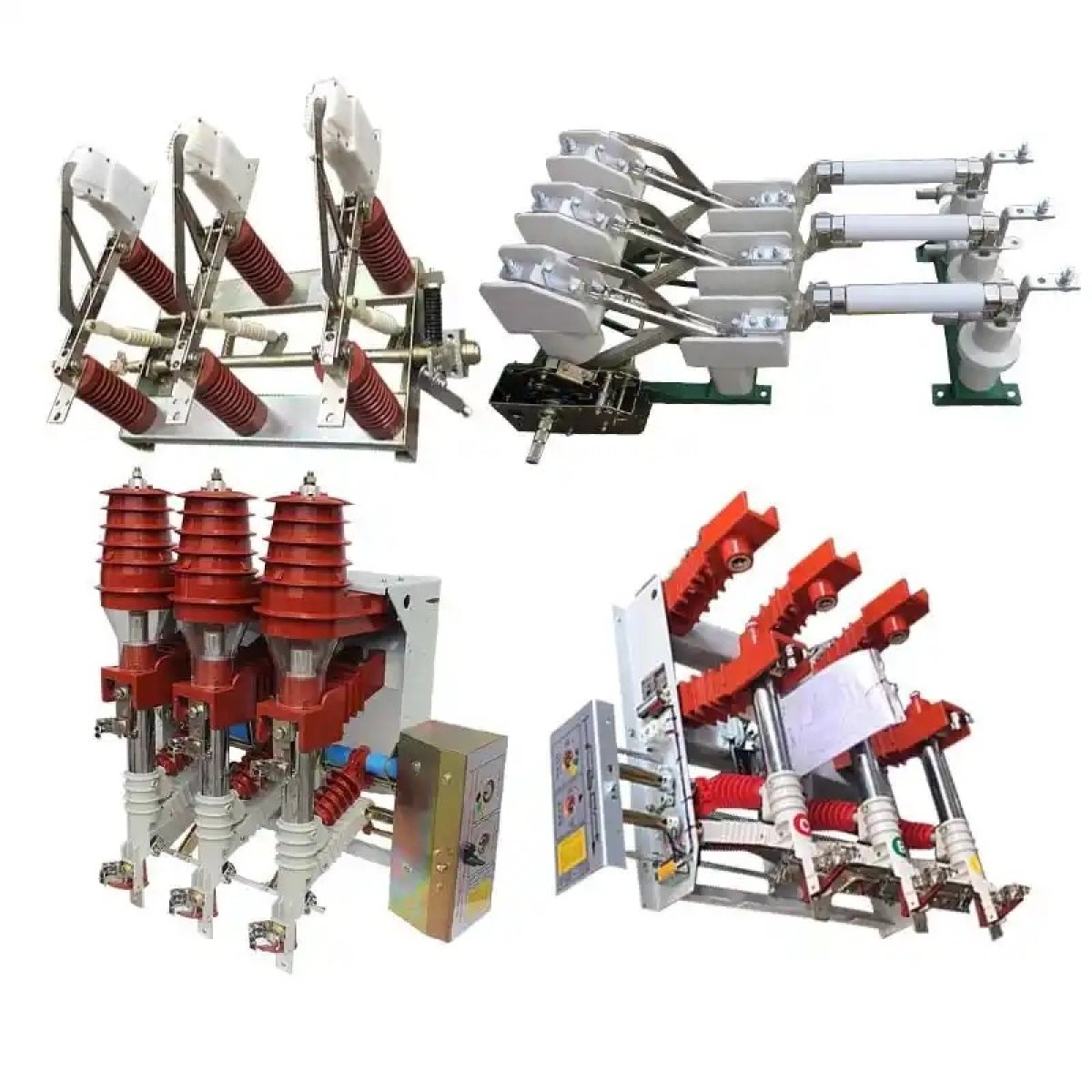
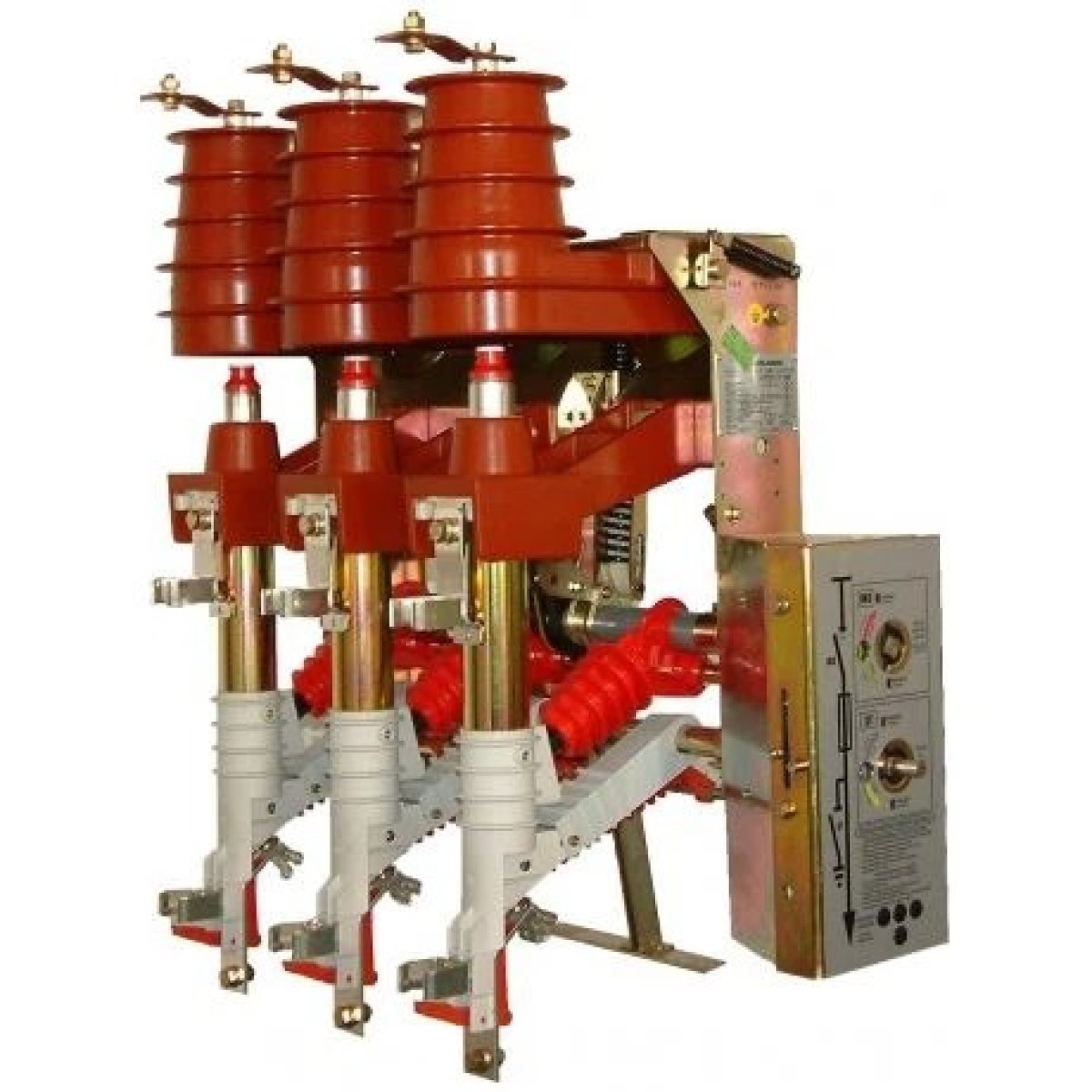
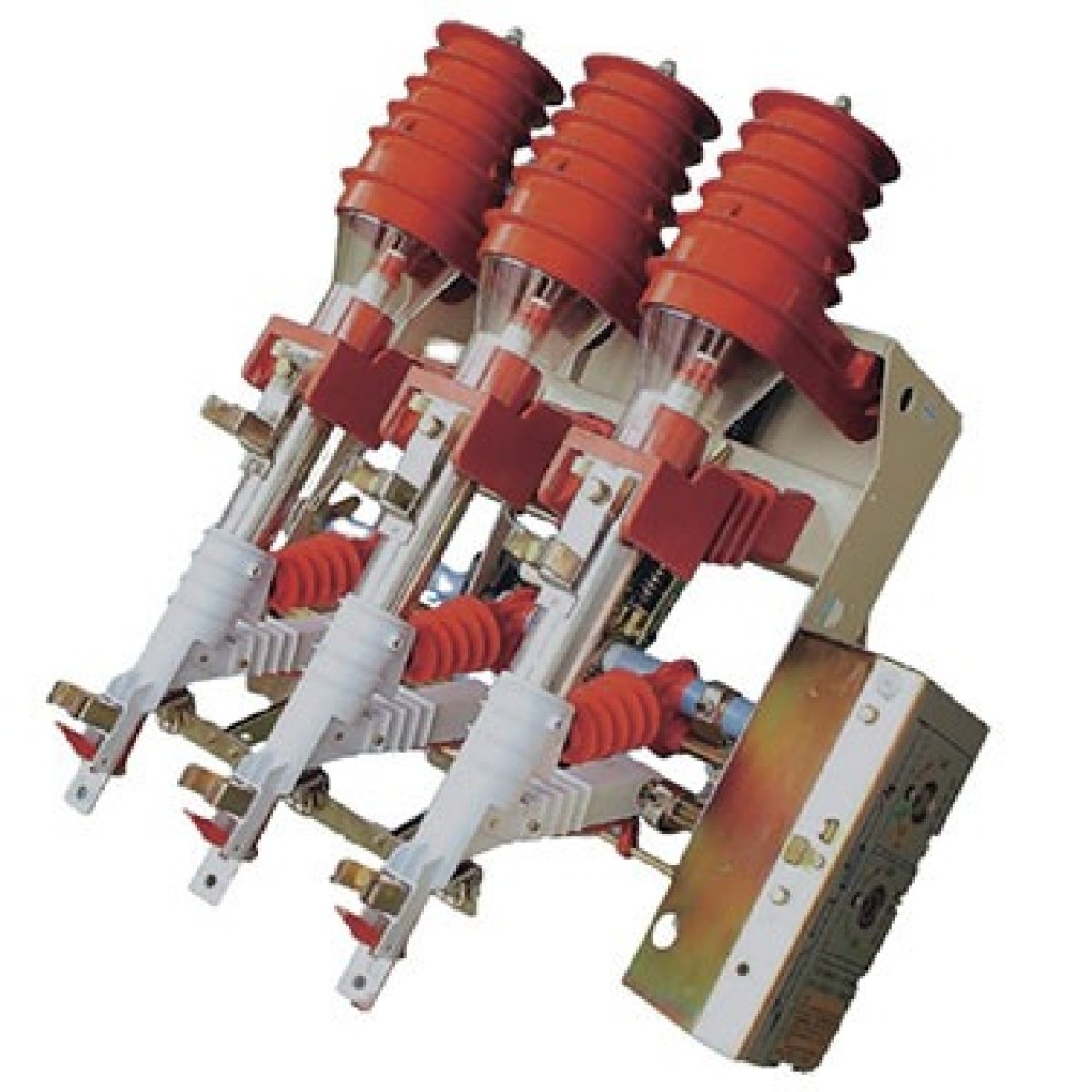
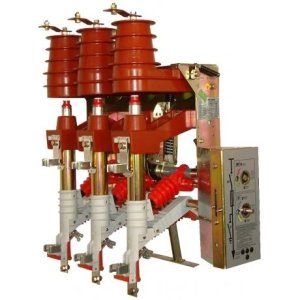
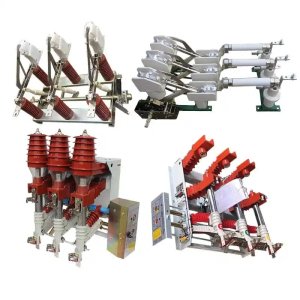
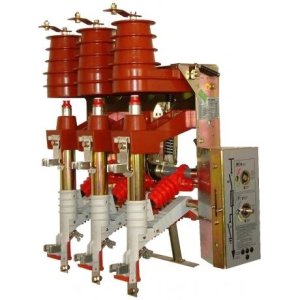
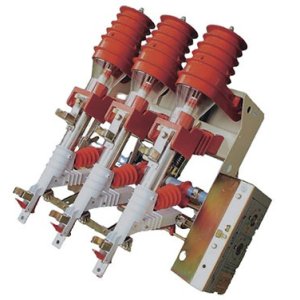
An LBS is a hybrid between a standard disconnect switch (isolator) and a circuit breaker. While a simple isolator can only be operated when the power is off, an LBS features an internal arc-quenching mechanism that allows it to safely interrupt rated load currents manually or via a motor. It is an economical solution for routine switching and isolating transformers in medium-voltage systems up to 36 kV.
- Operating Principle: Unlike an isolator, which relies on a slow manual pull that could cause a dangerous arc in air, an LBS uses a spring-energy storage mechanism. This ensures that the contacts separate at a high, predetermined speed regardless of how fast the operator moves the handle, effectively "snapping" the arc so it can be quenched.
- Arc Quenching Media: To handle the arc formed during on-load switching, LBS units use various media:
- Air: Uses arc chutes or arcing horns to stretch and cool the arc in open air.
- SF6 Gas: Pressurized gas absorbs free electrons to extinguish the arc almost instantly.
- Vacuum: Separation occurs in a sealed vacuum interrupter where the arc cannot be sustained.
- Key Capabilities:
- Normal Switching: Can handle "making" (closing) and "breaking" (opening) of rated currents.
- Fault Withstand: While it cannot break a short-circuit, it is designed to withstand the mechanical and thermal stresses of a fault current until a downstream circuit breaker or series fuse clears it.
- Capacitive/Inductive Switching: Used to de-energize unloaded transformers (exciting current) or long cables (charging current).
- Common Applications:
- Ring Main Units (RMU): Essential for reconfiguring urban power feeders.
- Transformer Protection: Typically installed on the high-voltage side to allow for maintenance isolation.
- Sectionalizing: Used on overhead lines to isolate a specific segment of the grid during repairs without shutting down the entire line.