
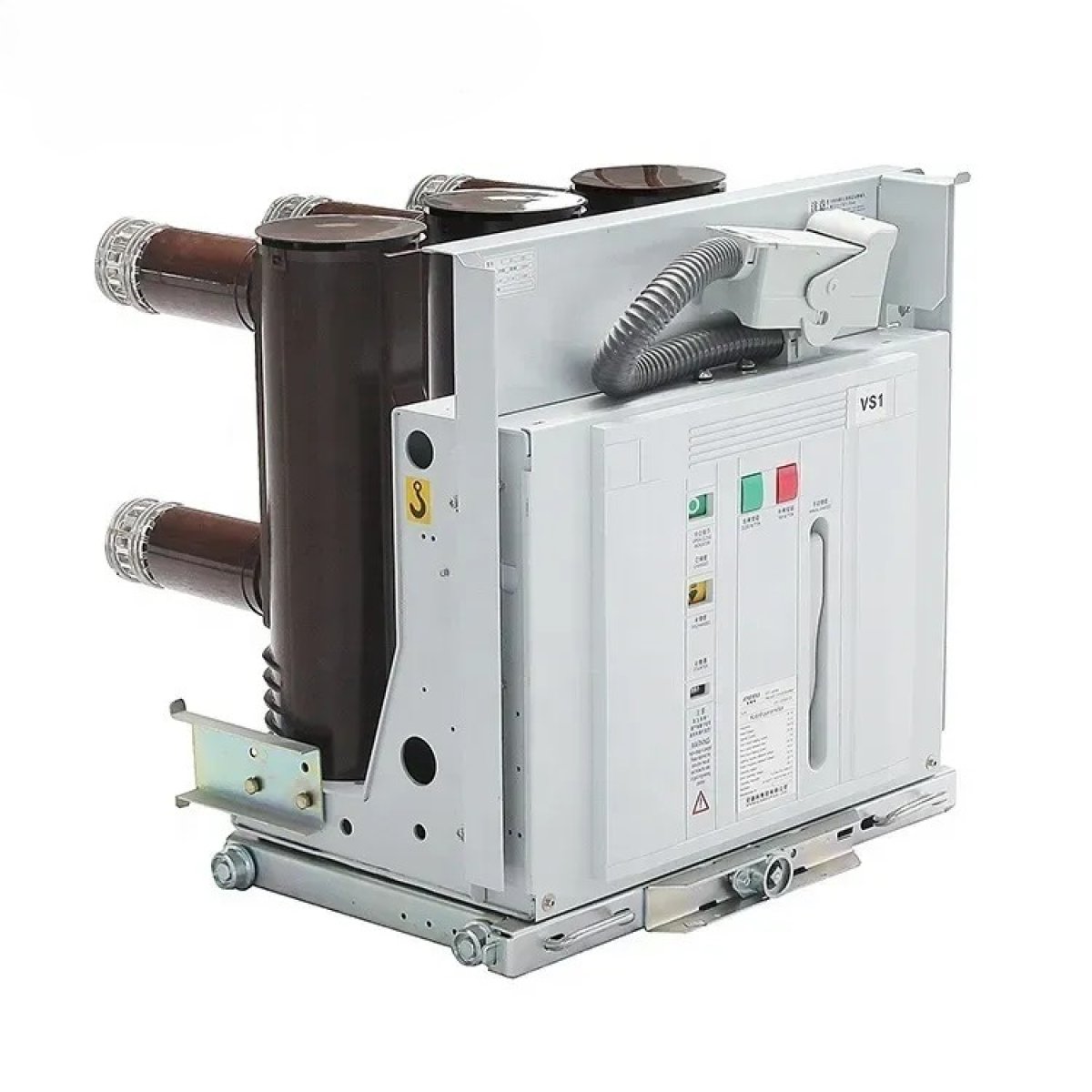
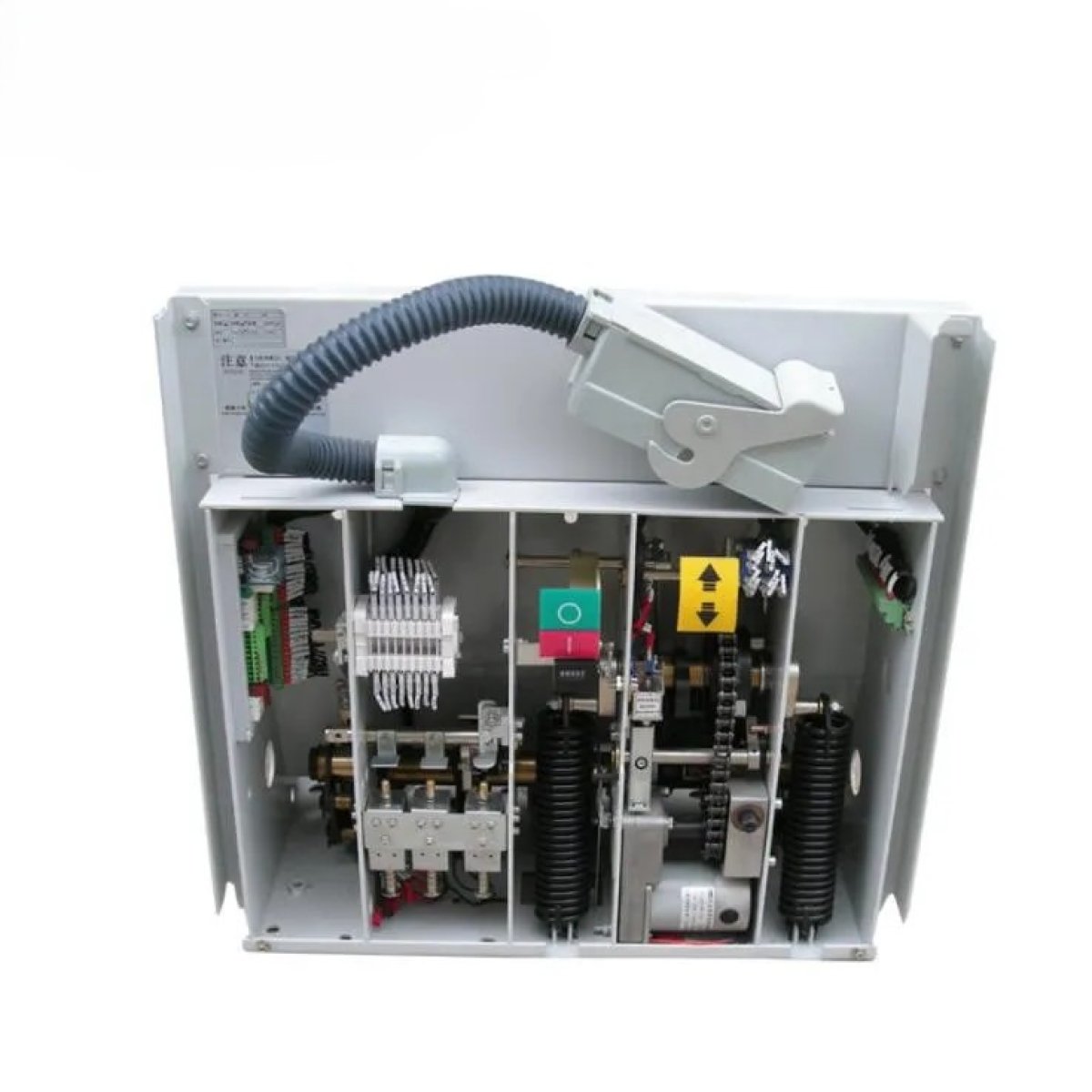
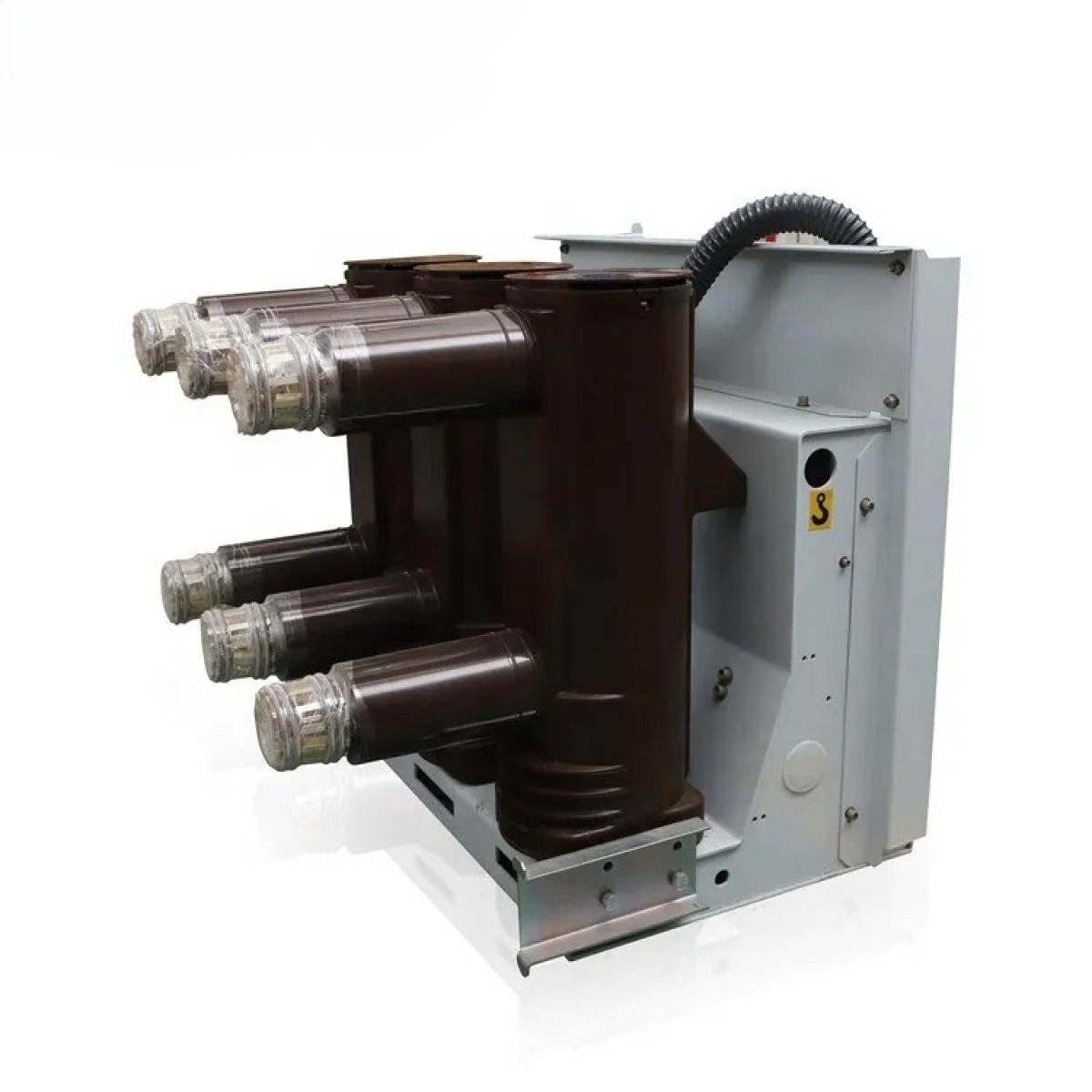
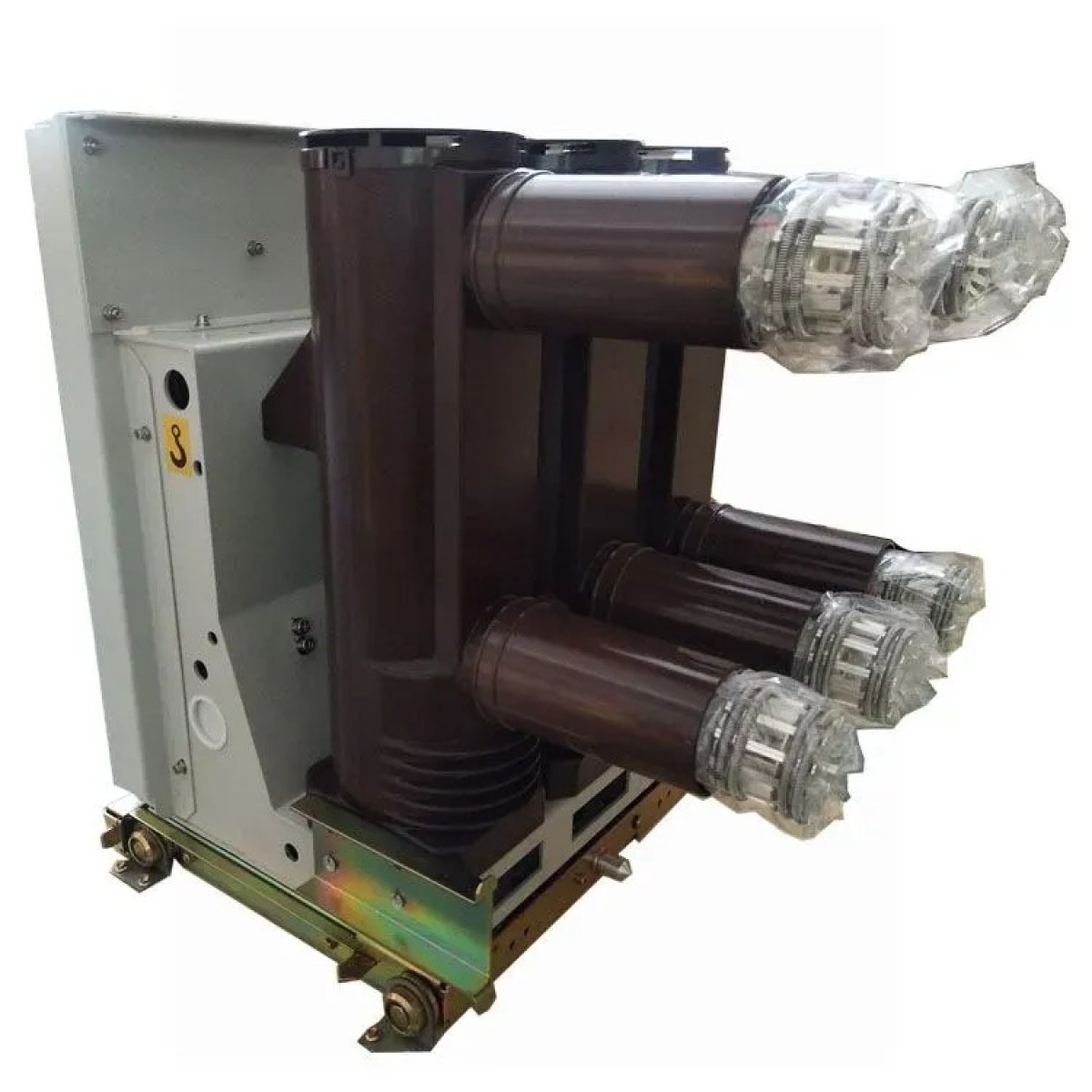
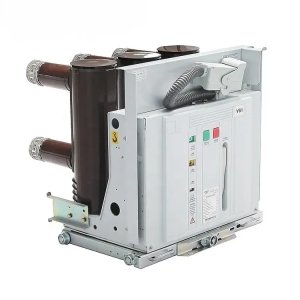
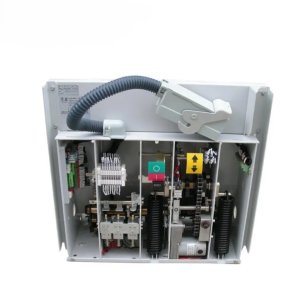
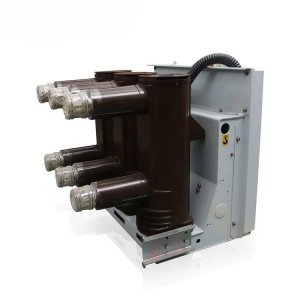
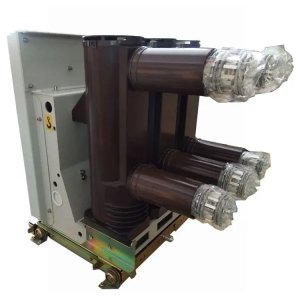
VCB is an electromechanical device designed to open or close an electrical circuit under both normal and fault conditions. Unlike air or oil breakers, it uses a Vacuum Interrupter to extinguish the electrical arc that forms when contacts separate. Since there is no gas or liquid to ionize in a vacuum, the arc is extinguished almost instantly, making the VCB highly efficient, fire-safe, and virtually maintenance-free.
In an electrical substation, the VCB serves as the primary switching and protective element within the HT (High Tension) Switchgear panel.
Operational Role
Fault Interruption: If a downstream fault occurs (such as a short circuit or ground fault), the protective relays signal the VCB to trip, breaking the current in milliseconds to save the transformer from burning out.
Load Switching: It allows operators to safely disconnect parts of the substation for maintenance without affecting the rest of the grid.
Arc Control: When the contacts inside the VCB pull apart, the metal vapor from the contacts creates a plasma arc. Because the chamber is a high-vacuum environment ($10^{-7}$ to $10^{-5}$ torr), the dielectric strength recovers rapidly, and the arc is extinguished at the first current zero.